A guide to the ins and outs of layering
Most people in the Nordic countries have probably heard of layering at some point. If you live in a cold climate, you learn to dress warmly whether you like it or not. But what is the idea behind layering? What does each layer actually do, and which materials work best for which activity?
Our expert for this guide is Esa, store manager at our Kuninkoja store. Esa has worked in the outdoor industry for years. He cycles to work all year round and also skis downhill and cross-country and goes hiking, so his advice comes from plenty of hands-on experience.

Layering lets you enjoy being outdoors whatever the weather. You stay dry and warm, and you can adjust your clothing to match what you're doing, Esa sums up.
You can head outdoors in almost any clothes, but proper outdoor clothing makes you more comfortable and lets you do more. Most of us have been out on a cold day thinking only about how fast we can get back inside, while the beautiful weather goes unnoticed.
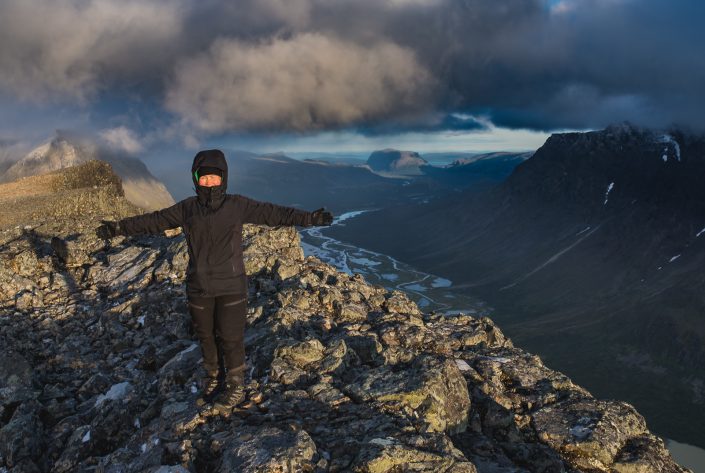
The three-layer principle makes it easy to adjust your clothing when your day mixes heart-pumping exercise with standing still in the cold.
The three-layer system works well, especially in cold weather. You can wear more than three garments, but the system is built around three functions that the layers provide.
The idea is simple. The base layer next to your skin moves moisture efficiently towards the outer layers. The mid layer traps air and keeps you warm. The outer layer blocks wind and rain.
1. Layering starts with the base layer
The most important job of a base layer is to keep your skin dry. When you're active, your body produces heat and you start to sweat, and that sweat needs to pass through the base layer to the outer layers. A damp base layer feels cold. A good base layer sits close to the skin with a snug fit, without restricting your movement.
Base layer materials play a key role in moisture transport. The old saying “cotton kills” exists because cotton absorbs a lot of moisture, dries slowly and therefore feels cold. So avoid cotton. Even if the rest of your outfit is warm, cotton underwear or a cotton bra is enough to leave you shivering.
Choose your base layer material to suit the activity. The most popular outdoor base layers are made from merino wool, synthetic fibres, silk or a blend of these.
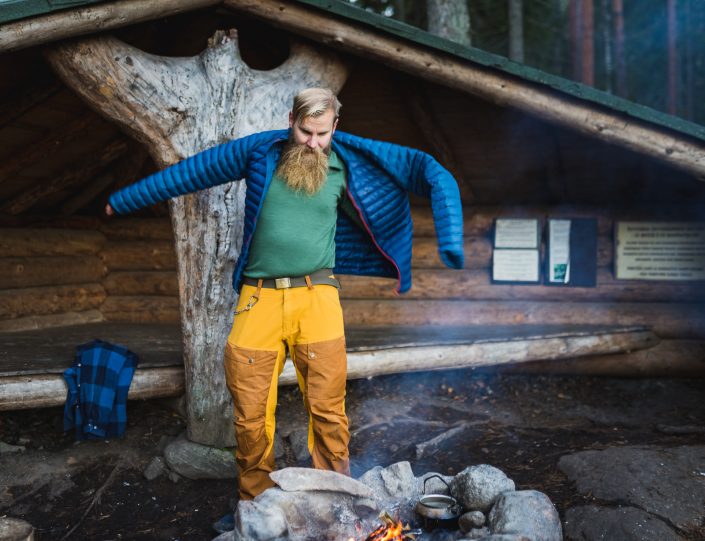
Merino wool is a good material for hiking base layers. In the photo, Caj has pulled a Haglöfs –lightweight insulated jacket over his Devold Expedition Man Zip Neck base layer for a break, with a Fjällräven Canada Shirt on top to protect against campfire sparks.
Merino wool works very well for activities where you don't sweat heavily. It stays warm even when damp, is naturally antibacterial and usually only needs airing after use. That's why most people choose merino base layers for hiking and paddling. On cold-weather treks, many people carry two base layer sets: a warmer one for camp and a thinner one for the day's walking. You can dry the thinner set in camp so it's comfortably warm for the next day on the trail.
One of our most popular merino base layer brands is Devold, which offers a wide range. The Breeze series is the lightest and most breathable, and suits activities where you sweat more. The Hiking series is slightly warmer and suits hiking where you sweat less. During autumn 2022, the Hiking series is being replaced by the Lauparen series. The Duo Active series is warmer still, with a technical, highly breathable ThermoLite® inner face and a warm merino outer face. Devold's warmest base layer range is Expedition, designed for very cold conditions. The inner face is 100% merino wool and the outer face is a more durable blend of 90% merino and 10% polyamide.
Other brands we stock with merino base layers include Fjällräven, Svala, Smartwool, Aclima, Halti, Lasting, Supernatural and Mons Royale.
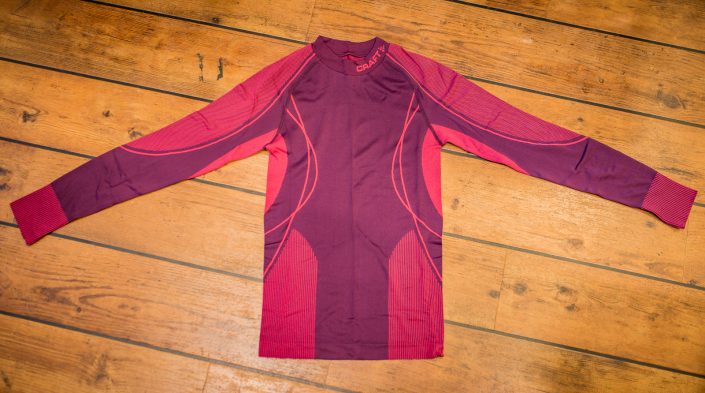
Synthetic fibres are a good base layer choice when you expect to sweat more.
Synthetic fibres move moisture to the outer layers more efficiently than merino. That's why synthetic base layers are popular with cross-country skiers, cyclists and others doing high-intensity activities.
When you're working hard, a good combination is a synthetic base layer with a softshell outfit. In colder weather, swap the synthetic base layer for merino and add a mid layer if needed.
Our range of synthetic technical base layers includes brands such as Odlo, Helly Hansen, Halti and Svala
Some base layers blend merino and synthetic fibres, which makes the garment more hard-wearing. Others use merino in body zones that need warmth and synthetics where you need breathability and stretch. We also stock windstopper underwear with windproof panels over the areas most sensitive to cold. Cross-country skiers and cyclists, among others, wear them to block wind coming through the fly.
Other features to consider in a base layer top are the collar, hood, zip and thumb loops.
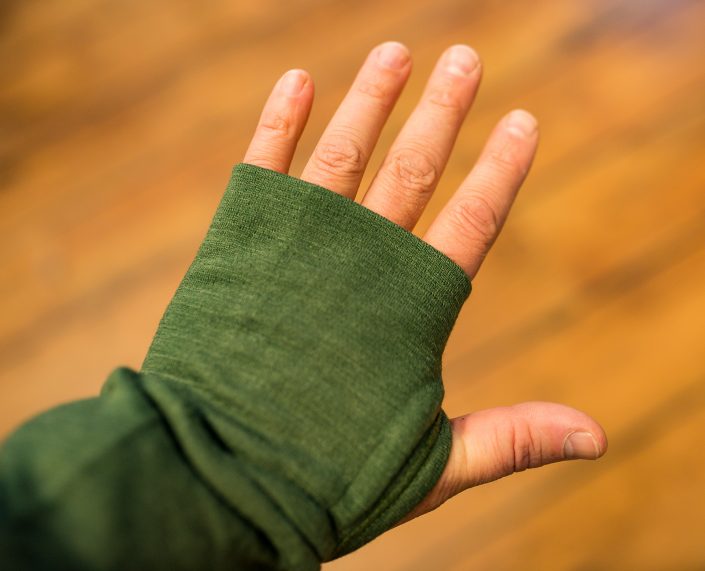
A long sleeve with thumb loops adds warmth at the wrist and closes the gap where cold air gets in. Pictured: Devold Expedition Man Zip Neck.
2. A key part of layering: the insulating mid layer
The mid layer's job is insulation. Heat moves in three ways: conduction, convection (air movement) and radiation. Still, trapped air effectively stops conduction and convection, which makes air an excellent insulator. In clothing, the materials that trap air best are down, wool and synthetic fibres.
A good mid layer carries on moving moisture away from the skin. Moisture trapped in the mid layer reduces its insulating performance.
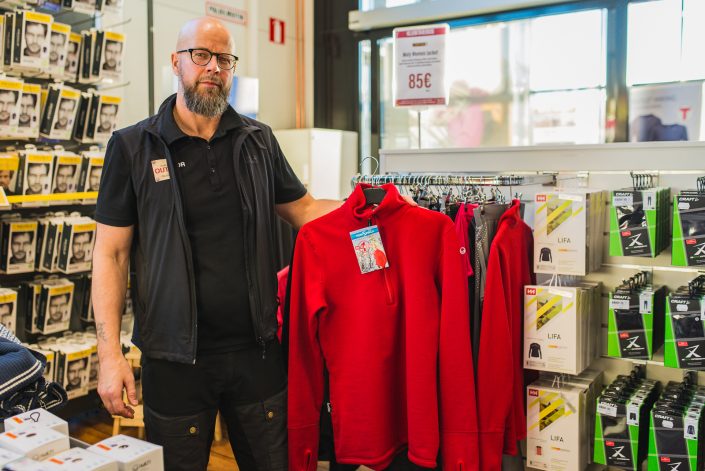
Esa recommends the Svala Powerstretch as a mid layer under a shell jacket. The Powerstretch outer face doesn't cling to the inside of the shell, so breathability stays good.
Your mid layer can be one garment or several, depending on the activity and the temperature. Good mid layer materials include merino, wool, fleece and down.
As your activity and the temperature change, you'll want to adjust your mid layer to match. When you're sweating hard, a base layer under your outer layer is often enough. At a gentler pace, you'll need a bit more airy, breathable insulation in between. Lofty fleeces work well here, and in really cold weather, merino or wool jumpers. When you stop for a break, add a warm layer under your outer layer straight away. Packable lightweight insulated jackets and lightweight down jackets are ideal. We've written more about lightweight insulated jackets on our blog.
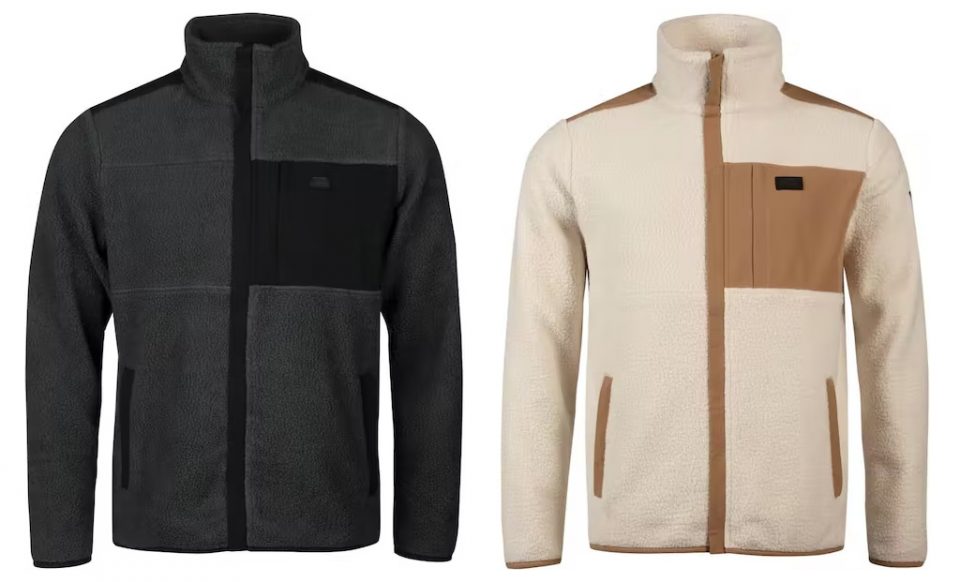
The Halti Klaidu Fleece is a very warm pile fleece jacket that works as either a mid layer or an outer layer.
When choosing a mid layer, look at the collar, pockets, weight and loft. The biggest decision is hood or no hood? A mid layer hood is usually fairly small and doesn't bunch up at your neck when it's down. Hooded tops and jackets also tend to have a more protective collar. A hooded insulated jacket such as the Haglöfs Expedition Lätt Hoodie also works as an outer jacket, where the hood keeps you warm and looks good too. Under a shell, though, that hood can be too warm. Without a hood, an insulated jacket is lighter, packs smaller and is often cheaper.
A thick merino base layer, such as Devold's Expedition range, also works as a mid layer. In that case, wear a technical synthetic base layer underneath.
3. The final part of layering: the protective outer layer
The outer layer's main job is to protect you from wind and wet. It also holds the warm, insulating air in your mid layer, so it needs to be roomy enough for the mid layer to keep its loft. For the three-layer system to work, moisture from the base and mid layers must also pass through the outer layer, so it doesn't stay trapped in your clothes.
In dry weather, good outer layer options are windproof trousers and jackets, softshell jackets and trekking jackets. In the rain, a breathable, fully waterproof shell jacket works best. On your legs, two layers are usually enough. Save long johns for cold weather. If the rain sets in on a hike, you can pull waterproof overtrousers on over your trousers until it passes.
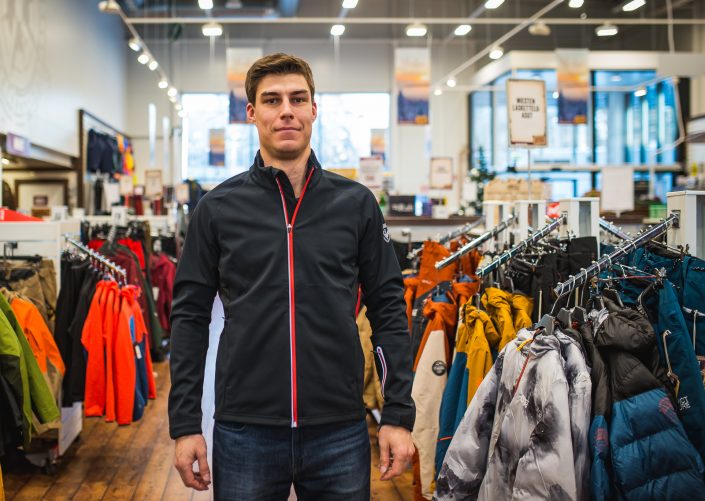
In the photo, Eetu is wearing a softshell ski jacket that looks smart enough for everyday wear.
Softshell jackets are more comfortable than a waterproof shell, and their breathability makes them more versatile. The inside is brushed soft, so it feels pleasant even worn directly over a base layer, with no clammy, plasticky feel. A softshell usually won't keep out rain, but it breathes better than a fully waterproof shell.
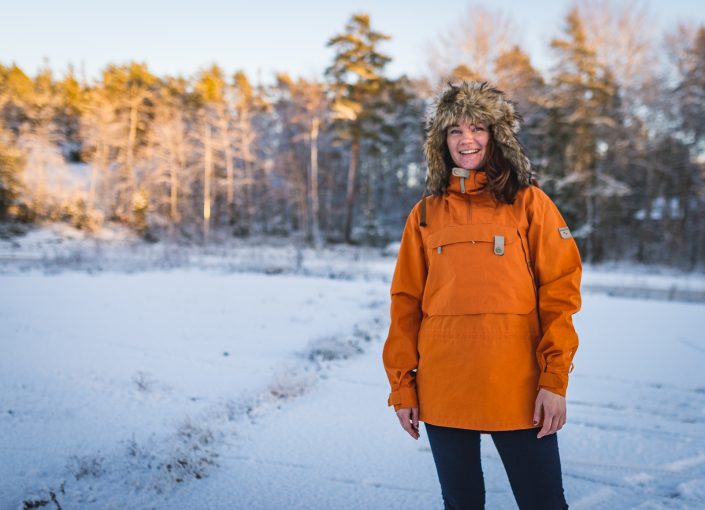
Heidi is wearing the Sasta Katmai anorak. The fabric, made from organic cotton (35%) and recycled polyester (65%), comes pre-waxed with Nikwax Cotton Proof for water repellency.
Trekking jackets are, as the name suggests, made for hiking, but they also work well for general outdoor use and everyday wear. They aren't fully waterproof, but polycotton jackets such as the Fjällräven Keb Jacket can often be waxed for water repellency. Trekking jackets breathe well, are comfortable to wear and come with practical features such as plenty of pockets, highly adjustable hoods, stretch panels and zipped vents.
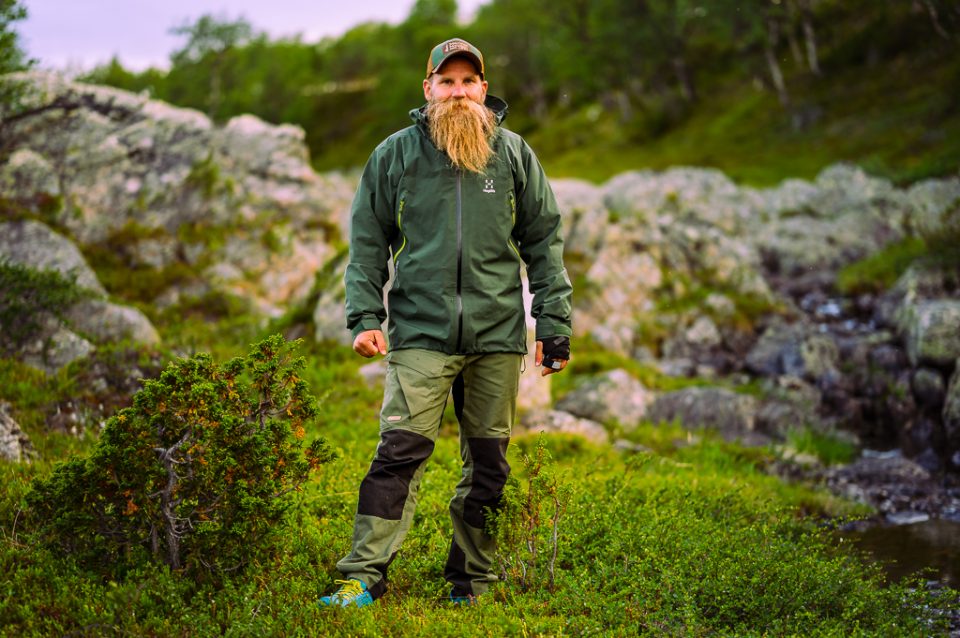
The Haglöfs Roc GTX range uses a durable 3-layer fabric built for heavy use.
A fully waterproof shell jacket is the right choice when rain is likely and you want better breathability than a basic rain jacket. A standard rain jacket barely breathes at all, whereas a good Gore-Tex shell keeps the rain out while letting the water vapour from your sweat escape. Besides breathability, a shell is light and packs down small. You can wear it in every season and around town too. You can read more in our blog post on shell jackets.
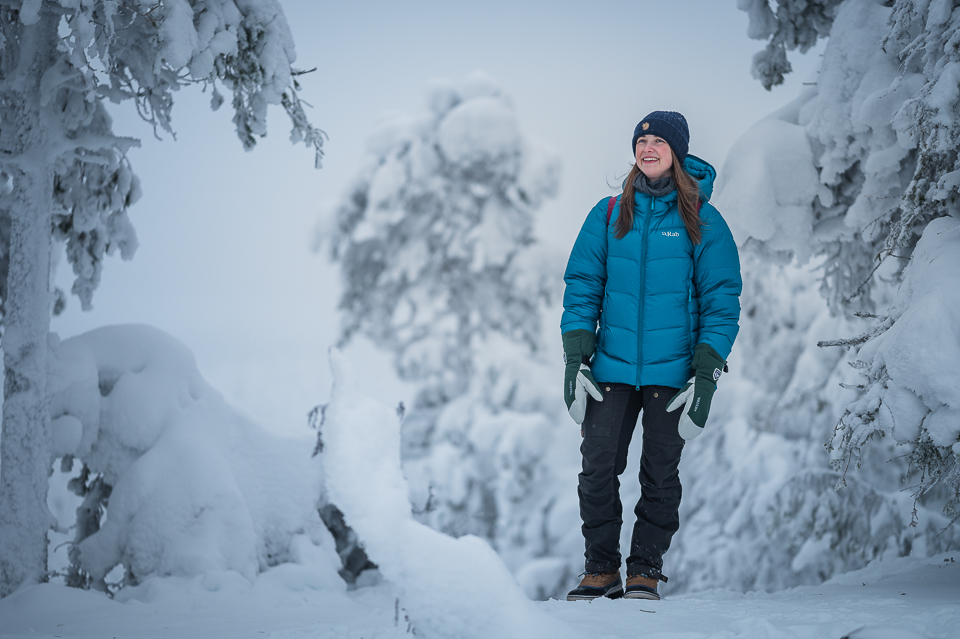
In really cold weather, a winter jacket makes a good outer layer. Fully windproof and waterproof options are available. You can read more about winter jackets in this blog post.
Also consider how well an outer jacket suits your own activities. For alpine sports, it's handy if the hood fits over a helmet, and ski jackets usually come with powder skirts, avalanche reflectors, security pockets and so on.
For hiking, look for a shell whose front pockets sit clear of your pack's hip belt. Pit zips improve ventilation, and a hydrostatic head of over 20,000 mm is a good idea if you want the jacket to keep you dry while carrying a rucksack.
Once you understand what each layer and material is for, you can adapt the system to suit different uses. Esa also points out that too few people make use of their hood in cold weather. A hood adds a surprising amount of warmth and comfort. Before you buy, think about how you'll use each garment, and which ones you actually want a hood on.
Watch the video:
The Scandinavian Outdoor team welcomes you to visit our stores and online shop to take a closer look at our clothing range. Our outdoor specialists will help you find the right clothes for the things you like to do.
Read more:
The versatile lightweight insulated jacket