A guide to lightweight insulated and down jackets
Good lightweight down jackets, or "puffies", have kept hikers warm for years. They've also become a versatile, long-lasting go-to layer for year-round outdoor use and hiking.
These jackets are mainly designed as a layer to pull on during breaks on the trail. As the name suggests, they're very light and pack down small.
You'll find them with both down and synthetic fill. We use the category lightweight insulated jackets when the fill is synthetic. Down-filled “camp jackets” are in the lightweight down jackets category.
Things to consider when buying a lightweight down or synthetic insulated jacket:
- Intended use: Everyday wear or hiking?
- Insulation: Down or synthetic?
- Weather resistance: Most jackets are windproof but not waterproof.
- Weight and packability: Especially important for hiking.
- Fit and comfort: The right cut and length.
- Details: Hood or no hood, pockets and so on.
- Sustainability and materials: Check the certifications on down products.
- Price and quality: A well-made jacket will last for years.
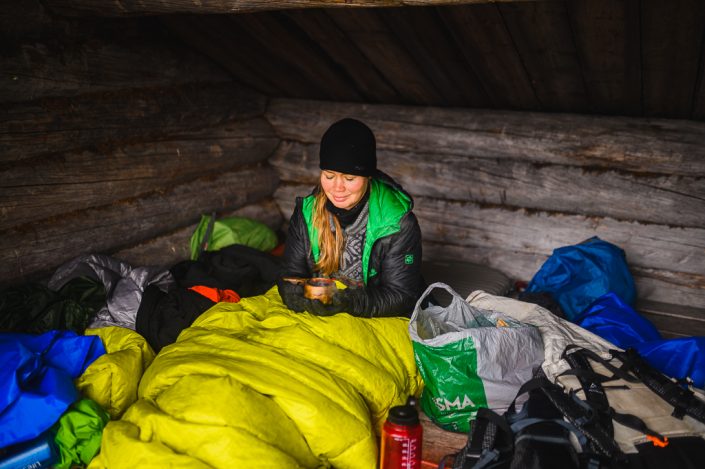
The main differences between down and synthetic:
Down:
- Excellent warmth-to-weight ratio and packability.
- At its best in cold, dry conditions.
- Check the down-to-feather ratio (e.g. 90/10) and fill power (e.g. FP700).
Synthetic:
- Stays warm when damp and dries faster.
- Easier to care for and often cheaper.
- Good options include Primaloft® and Thinsulate™
Lightweight down jackets
The biggest advantages of a down jacket are its low weight and how small it packs. It works like the plumage of a bird fluffing up its feathers in the frost: air trapped between the down clusters conducts heat poorly, and that combination makes a very effective insulator. All the down in Scandinavian Outdoor's down jacket range comes from ethically certified facilities. The birds have not been force-fed, and the down has not been plucked from live birds.
Down quality is measured by its Fill Power (FP) rating. FP tells you how much volume one ounce of down fills. In clothing, it usually ranges from 300 to 900. The higher the number, the better the down. FP700 is already good, and 800–900 is excellent. FP tells you about the quality of the down, but it's also worth checking the fill weight — how much insulation the jacket actually contains.
Read more about Fill Power here.
A down jacket is lighter and packs smaller than a synthetic jacket with the same weight of insulation, although modern synthetics are now very close to down. Down, on the other hand, takes longer to dry and can be more sensitive to moisture. Many modern down fills are treated with a water-repellent finish, though, so a light shower won't soak them.
Lightweight down jackets worth a look from our range:
Rab Microlight Alpine and Microlight Jacket
Peak Performance Helium Down Hood Jacket
Fjällräven Expedition Pack Down Hoodie
Cotopaxi Fuego Down Hooded (also available in plus sizes for women)
You'll find all our lightweight down jackets for women and men here.
Lightweight synthetic insulated jackets
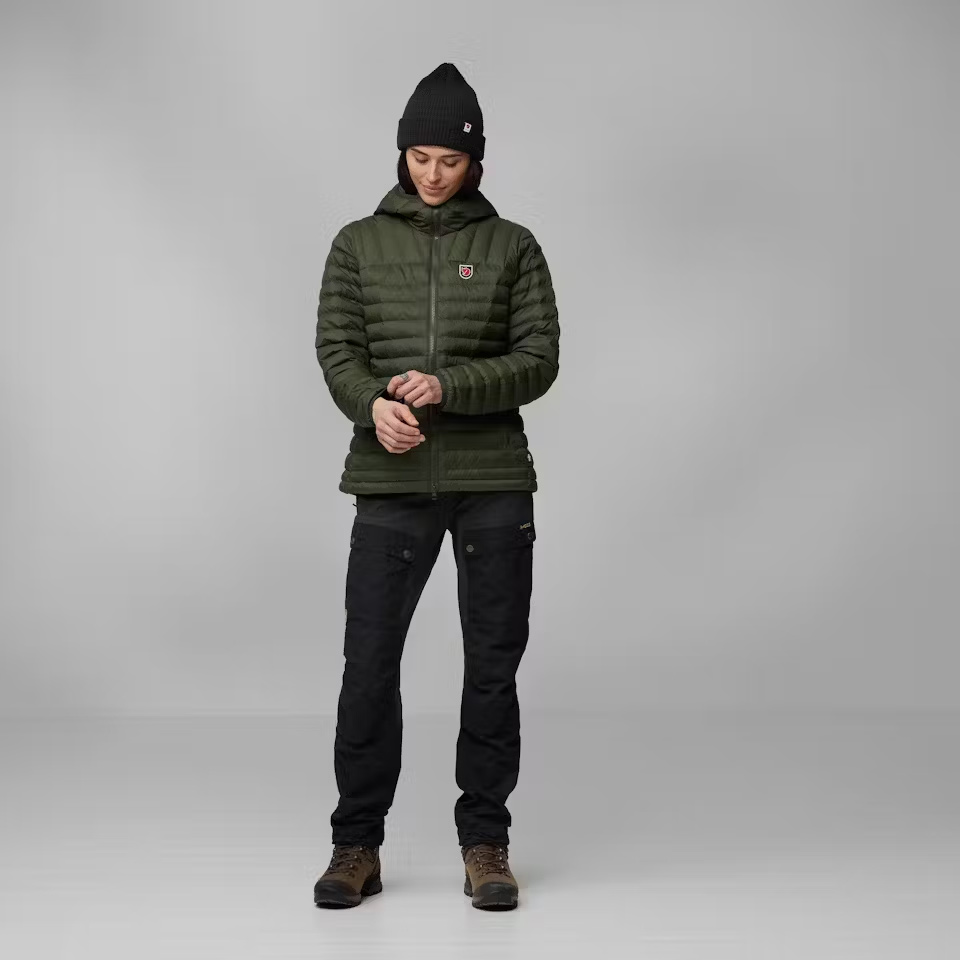
Synthetic fills generally aim to mimic the properties of down, and their performance keeps improving.
Picks worth a look on the synthetic side include:
Rab Cirrus jackets
Fjällräven Expedition Lätt Hoodie
Norrøna Falketind Thermo40 Hood
Here you'll find all our women's and men's lightweight insulated jackets.
Lightweight insulated and down jackets are well suited to hiking and trekking
A lightweight synthetic or down jacket replaces a heavy wool jumper. Most lightweight jackets designed for breaks pack down to around a litre and weigh less than half a kilo. You can easily fit one into a small daypack to keep you warm during breaks and around camp.
When it's really cold, combine several layers. A warm base layer, a midlayer top, a lightweight insulated jacket and a shell on top will keep you warm even in winter.
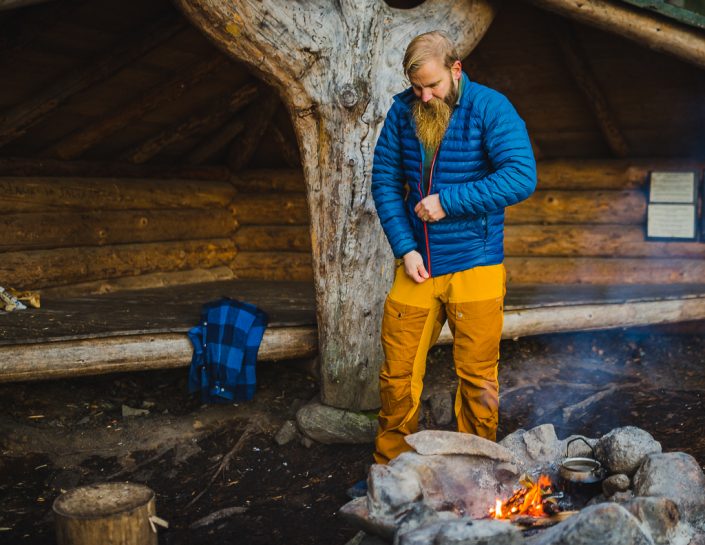
Keep your insulated jacket away from campfire sparks. Down jackets are particularly vulnerable: a spark burns a hole and the down starts escaping through it. Synthetic fills melt in the heat, so it's worth wearing something over the top that copes better with sparks.
If you wear another jacket over a lofty insulated jacket, it needs to be big enough not to compress the insulation. Flattened insulation won't keep you as warm as lofted insulation. Many hikers choose a slightly larger shell jacket so there's plenty of room for insulation underneath when needed.
If you plan to wear your insulated jacket under another jacket often, think about which one you want the hood on. The shell or the insulated jacket? Or both? Many shell hoods can be adjusted for a better fit than the hood on an insulated jacket. Insulated hoods, on the other hand, are very warm and comfortable in the cold. If you're hiking light in summer, a hoodless jacket saves weight.
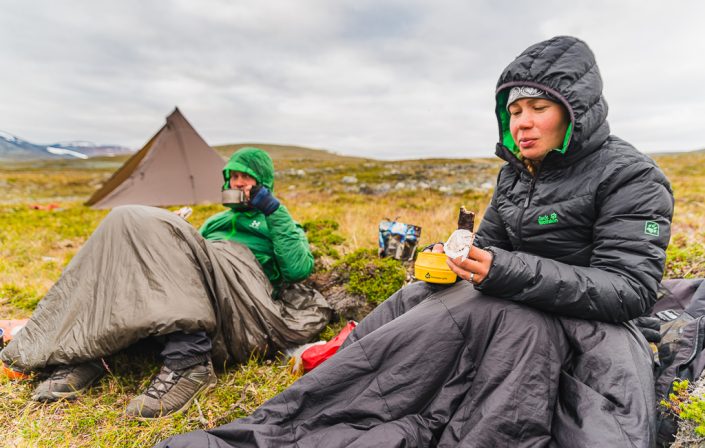
For multi-day hikes, choose a lighter jacket that packs small. In summer, less insulation is enough, so the jacket stays light and packs down very small. A lightweight insulated gilet is also worth considering. If you tend to feel the cold, go straight for a jacket with a bit more insulation.
An insulated jacket also works as an extra layer inside your sleeping bag at night, or as a pillow. Stuff it into its own hood, a neck tube or a dry bag and you've got a handy pillow.
Come and see our lightweight down and synthetic insulated jackets in our shops or online shop!