Down as insulation — What is fill power (FP)?
Down is the most valued and widely used insulation in winter jackets, lightweight down jackets and sleeping bags. In this article, we explain what makes it such effective insulation and what to look out for when buying down-filled products.
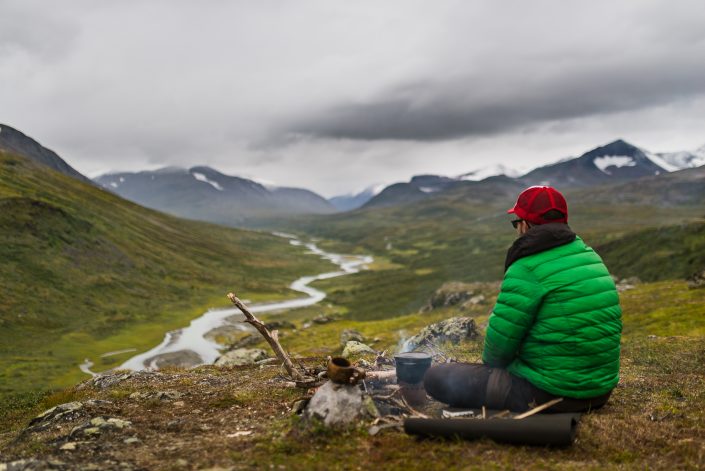
Lightweight down jackets are especially popular with hikers – they're light to carry but warm enough to throw on at camp or during breaks.
Like other types of insulation, down works by trapping still air in a small space. Down clusters have a spherical structure that holds tiny pockets of air inside.
The difference between down and feathers
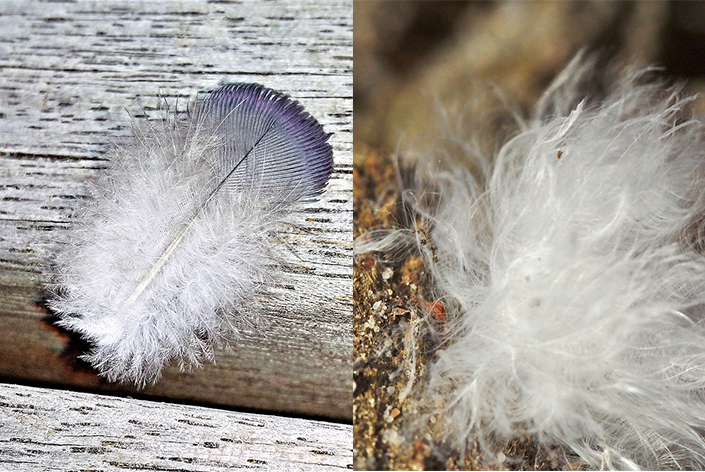
On the left is a feather, with a quill running down the middle. Down has no quill.
Down fill usually contains some feathers too. You'll often find the ratio in the product details, shown as something like 90/10, which means the fill is 90% down and 10% feathers. A high proportion of feathers isn't a good thing: the quills add weight, provide very little insulation and tend to poke through the fabric of lighter jackets and sleeping bags.
Genuinely high-quality down products contain 90% down or more.
Fill Power, FP and CUIN = down quality
Down quality is measured by its Fill Power. You'll also see it abbreviated as FP (Fill Power) or CUIN (cubic inches per ounce). They all mean the same thing: the volume that one ounce (a unit of mass) of down fills. For example, if one ounce (28.35 g) of down fills 900 cubic inches, it's FP 900 down.
The higher the number, the better the down – in other words, the more insulation it gives you for its weight. Good-quality down also lofts back up faster after being packed.

A high FP rating matters most when you're carrying your down gear with you – sleeping bags and lightweight down jackets on a multi-day hike, for example. With better down, they weigh less and pack down smaller.
Down FP ratings in practice:
- 900 or above = Excellent
- 700-899 = Very high quality
- 600-699 = Good
- Below 600 = Average
Fill Weight – how much down is inside
The FP rating and the down-to-feather ratio only tell you about the quality of the down. To judge how well a product insulates, you also need to know how much of that fill has been used. FP alone won't tell you how “warm” a jacket or sleeping bag is.
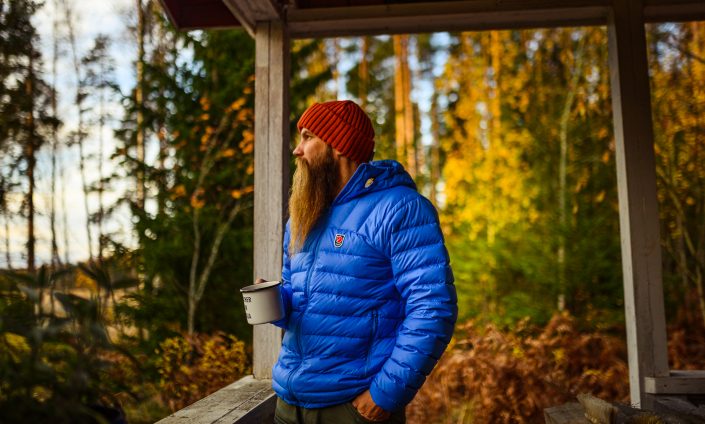
Down jackets for outdoor use generally fall into three groups: lightweight down jackets for summer and winter, lighter winter jackets and very warm winter jackets.
Comparing sleeping bags is easy – you just look at the comfort rating. Jackets are trickier, because there's no equivalent rating. Instead, you have to compare the quality and quantity of down in each jacket. There's no official standard for this, but you can still draw some conclusions from the figures provided.
In principle, the relationship between FP and fill weight is linear, so 50 g of FP900 down equals 100 g of FP450 down (assuming the same feather ratio). In reality, plenty of other factors come into play, but you can get a rough indication by multiplying the FP rating by the fill weight. Here's how it works if you compare two jackets with the figures above.
The relationship between fill weight and quality can be calculated as an “insulation value”:
- Weight x FP = “insulation value”
- 100 x 900 = 90 000
- 200 x 450 = 90 000
So if the jackets were otherwise made from the same materials, with identical seams and baffles and the same feather ratio, they would be equally warm. Divide the result by a thousand and you get a handier number: 90.
Let's compare a few popular jackets from different categories:
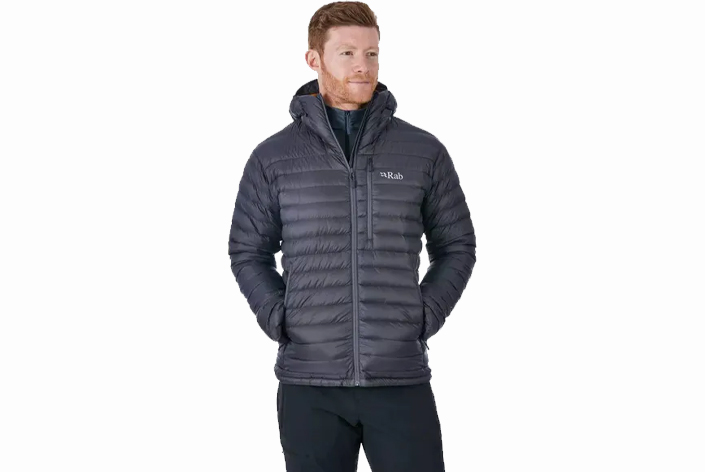
A very popular hooded belay and camp jacket, especially before proper winter weather sets in. A size L contains 143 grams of FP700 down.
143 x 700 / 1000 = 100.1
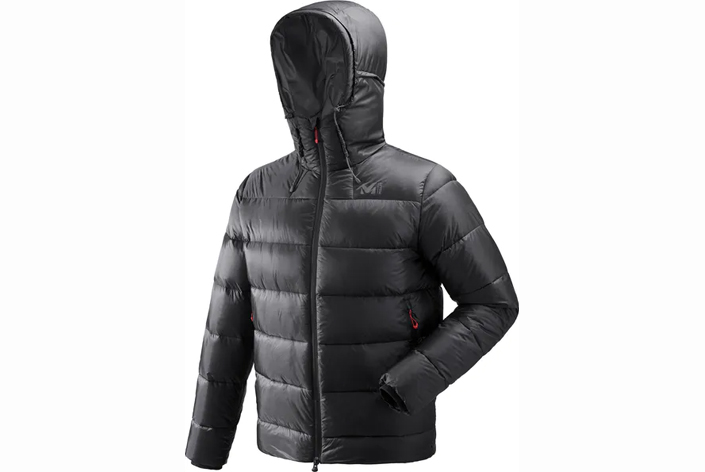
A noticeably warmer lightweight down jacket, also filled with FP700 down – but a size L has 250 grams of it.
250 x 700 / 1000 = 175
Fjällräven Keb Expedition Down Jacket
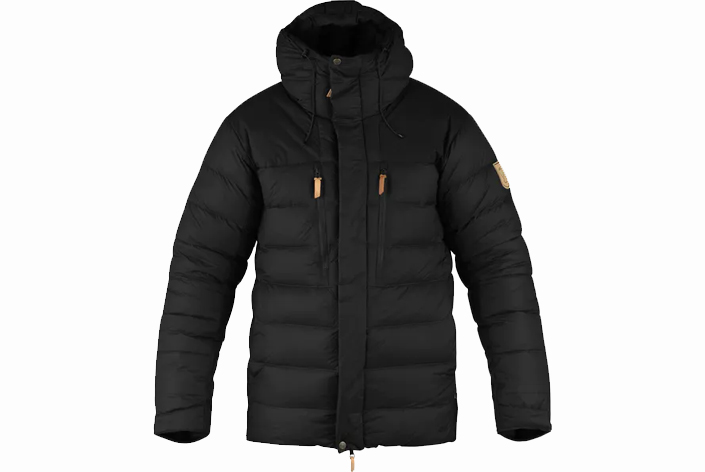
Finally, a very warm winter jacket for comparison. This substantial jacket packs in no less than 420 grams of FP800 down in a size M.
420 x 800 / 1000 = 336
This isn't a perfectly accurate comparison method, but it gives you a good indication. Unfortunately, not all manufacturers state the fill weight, which makes comparing even harder. The total weight of a jacket is an even less reliable guide, since fabrics, zips and other components add weight without necessarily adding warmth.
Still, with these examples you now know in practical terms how Fill Power and Fill weight relate to each other in theory.
Other factors that affect insulation
Just so things don't get too simple: there are plenty of other variables that affect how well a jacket (or any other down product) insulates.
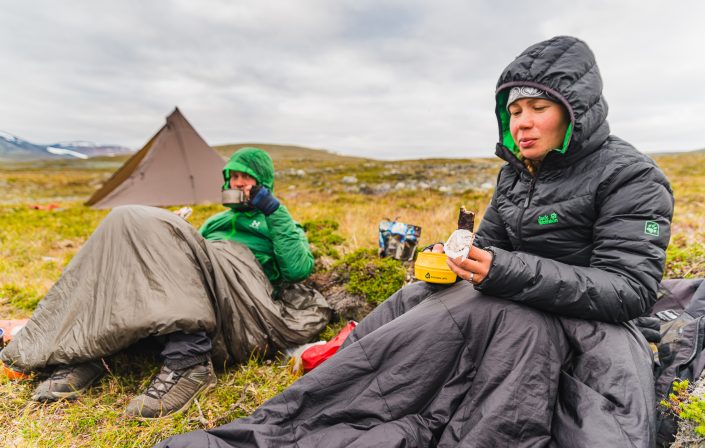
Besides the quality and quantity of the down, a jacket's warmth also depends on the outer fabric, the seams and how the down is distributed in baffles inside the jacket. These can vary a lot between models. In lighter jackets, the baffles are stitched through both layers of fabric, so there's less insulation along the seams. Heavier jackets use various construction methods to reduce these cold spots.
Down comes from geese and ducks. Goose down is usually higher quality than duck down. Duck down is more common, which makes it cheaper.
The other materials in a jacket usually weigh considerably more than the fill itself. That's why hikers often choose lighter models – but these are less durable and don't necessarily handle moisture as well as heavier ones. Price often reflects the materials used and their quality.
Pros and cons of down
Compared with synthetic insulation, down still comes out ahead on warmth and packability. That said, the best synthetic materials are now very close.

Haglöfs' down-mimicking synthetic insulation comes close to the properties of real down.
Down vs. synthetic insulation:
Pros:
- Lighter than synthetic insulation of equivalent warmth
- Packs down smaller
- Can last longer (doesn't flatten out over time)
Cons:
- More expensive
- Handles moisture less well / dries more slowly (although water-resistant treated down is now available)
- Loses more insulation where it's compressed (e.g. your backside when sitting down)
- Very vulnerable to sparks (synthetic fill usually melts into a hole, whereas down escapes through a burnt hole)
Ethical down
The down used in outdoor clothing comes from either geese or ducks, so these products aren't suitable if you prefer to avoid animal-derived materials.
At Scandinavian Outdoor, we choose our down product manufacturers carefully. All of them are certified: the birds haven't been force-fed, and the down hasn't been plucked from live birds. In practice, all the down is a by-product of the meat industry, so the birds aren't raised for their down.
The most common ethical certifications are the R.D.S. (Responsible Down Standard), awarded by Textile Exchange (a global non-profit organisation working to reduce the negative social and environmental impacts of the textile industry), and DOWNPASS, which guarantees that no down has been plucked from live birds, and that the birds haven't been caged or force-fed. DOWNPASS certification has strict requirements that cover wider animal welfare too, such as keeping transport of the birds to a minimum. The certificate guarantees full traceability right back to the farm. Audits for both certifications are carried out by an independent third party.
More blog posts and guides on down products:
Tips on lightweight insulated and down jackets for use as camp and belay layers:
The versatile lightweight insulated jacket – a go-to piece of kit for outdoor people!
Tips on choosing a sleeping bag:
Choosing a sleeping bag and sleeping mat — How to put together a system that works
How to wash a down jacket:
How to wash a sleeping bag:
Sleeping bag and sleeping mat care, storage and washing’
Find them here: lightweight down jackets, all down-filled winter jackets and down sleeping bags.
Rule of thumb: down is the warmest for its weight but loses insulation when wet; synthetic fill keeps warming when damp.
Our picks
- Peak Performance Men's Helium Down Jacket – light down jacket for breaks and dry cold: men’s 270 g, 700 FP down
- Norrøna Women's Falketind Down 750 Hood – warmer down jacket: 382 g, 750 FP down
- Rab Men's Xenair Alpine Flex Jacket – synthetic for damp days and moving: 354 g, PrimaLoft Gold 40 g/m²
- Arc'teryx Men's Atom Hoody – synthetic for damp days and moving: 355 g, Coreloft 60 g/m²