Why is a good shell jacket one of the most versatile pieces you can own?
In our view, a long service life and versatility are what make an outdoor jacket truly sustainable. For us, durability means quality, and offering that quality to people who spend their time outdoors is a matter of pride. But what do we actually mean by durability, and why do we see it as a mark of quality? Let's look at durable quality from a few different angles.
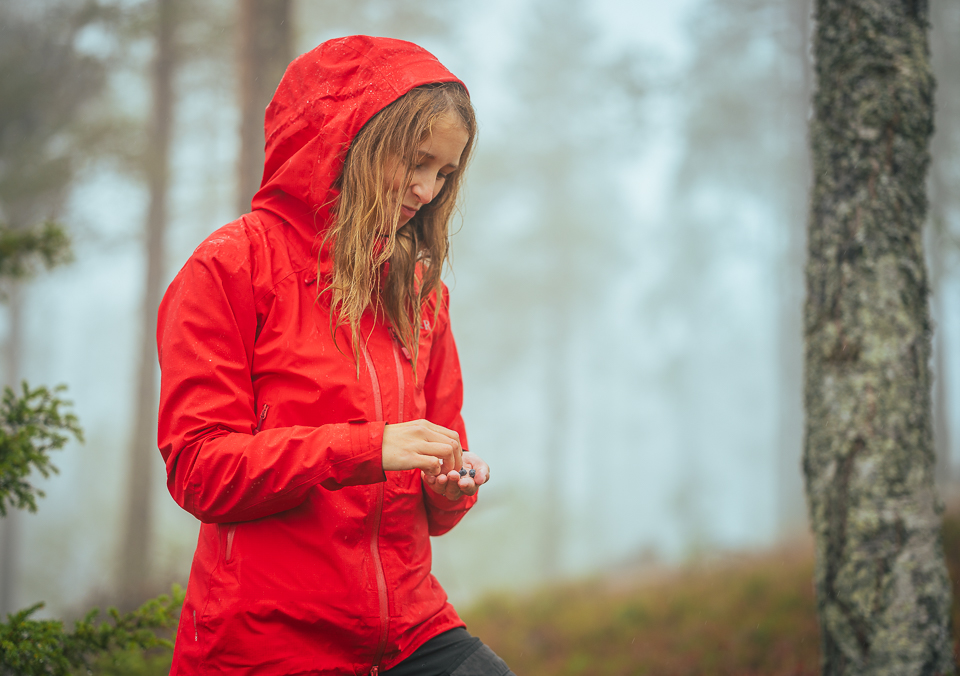
In this post, we explain our thinking on shell jackets in a bit more detail. In particular, we explain why a well-made shell jacket covers a lot of ground, from the commute to time in the hills and everyday life in town.
Things to consider when buying a shell jacket:
- Intended use: Hiking, general outdoor use, skiing or everyday wear in town?
- Waterproofing: Check that the hydrostatic head is high enough for how you'll use it
- Breathability: A good breathability rating and ventilation openings
- Membrane: Gore-Tex, Pertex etc. 2-layer, 2.5-layer or 3-layer?
- Cut and fit: Is there room underneath for a wool jumper or a light insulated jacket?
- Pockets and details: Waterproof zips, hood, adjusters etc.
- Weight and packability: Does it need to pack down small? Handy on trips
- Environmental impact: recycled materials – PFC and PTFE
- Durability: Price usually reflects quality, and a well-made jacket stands up to years of use
- Price and warranty: for regular active use, it pays to choose a well-made, durable jacket
Bad weather doesn't stop people who like to get outdoors. An outdoor wardrobe includes clothing for rainy days too. A jacket's waterproofing is measured by its hydrostatic head. The higher the figure, the better the jacket keeps water out.
What sets a shell jacket apart from a traditional rain jacket is that it's lighter and more breathable. A shell jacket has a waterproof membrane with microscopic pores. They're too small for water droplets to get in from outside, but water vapour from inside can pass through.
Today the most popular choice of rain jacket is a shell jacket. The most common reason people choose one is its versatility.
A well-made shell jacket covers a wide range of outdoor activities

A shell jacket is also a good choice if you walk to work or school. Layering keeps you warm when you head out on a cold morning. Once you've warmed up, you can simply stuff the jacket into your rucksack.
Jackets with a hydrostatic head above 5,000 mm are generally classed as waterproof. For everyday use, that's often enough to keep you dry on short walks in the rain.

The same goes if you cycle to work or school. Add waterproof trousers and shoes, and cycling is comfortable whatever the weather. When you're cycling or doing anything that makes you sweat, pay close attention to the jacket's breathability as well. The harder you work, the more heat your body produces.
For more active use, we recommend a shell jacket with a hydrostatic head of at least 10,000 – 15,000 mm. At that level, the jacket will keep you dry in rain and sleet. Some moisture may still get through where your daypack or rucksack straps press on your shoulders.
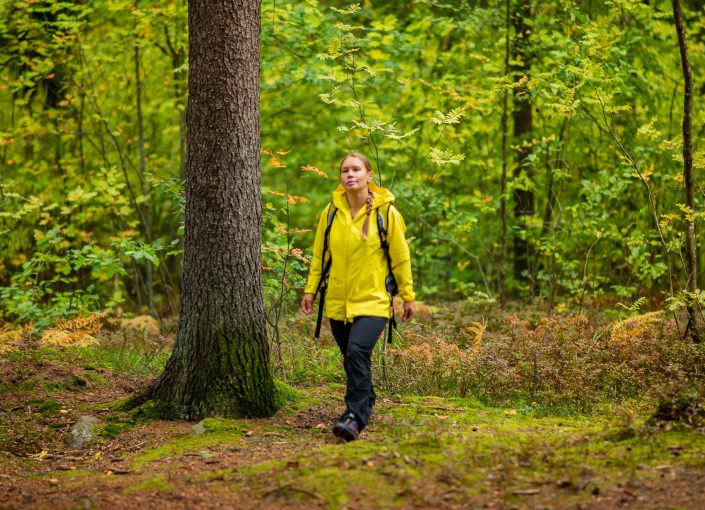
If you're carrying a daypack or rucksack, we recommend a hydrostatic head above 20,000 mm, so moisture doesn't get through at the points under the most pressure. On hiking trips, a shell jacket is one of the basics. Many hikers pack one just in case, so a downpour never catches them out.
A shell jacket is the cornerstone of layering. As your outer layer, it keeps out rain and wind and helps keep you warm. Pair it with a light insulated jacket that packs down small, and the combination is hard to beat for warmth relative to weight and bulk. It keeps you dry and warm even when the weather turns properly nasty. Wear a light insulated jacket or a lightweight down jacket under your shell as a mid layer. Just make sure the shell isn't too snug. Otherwise it compresses the insulation and the combination loses some of its warmth.
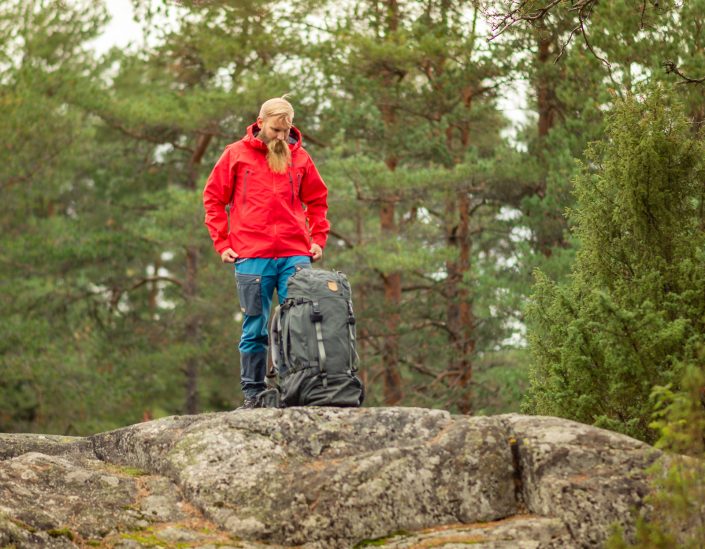
Shell jackets use different membranes to make them waterproof. The best known are Gore-Tex and Pertex, and some manufacturers have their own membrane technologies. You can now also find membranes made without PTFE. It's also worth checking that the outer fabric's water-repellent treatment is PFC-free.
When the membrane is laminated between an inner and an outer layer into a single fabric, the jacket is called a three-layer jacket (3L). Three-layer jackets are sturdier and more abrasion-resistant than two-layer jackets, which makes them better suited to demanding use.
When a jacket has a separate mesh or fabric lining, it's called a two-layer jacket (2L). Two-layer jackets feel softer and more comfortable than three-layer jackets. They're also slightly warmer, although keeping you warm isn't really a shell jacket's job.
There are also 2.5-layer (2.5L) shell jackets. In these, the membrane is laminated to the outer fabric and protected on the inside by a coating. Compared with three-layer jackets, they're lighter and pack down smaller, but they don't stand up to wear as well.
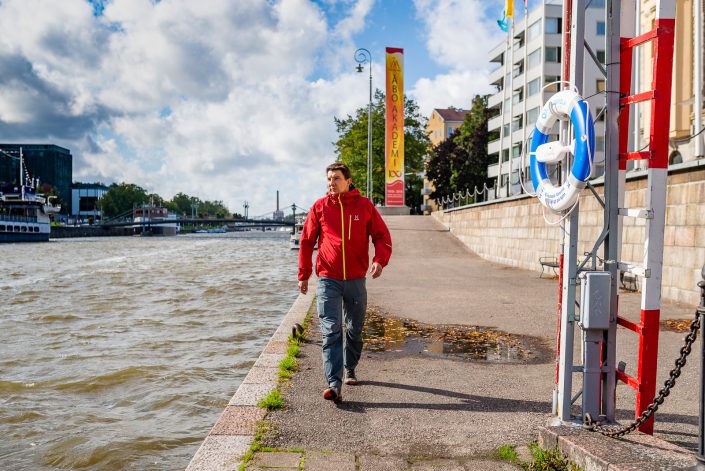
A well-made shell jacket is built to last
By durable quality, we mean more than sustainable production methods. We also mean a product that lasts a long time. Over the years, that long service life makes up for a higher price at the till.
It's also no fun when kit fails while you're using it. Picture yourself on a long trek when your shell jacket rips, the zip breaks or the membrane gives up. A long-lasting shell jacket is durable quality at its best. It keeps going year after year and may even find a second owner.

Shell jacket care
Look after a well-made shell jacket and it will serve you for a long time. Always check the manufacturer's care and washing instructions, but here are some general guidelines.
The outer fabric of a shell jacket has a water-repellent treatment, so a new jacket beads water well. Over time, though, wear and washing break the treatment down. It's worth renewing the treatment regularly, for example with Nikwax TX.Direct Spray-On. The treatment then needs reactivating with heat. A tumble dryer or an iron on a low setting both work.
Wash your shell jacket regularly too. The membrane's microscopic pores easily get clogged with dirt and skin oils, and breathability suffers as a result. Use a liquid detergent without bleaching agents. Nikwax, for example, makes a wash designed for exactly this job.
Come and try one on in our stores. Our outdoor specialists will help you find the right shell jacket for you. You can also ask for advice online, for example via the chat in our online store!
Read more:
Our picks
- Rab Men's Namche GTX Jacket – durable Gore-Tex jacket for hiking: men’s 412 g, Gore-Tex ePE, 28,000 mm hydrostatic head, breathability RET < 13, pit zips
- Marmot Men's Waypoint GTX Jacket – versatile jacket for town and trail: men’s 466 g, Gore-Tex, 28,000 mm hydrostatic head, pit zips
- Rab Women's Downpour Trail Light Jacket – ultralight backup jacket for the pack: 175 g, Pertex Shield, 20,000 mm hydrostatic head