What to eat on the trail — the basics of outdoor meals
Good provisions and tasty food are the cornerstones of a successful trip. On a short outing, the lunch break is often the highlight. On a multi-day hike, it takes some planning to pack food that is light, keeps well and gives you enough nutrition.
TOP tips for eating outdoors
- Get the right kit together: you'll need a heat source (camping stove or open fire), a pot, a bowl and a spoon. In winter, a vacuum flask is especially useful.
- Freedom to cook anywhere: a camping stove makes you self-sufficient, so you don't have to rely on campfire sites.
- Get creative on short trips: weight matters less, so you can cook almost anything, including fresh vegetables and other simple dishes.
- Cooking as a group adds to the experience: split the dishes between you and it's easy to put together a proper meal, and eating together is half the fun.
- Plan your hiking meals in advance: on a hike, plan a tasty, nutritious meal for each day and pack a few extra snacks for the stretches in between.
- Energy and nutrition matter: on a long hike you burn more energy than at home, so your food needs enough calories to keep you going.
- Variety makes it more enjoyable: you can make sauces and sides, and even desserts like pancakes with fresh berries.
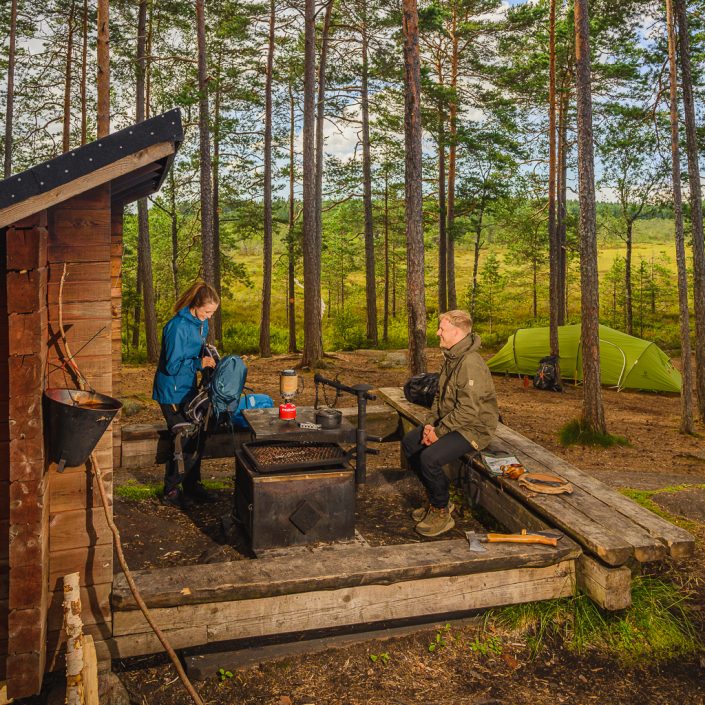
What equipment do I need for cooking outdoors?
To make hot food, you need a heat source. That can be a camping stove or an open fire. A responsible hiker uses a camping stove as their main way of cooking, and it opens up a lot of possibilities. You're not dependent on fire sites or whether they've been maintained, and you're self-sufficient on the trail, so you can stop to eat wherever you like.
We introduce the different types of camping stoves here.
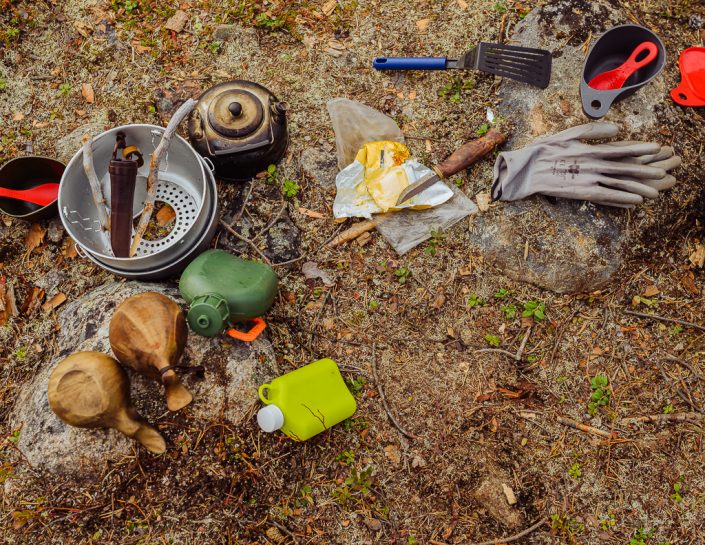
As well as a stove or fire, you'll need a pot, a bowl and a spoon. These will get you a long way. You might also want a frying pan, a coffee pot, a water bottle, a knife, a spatula, a bottle for oil and a kuksa cup. In winter especially, vacuum flasks are very handy.
To light an open fire, you'll also need fire starters, and firelighters can sometimes help. You rarely need to carry an axe, as maintained fire sites often have chopped wood or a tool for splitting it. Still, it's nice to have your own axe – there are times when it comes in useful.
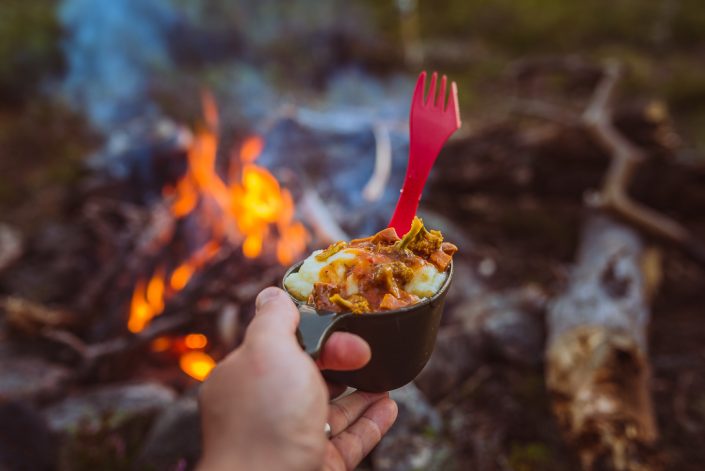
A simple bowl and spoon are usually all you need to eat. If you're heading out on a long hike, pay attention to their weight.
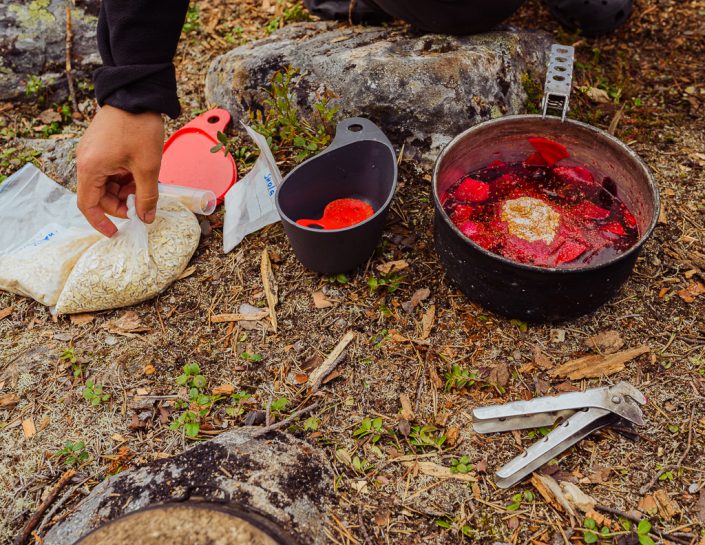
When you're heating more than just water, you'll need a pot or two. You can warm a sauce in one while mashed potatoes cook in the other. For one person, a pot of around 1 litre is usually enough; for two, you'll often want something bigger. You'll usually also need a pot grip that fits, so you can move the pot when it's hot.
A good combination to start with is a set of Trangia pots, which nest one inside the other. There are also sets that include cutlery and even a stove in the same package.
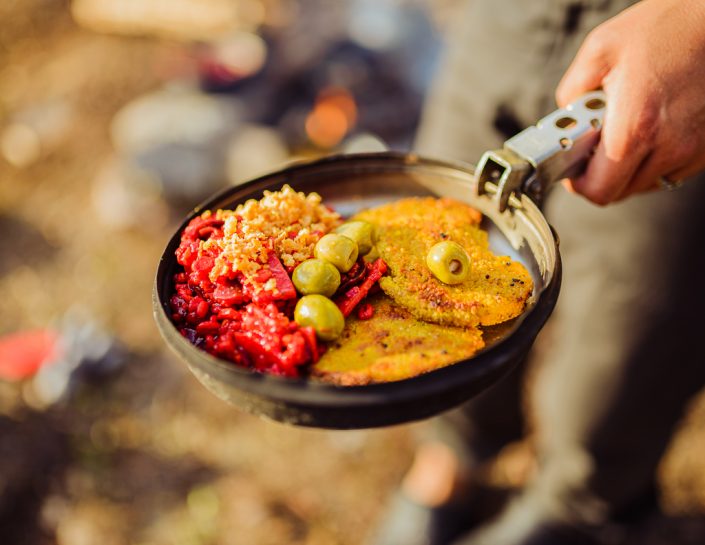
On many brands' pots, the lid doubles as a frying pan. These are usually thin metal – they'll do the job, but a proper cast-iron frying pan gives a completely different result.
Food tips for short trips
On short weekend trips and day hikes, you don't need to worry as much about the weight of your kit and food. Your imagination is the only limit, and practically anything you cook at home can be made outdoors too. Sometimes it just takes a bit of creativity and coming up with your own versions.
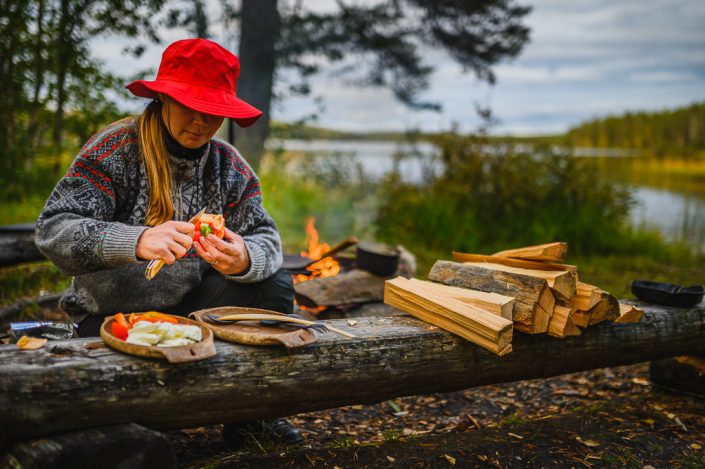
When weight isn't a big concern, you can bring fresh vegetables and other easy food that's quick to prepare.
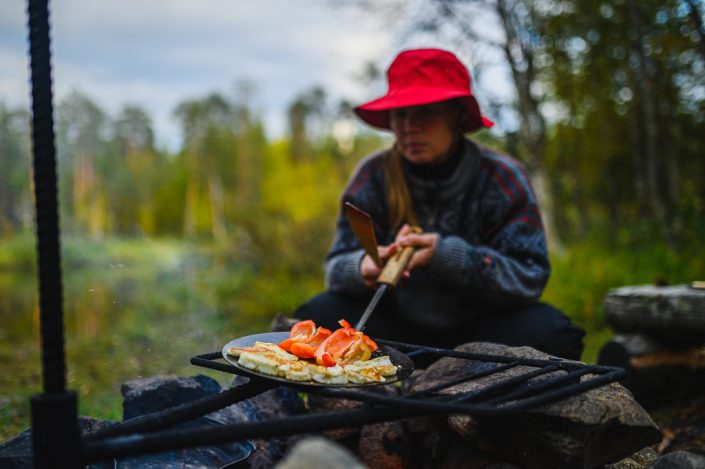
A cast-iron frying pan turns out tasty food, and you can eat just as you would at home. Pictured: the Muurikka Leisku pan.
You can buy ready meals to heat up or cook from scratch. In a group, outdoor cooking takes little effort – give everyone a different dish and you can really treat yourselves.
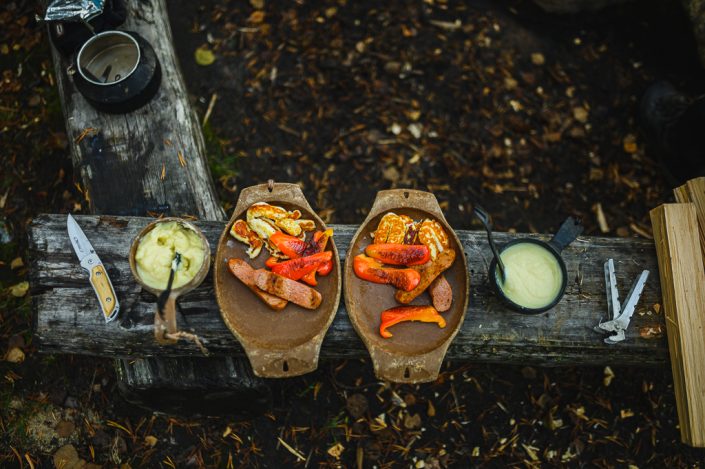
Food tastes better from nice tableware, and it adds to the atmosphere.
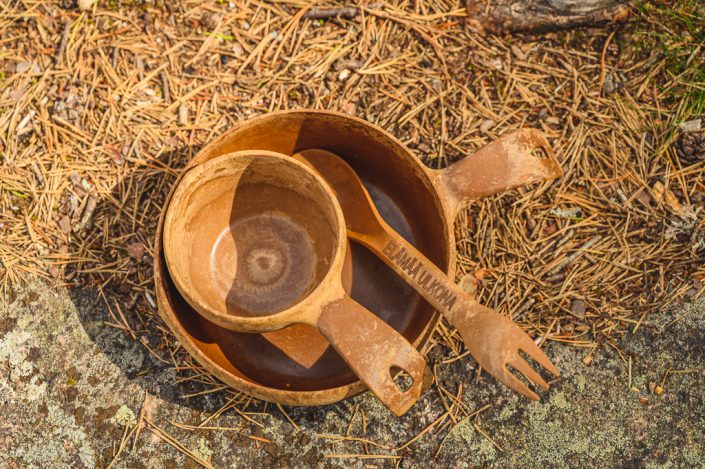
When weight doesn't matter, you can carry heavier tableware. Kupilka makes durable, wilderness-style tableware that's also easy to clean. Pictured: the Scandinavian Outdoor Festive Set.
Light but energy-dense hiking food
For a multi-day hike, it's worth spending more time planning your meals. Tasty, nutritious hiking food keeps your energy up, helps you recover and keeps your spirits high.
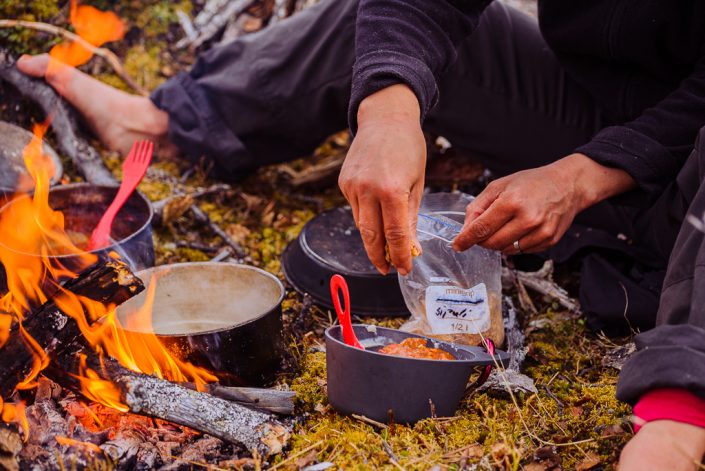
Plan each day's food carefully, pack a little extra and bring snacks for the stretches between stops – that way you won't run out.
On a demanding hike your energy needs go up, and you can burn considerably more than you would at home. You also burn more in winter, as your body works to keep itself warm. Energy needs vary a lot from person to person – anywhere from 2,500 to 6,000 kcal a day.
It's also worth keeping an eye on your protein intake. A common rule of thumb is 1 g of protein per kilo of body weight. So someone weighing 80 kg would need at least 80 g of protein a day.
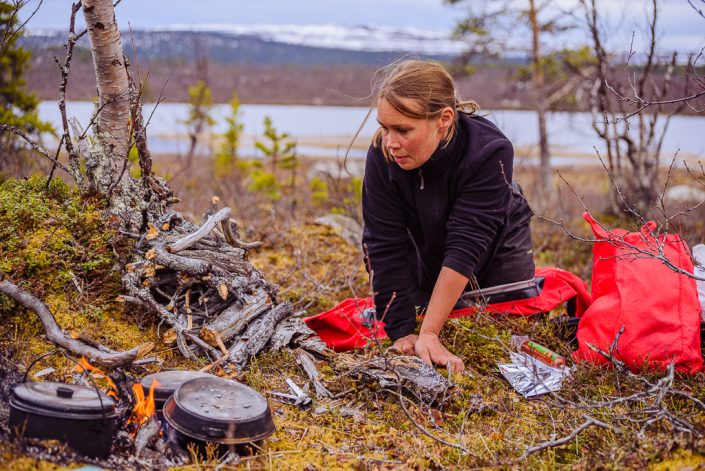
With hiking food, think about weight, shelf life and of course taste, as well as energy. Many vegetables weigh just 10% of their original weight once dried. The easiest way to pack food for a hike is to make up ready portion bags for each day. Dried root vegetables, wholegrain pasta, soya products, pulses, seeds and nuts all add plenty of flavour.
Not all meats and fats keep long in warm conditions. These days it's easy to find plant-based alternatives that taste just like meat.
Ready-made outdoor meals also work well on a hike. They're good as a back-up and when you need a quick meal. You can also tweak them to suit your own taste.
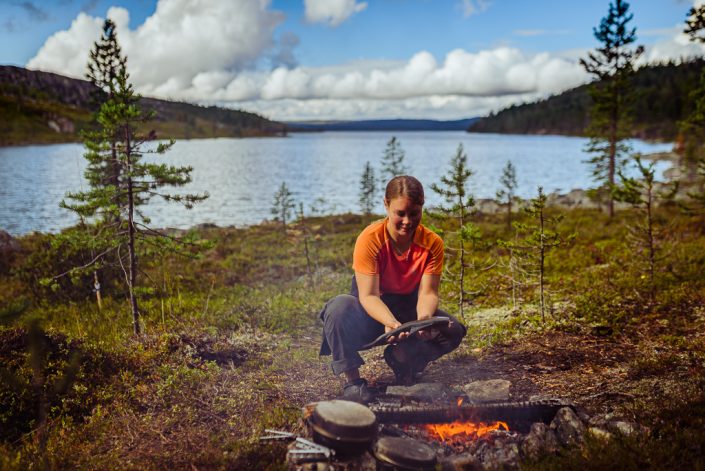
Nature itself offers plenty to eat, too. Fishing is a handy source of protein. The boldest hikers trust their catch so much that they rely on fish for part of their protein, while for others it's simply a nice bonus if they're lucky enough to land something.
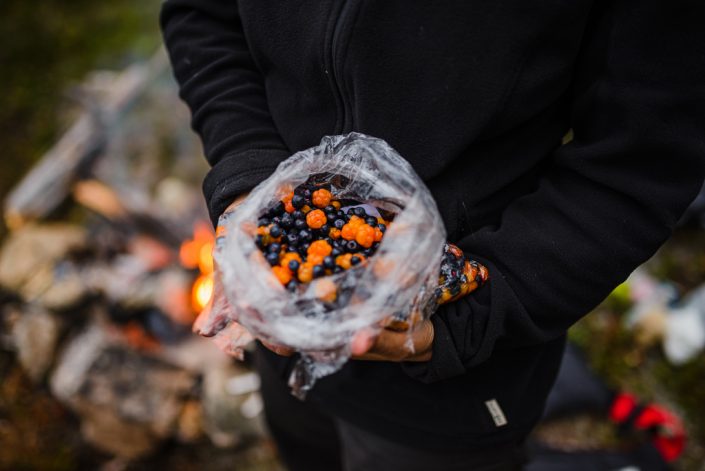
In season, berries and mushrooms are easy to forage. Mushrooms make a tasty addition to hot meals, and berries turn desserts into a vitamin boost.
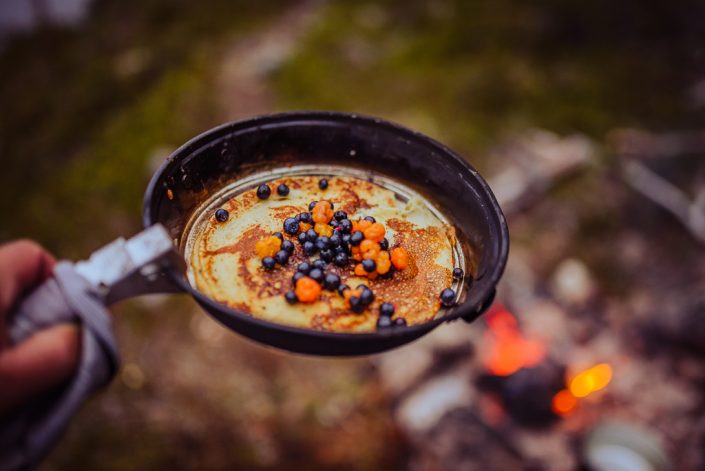
Ready-made pancake mix (just add water) weighs very little and makes a great dessert with fresh berries.
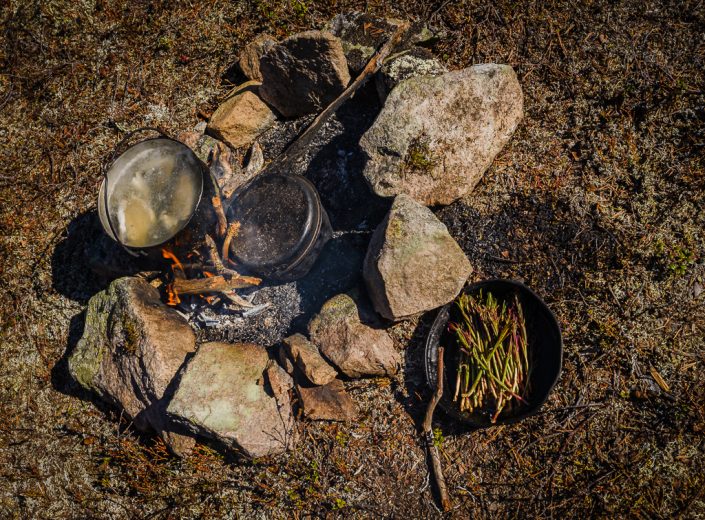
Spring is the season for wild herbs, and many plants make a good addition to a meal. Learn them properly beforehand – young shoots can look very similar, and some plants are poisonous. Pictured: rosebay willowherb and fresh fish, with mashed potatoes cooking in the pot.
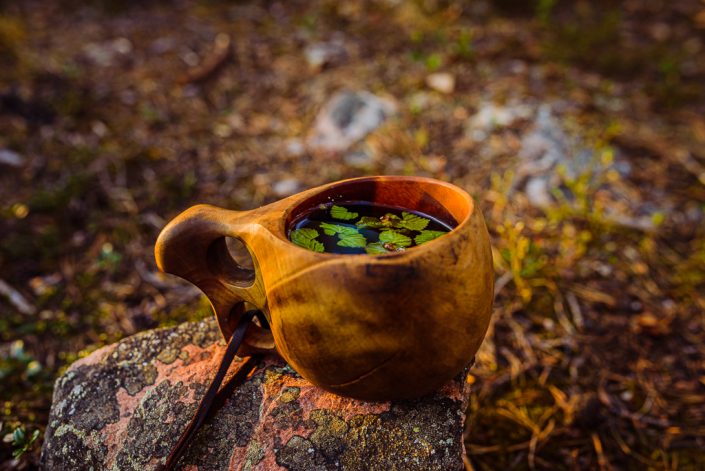
Lots of fresh leaves make a good infusion.
Where can I get water on a trip?
You rarely need to carry all your water with you. In the more densely populated south of the Nordic region, drinking untreated water from lakes and streams is a bit of a risk if your stomach isn't used to it – though if it is, you can find clean water there too. Even so, the general recommendation is to treat your water.
You'll find our water purifiers here. Treating water is very simple – use a filter or purification tablets. Follow the instructions carefully. Note: water filters rarely tolerate freezing temperatures.
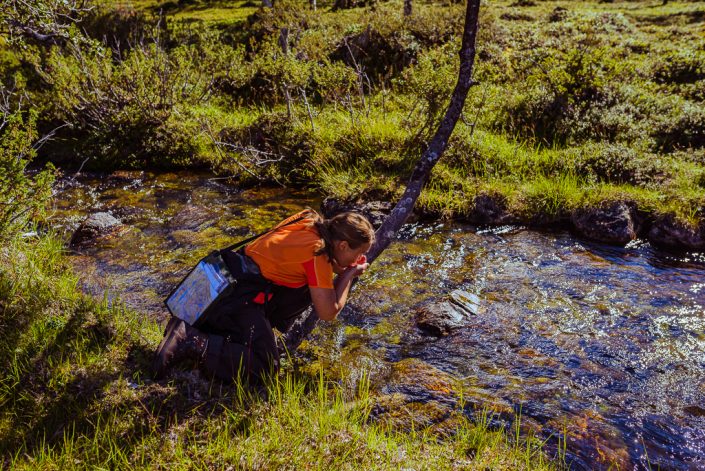
Further north, water is often clean enough to drink straight from the source. In a warm summer, streams can dry up, and it's worth checking for blue-green algae in advance.
On a short trip, though, it may be easiest to bring your water with you in a collapsible water carrier or a water bag. In winter you can melt snow. Snow does collect pollutants, so don't take it from near busy roads. Meltwater also lacks the minerals found in natural water sources, so it doesn't hydrate you quite as well.
Washing up outdoors
Washing up on the trail doesn't get talked about nearly enough. Don't leave food scraps in nature for animals to eat. Bury them, or use the composting facilities you'll find at some outdoor toilets.
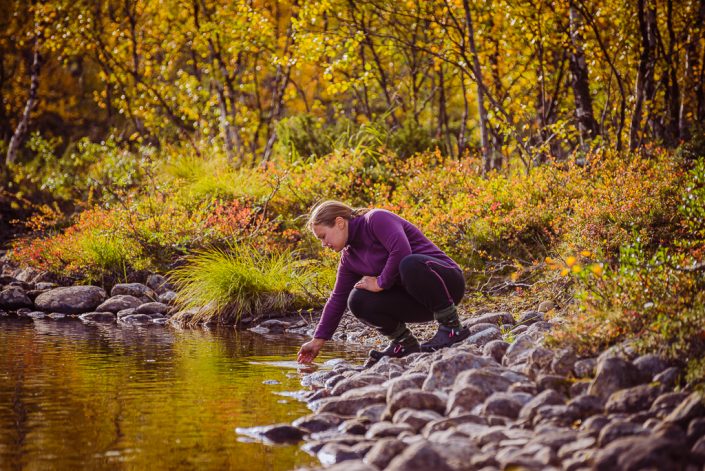
You usually don't need washing-up liquid, but if you do, make sure it's as environmentally friendly as possible. Boiling water works well instead of detergent, and a twig, a bundle of brush or some sand can stand in for a washing-up brush.
NOTE! Never wash your dishes directly in a lake or stream! Collect the water you need, heat it and do the washing up well away from the water source. On popular trails especially, you'll see grim leftovers from other hikers at the water collection points.
Leave no trace
The most important skill when you're out in nature is respecting it and leaving no trace. It goes without saying that you don't drop litter – but many people are surprised that even maintained trails usually have no bins. That's because emptying them is expensive and ultimately unnecessary: you can easily carry your empty packaging back out with you.
When it comes to cooking, leave unnecessary packaging at home and pack your ingredients in reusable boxes and bags. Bring a rubbish bag too – a waterproof, airtight dry bag does the job well.
P.S. That metal bucket at fire sites isn't for rubbish – it's for putting out the fire.
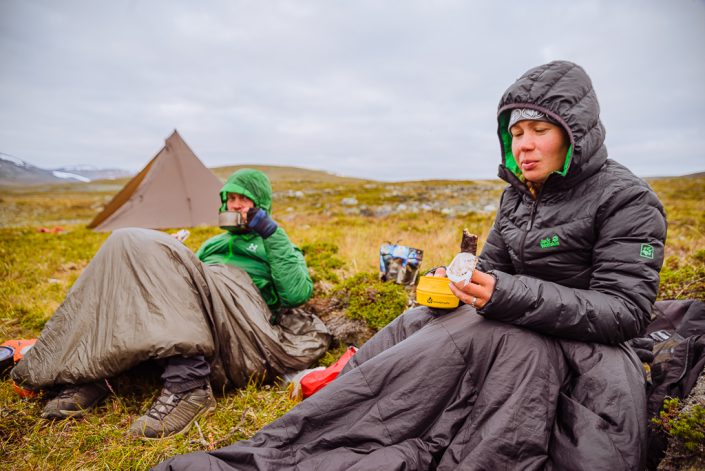
Get creative with your cooking and come up with outdoor versions of your favourite dishes. With a little effort, you can make some amazing food on the trail.
Enjoy your meals on every trip and hike!