Lightweight Hiking — Expert Tips and a Kit List for Your Trip
Hiking and trekking are great hobbies partly because everyone can do them in their own way. There's no right or wrong approach, as long as you follow the rules of the area you're visiting and don't damage nature. In this guide, we explain what lightweight hiking is and compare packs of different weights.
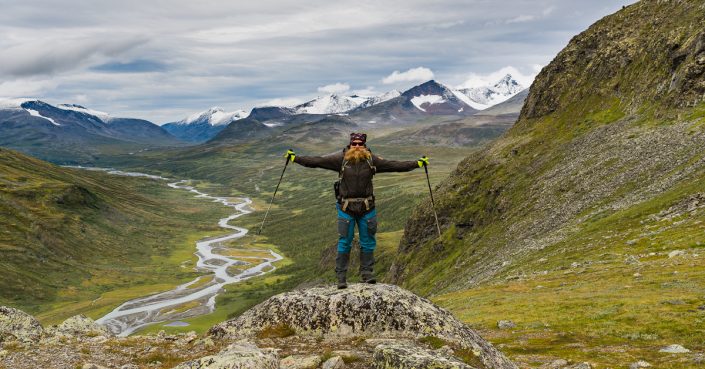
In the Nordic countries, we traditionally have a strong connection to nature, and people often head out on a trek to enjoy the silence of the wilderness. In the United States, where ultralight hiking has grown in popularity at record speed, thru-hikers have mostly aimed to cover the longest possible distances. Travelling light has been practically the only option.
Lightweight hiking can mean counting every gram to get your pack as light as possible. Or it can simply mean cutting weight wherever you can do so without major compromises. Counting grams isn't always the same thing as lightweight hiking.
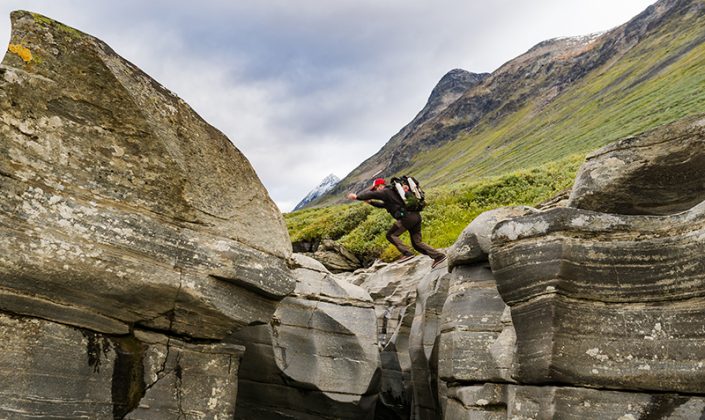
Moving with a light load is faster, easier and often safer than carrying a heavy pack.
Lightweight hiking comes with plenty of myths: that it's expensive, dangerous and uncomfortable, and that lightweight gear won't stand up to use. That doesn't have to be the case. Today's lightweight outdoor gear is well made, prices have come down as demand has grown, and in the end it comes down to whether you'd rather carry a heavy pack or a light one. Most people, we suspect, would choose the light one.
Lightening your kit doesn't necessarily mean giving up comfort – it can even work the other way round. With lighter gear, you have room for other things, such as food and drink, camera equipment or fishing gear. Buying a lightweight three-person tent for one person, for example, also adds a lot of comfort to life at camp.
TIPS FOR LIGHTENING YOUR PACK
When it comes to packing, you'll often hear the term base weight. This means the weight of your pack without consumables such as food, drink and fuel. In this blog post, we focus on reducing that base weight.
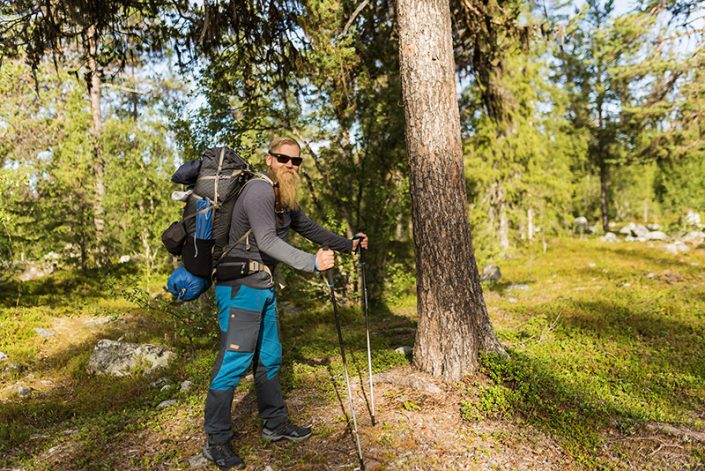
Caj setting off for two weeks in Sarek National Park with an Exped Lightning 45 lightweight pack on his back.
Lightening your pack usually starts with experience. After a few treks, you start to notice the gear you've hauled around for nothing – and anything you didn't use is best left at home. Many people are still surprised by how much individual items weigh, and how many options there are for swapping a heavy garment or piece of kit for a lighter one. A good way to get a handle on this is to weigh all your outdoor gear and put it into a spreadsheet, using Excel or Google Sheets, for example (there are also dedicated apps online). You'll quickly see where the weight in your pack actually comes from.
It all starts with the pack itself
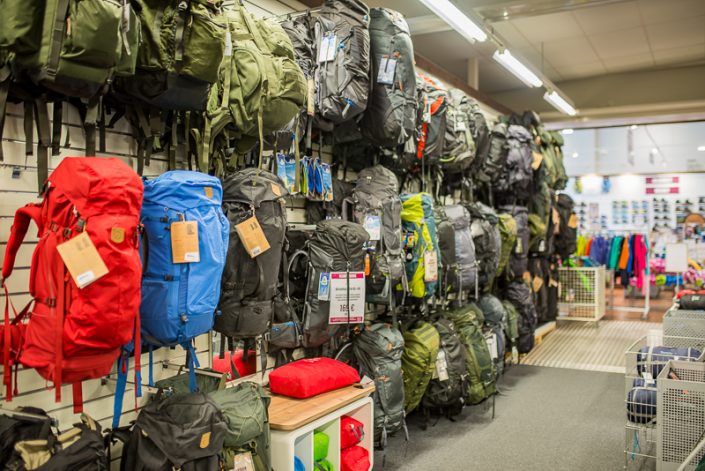
The heaviest item a hiker carries is often the pack itself. The pack may also be too big, and any empty space tends to get filled with something you don't need. Choose a pack size that fits everything you need, and no more. That's tricky at first: when you're just starting out, you have no clear idea of what you'll need to bring, and beginner gear is often bulky – which forces you into a big pack.
Here you'll find our lightest packs.
Experienced lightweight hikers use packs under 50 litres on treks of one to two weeks. This does, however, require all your gear to be light and compact.
Choose your shelter carefully to suit your destination and style
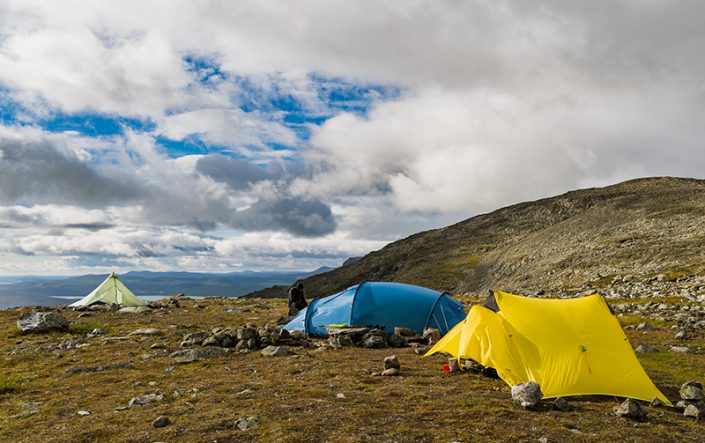
There's a wide range of lightweight shelters at all kinds of prices. Safety, though, is not the place to cut corners.
Safety should be your first criterion when choosing a shelter. In mountainous areas, the wind sets its own requirements, and the season sets others. After that, you can start balancing weight, price and comfort. We've written about choosing a tent before: Mikko's tips for buying a tent.
Here you'll find our lightest shelters.
Work out a tent's weight per person sleeping in it. The lightest tents easily come in under 1 kg per person. Sometimes there's a good reason to carry a heavier tent; other times there's no point lugging an overly heavy shelter. It's a call you need to make before every trip. Many hikers have several tents and tarps at home, so they can pick the best option for each trip.
A warm sleeping bag means a good night's sleep
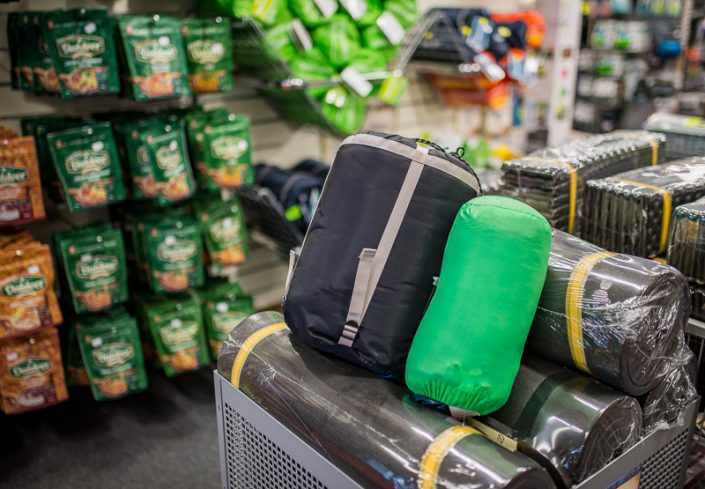
The most obvious difference between synthetic and down sleeping bags is pack size. A synthetic bag can take up almost four times the volume of a down bag with the same warmth.
Don't compromise on your sleeping bag's insulation. The best way to save weight and space is to choose a down-filled bag. Down insulates better than synthetic fill, and its fill power (FP) tells you the quality of the down inside. The higher the FP rating, the higher the quality. A sleeping bag filled with high-quality down is light, but you'll see that in the price too.
Here you'll find sleeping bags and sleeping mats for lightweight hiking.
Pay attention to a sleeping bag's comfort temperature. This is often given separately for women and men, and it tells you the temperature at which the average person can still sleep comfortably. Bear in mind, though, that everyone feels the cold differently. Besides the bag itself, other factors affect how warm you'll be, such as your sleeping mat's R-value, wind and wind chill, what you're wearing, how cold you were when you went to bed and how well you ate beforehand.
An inflatable sleeping mat packs down small
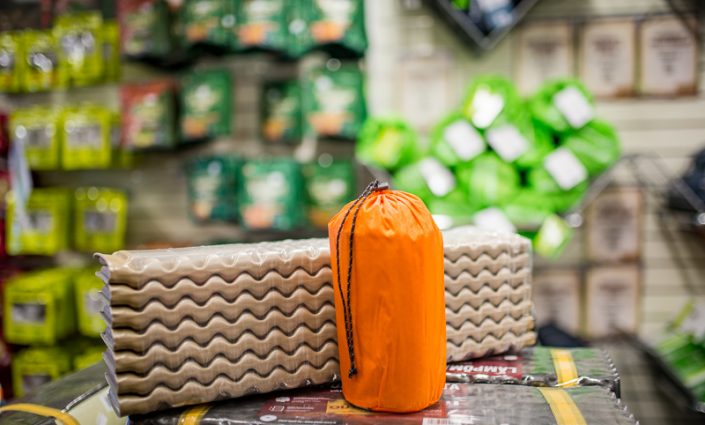
A foam mat and an inflatable mat with almost the same R-value. The difference in volume is huge.
An inflatable sleeping mat packs down smaller than a foam mat and usually offers a better weight-to-warmth ratio. Foam mats have their advantages too: they're cheaper, they can't puncture, and they double as a sit mat.
A sleeping mat's insulation is given as an R-value – the higher the value, the better it insulates. As a rule of thumb, values of 1–3 are strictly for summer, anything over 3 starts to cope in winter, and mats with an R-value over 5 are proper winter mats. As with sleeping bags, the other factors mentioned above also affect how warm you'll be.
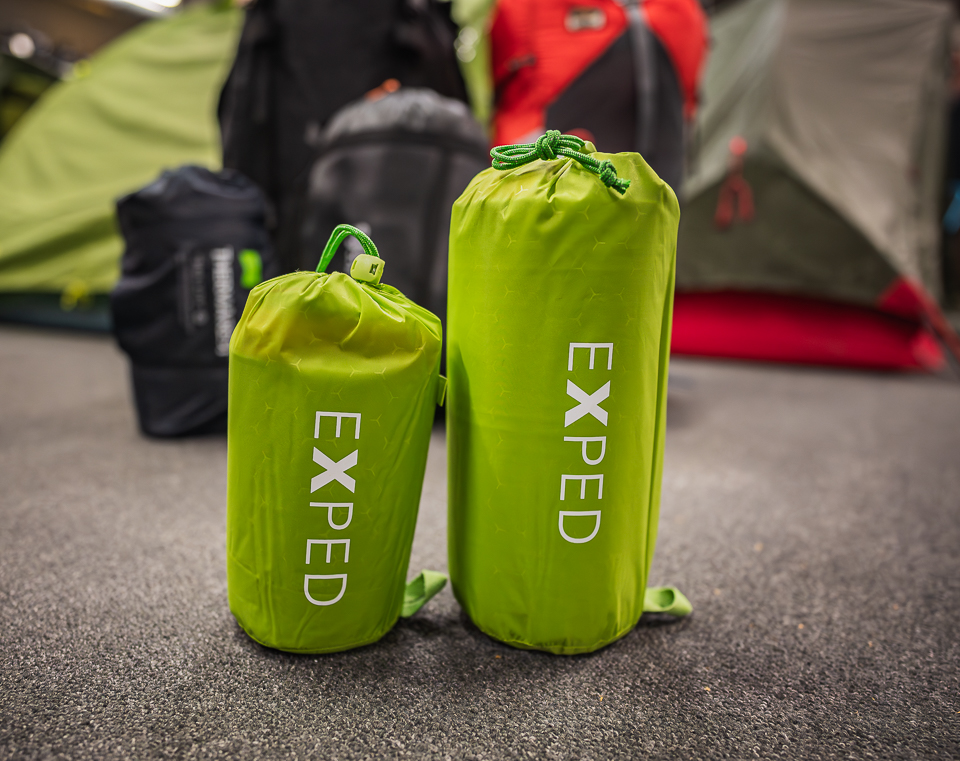
If you get separate sleeping mats for summer and colder-weather treks, you'll save a lot of pack space and a little weight. Pictured: Exped's Ultra 3R M Mummy and Ultra 1R M Mummy.
Think about your own needs before you buy. If you hike all year round, you might want one mat for the whole year – or separate summer and winter mats, so you save weight and space in summer.
Cooking and eating gear
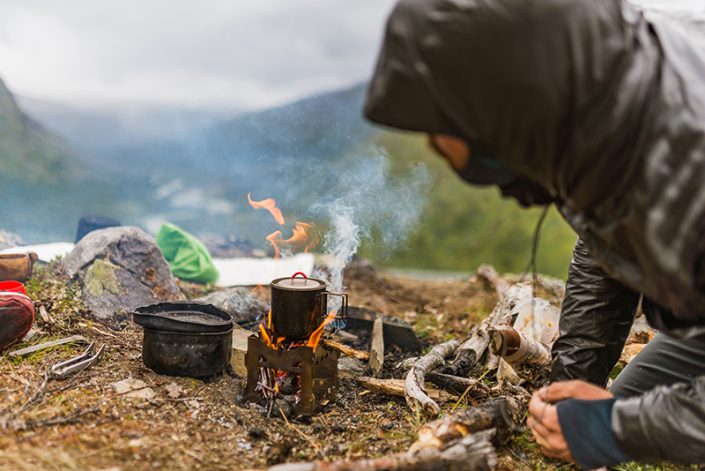
Plan in advance what you'll cook and how. Often you only need one pot for boiling water, but some meals call for two. Either way, match the size and weight of your pots to the trip. The lightest cookware is titanium, which is light but also expensive. Other lightweight materials include aluminium and plastic.
Here you'll find our lightest cookware and eating gear.
There are plenty of stoves to choose from. For summer lightweight hiking, the most popular options are gas stoves and wood-burning stoves. A gas stove is easier and quicker to use and, depending on how much gas you carry, often lighter overall. A wood-burning stove takes a bit more practice and a destination where you can find twigs for fuel. The stoves themselves weigh more than gas stoves, but they take up less space because you don't need to carry gas. Wood-burning stoves now count as open fires, so you can't always use them.
Here you'll find our lightest stoves.
On a trek, one spoon and one bowl to eat from, plus one cup to drink from, is usually enough. If you're hiking solo, you can eat straight from the pot. A wooden kuksa cup is heavy, so it's up to you whether you want to carry one or whether a light, compact folding mug will do the job.
The right clothing is light both in your pack and on your body
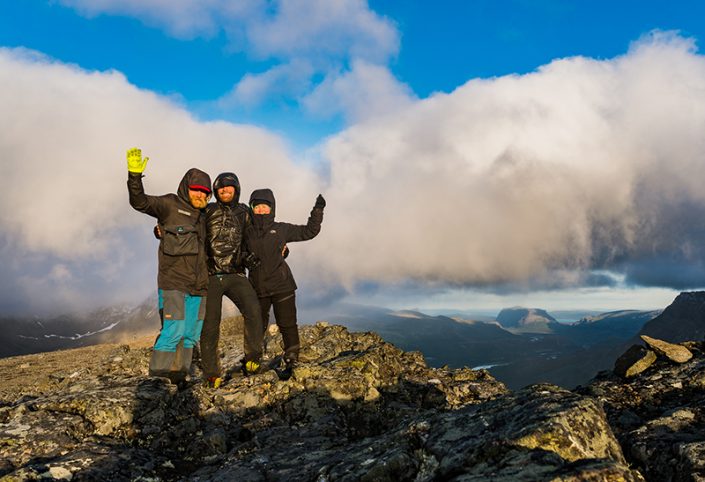
Once you've made your spreadsheet, you'll usually find that clothing is surprisingly heavy. For safety and comfort, though, your clothes need to give you enough protection against wind, wet and cold. In the mountains – whether in Lapland or the Scottish Highlands – it's not unusual for a single trip to bring a heatwave, a walk through snow, a soaking in a downpour and a summit with your beard flapping in the wind.
Here you'll find our clothing for lightweight hiking.
Shell jackets and trousers protect you from rain, while lightweight insulated jackets keep the cold out. Look at the weight and how small they pack down.
A light load means you can wear light footwear
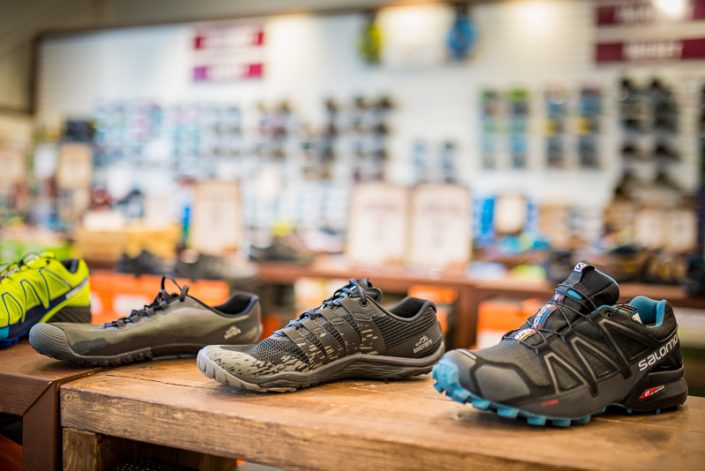
Lightweight hikers often wear lightweight footwear too. A light shoe gives you more agility and a lighter step than heavy hiking boots. If your feet are used to sturdy boots, get them used to a lighter, less supportive shoe on shorter local walks before your trek.
There are two schools of thought among people who wear lightweight footwear. Some choose waterproof shoes and perhaps even waterproof socks, while others prefer more breathable shoes, accept that they'll get wet and dry them out at camp in the evening. Popular choices include hiking shoes, trail running shoes and even barefoot shoes.
Trekking poles help with balance and reduce the risk of injury. They also tend to raise your average speed, help with river crossings, “take” weight off your shoulders, shift some of the strain from your legs to your arms and form part of many lightweight shelters.
Other gear
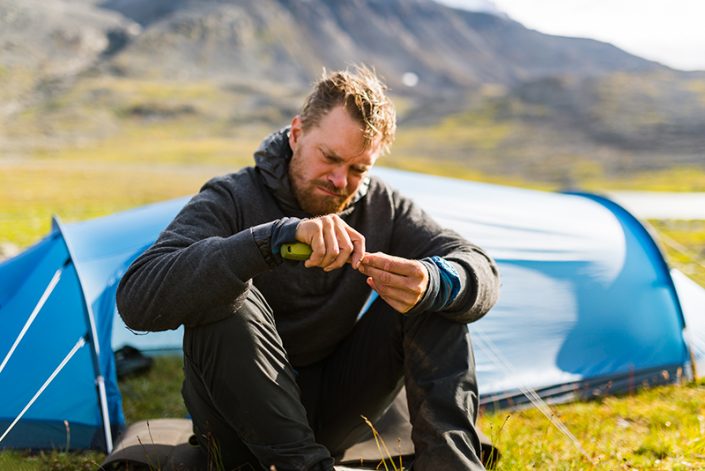
Packs with lots of small pockets tend to collect odds and ends over time, some of them only there just in case. Ask yourself whether you really need it all. The exception is safety gear, such as a first aid kit.
Recommended small items include at least a first aid kit, a knife/multi-tool, a compass, a map, fire-lighting gear, a GPS device, a head torch and a water filter.
YOUR KIT DEPENDS ON THE TRIP
As we said at the start, there's no right or wrong way to hike. To show the differences between styles, we packed two packs from different schools of thought, for two different kinds of trek. We added up the price of each setup and weighed them too.
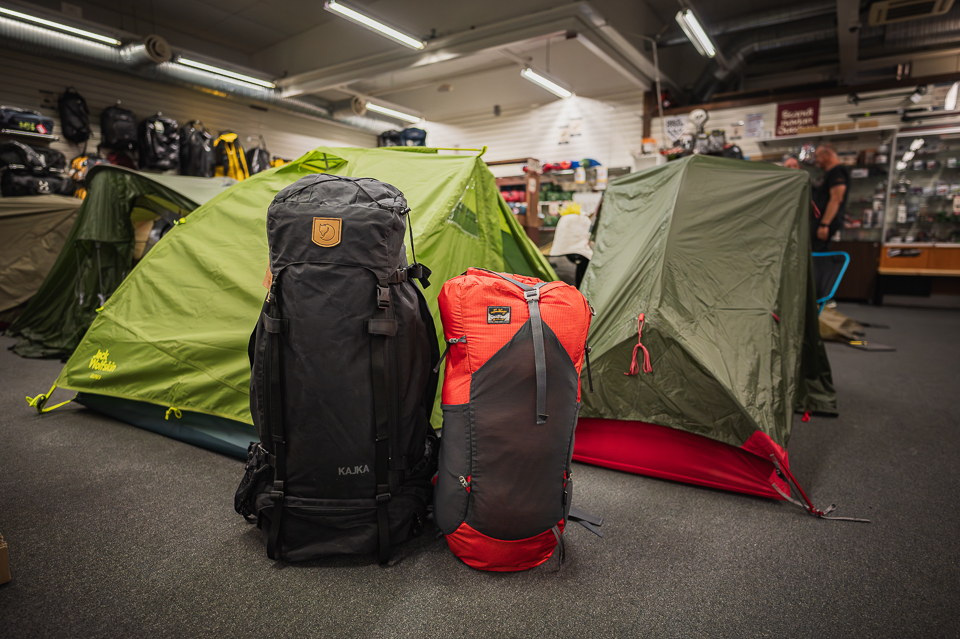
The traditional trekker's kit
Pack: Fjällräven Kajka 85
Tent: Fjällräven Abisko Dome 3
Sleeping bag: Haglöfs Tarius -5
Sleeping mat: Thermarest Trail Lite Regular
Stove: Trangia 27-3 UL GB
Warm layer: Fjällräven Övik Roll Neck Sweater
Rain jacket: Helly Hansen Moss Jacket
Total weight: 11.913 kg Total price: €2,023.90
The lightweight hiker's kit
Pack: Lundhags Padje Light 45 Regular
Tent: MSR Freelite 3 V3
Sleeping bag: Deuter Astro 400
Sleeping mat: Exped Ultra 3R M Mummy
Stove: MSR PocketRocket 2 Mini Stove Kit
Warm layer: Rab Men’s Microlight Jacket
Rain jacket: Rab Downpour Eco Jacket Men
Total weight: 4.477 kg Total price: €1,943
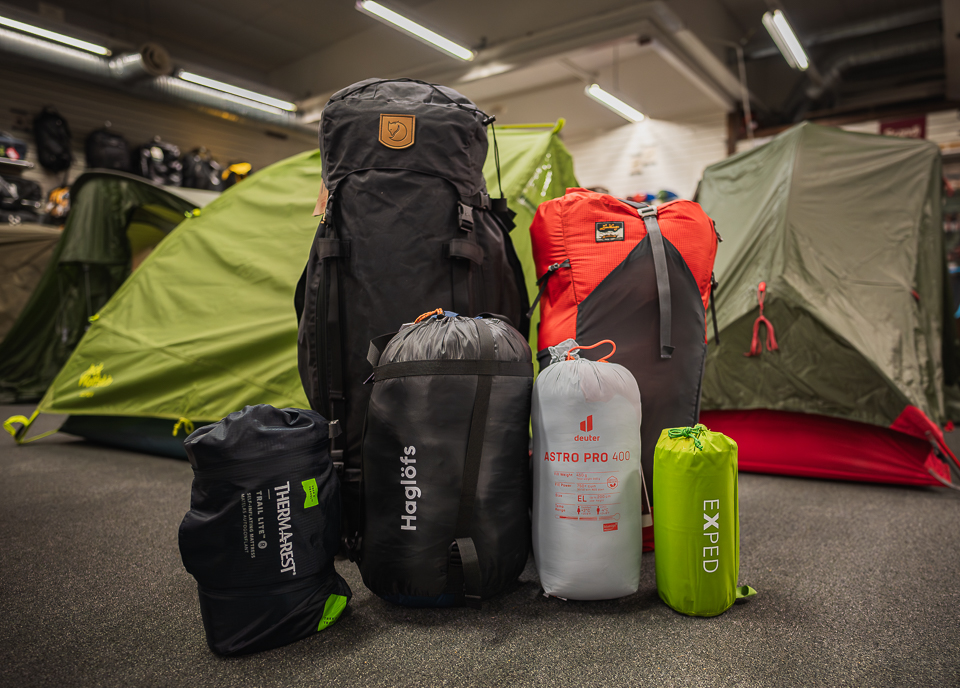
Summary of the kit
Both setups have sleeping bags and mats that are practically equally warm. Both tents sleep three. For cooking, the traditional trekker's kit includes more pots and a frying pan. Neither setup has enough clothing for a long trek, but both include an insulating layer for the upper body and a rain jacket.
In practice, there's barely any price difference between the two. The tent has a big impact on the total – you can swing the price either way with that choice alone. So what's the takeaway? If you're buying trekking gear, you can easily influence the weight of your load with every single item. Add it all up, and the difference quickly becomes very large.
The comparison may not have been entirely fair or scientific, but it should give you an idea of what kind of gear to choose for your own trips. In the end, it's always a compromise in the tricky balance between weight, price and comfort. There's no single right style – we all have our own preferences.
You'll find our lightweight hiking gear in our online store and shops. Have a great summer, and we wish you successful treks and trips – whatever your style!