Tent-buying tips from our outdoor expert Mikko
Our Outdoor Tent Week runs from 30.5 to 9.6.2019 in our stores and online store. With help from Mikko, one of our outdoor experts, we've put together a guide for anyone thinking about buying a tent, covering what's worth considering before you decide.
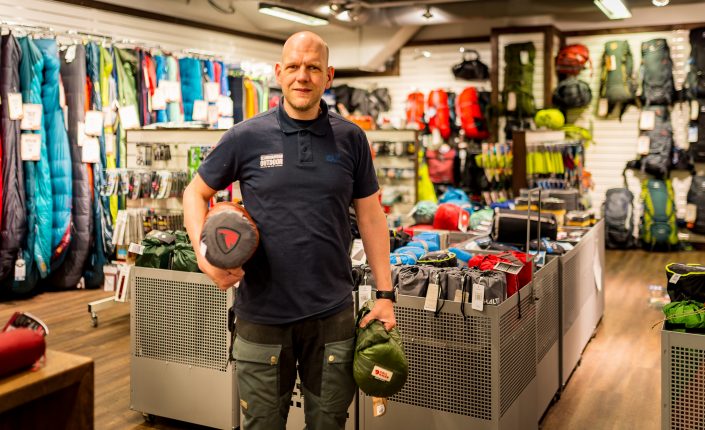
Mikko works at our Hansakortteli store in Turku and is one of our tent specialists. He has plenty of hands-on experience pitching and using our different tent models, so he could easily have filled a much longer article.
MIKKO'S 10 TIPS FOR BUYING A TENT
What will you be using the tent for?
Choose the right tent for the right activity. Our tent range is split into four categories: family and camping tents, trekking tents, hammocks and camp furniture, and tarps and shelters.
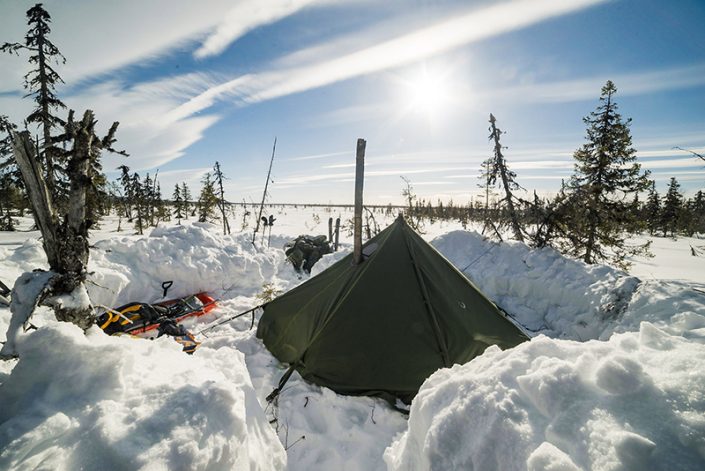
The Hawu 4 tent in Muddus National Park, Sweden.
Family and camping tents suit scouting, families and general group use, such as winter treks, where one larger tent usually makes more sense than several small ones. A big tent also gives you more comfort on a campsite or on basecamp-style trips.
For trekking, though, go for a lighter tent – a heavy one quickly becomes a burden over longer distances. Trekking tents are generally lighter than camping tents and built to handle rougher weather. In this post, we'll focus mainly on tips for choosing a trekking tent.
As alternatives to a tent, we also stock hammocks and tarps, but this time we're sticking to tents.
Tent size – how many people?
One of the most important factors when buying a tent is how many people will sleep in it, as that determines the size. To make this easier, our tents page has handy filters that let you choose by capacity.
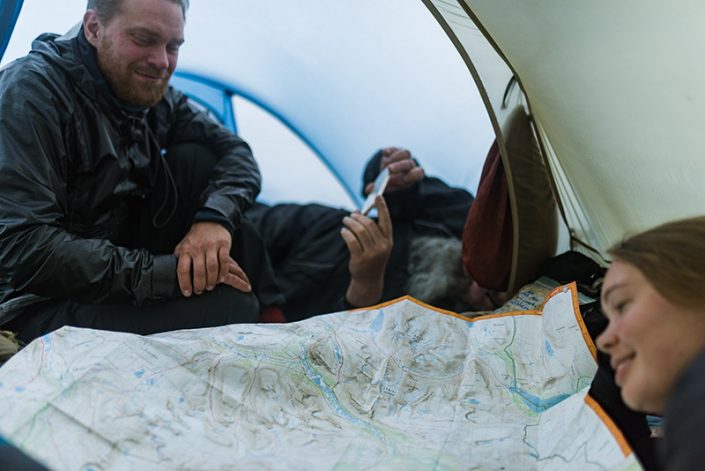
The number of people can vary from trip to trip. You might share a tent with a friend on some treks and go solo on others. In that case, think about whether you'd rather compromise with one tent that covers several situations, or buy different shelters for different trips.
You don't always need a tent rated for exactly the “right” number of people. Many models come in several sizes, and the weight difference between, say, the two- and three-person versions can be very small. So it's worth considering a three-person tent for two: you add a little weight but gain extra space inside, and with it more comfort.
Large or small vestibule?
The vestibule is the porch area at the entrance of the tent. You can use it to store gear, cook, or sit together over breakfast while you wait for the rain to stop.
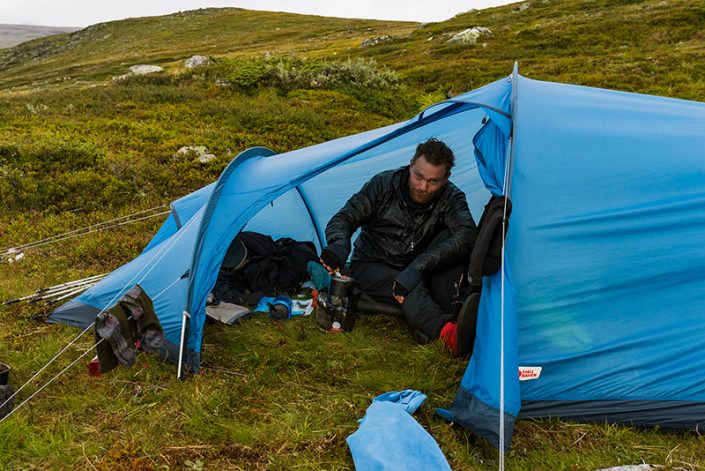
Fjällräven Abisko Shape 3 in Sarek National Park, Sweden.
A large vestibule has room for your gear and enough space to cook carefully. Manufacturers don't recommend using stoves inside a tent, but with good ventilation and careful use, it can be done safely.
Separate inner and outer tent, or both in one?
Dome tents come in two designs. In one, the poles attach to a separate inner tent. In the other, the inner and outer tents are connected, and the poles go through pole sleeves on the outer tent.
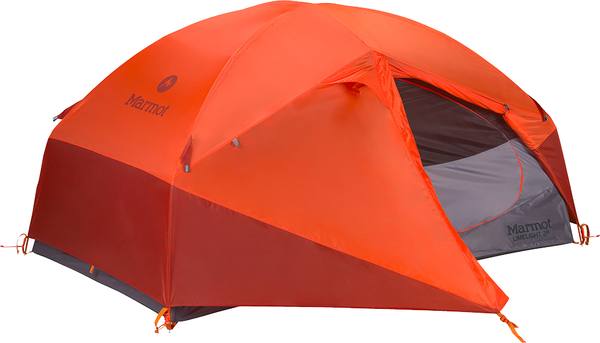
On the Marmot Limelight 2P, for example, the poles attach to the inner tent. You pitch the inner first, then clip the waterproof flysheet over it. On hot summer nights you can use the inner tent on its own for maximum airflow, and it still keeps the mosquitoes out.
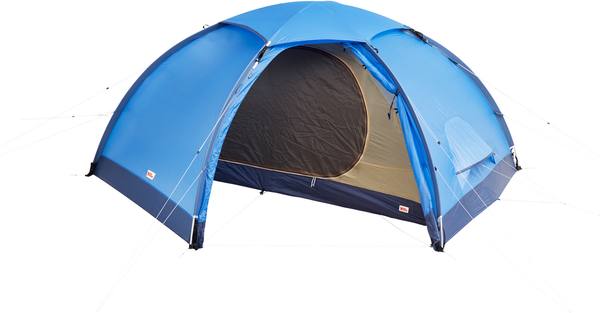
In some dome tents, like the Fjällräven Dome 2, the poles go into sleeves on the outer tent, so the whole tent goes up in one go. That's a small advantage in the rain, as the inner tent doesn't have time to get soaked while you pitch. You can unclip the inner from the outer, but you can't pitch the inner on its own.
In tunnel tents, the poles almost always go into the outer tent.
Tunnel or dome tent?
This is the question people ask most: tunnel or dome? Both designs have their strengths and weaknesses.
Tunnel tents are probably the most popular design in the Nordic countries. They have a large vestibule and a good space-to-weight ratio, and when pitched into the wind with the pegs and guylines firmly secured, they can handle a proper storm. Tunnel tents are fairly long, though, so finding a big enough flat spot at camp can sometimes be tricky.
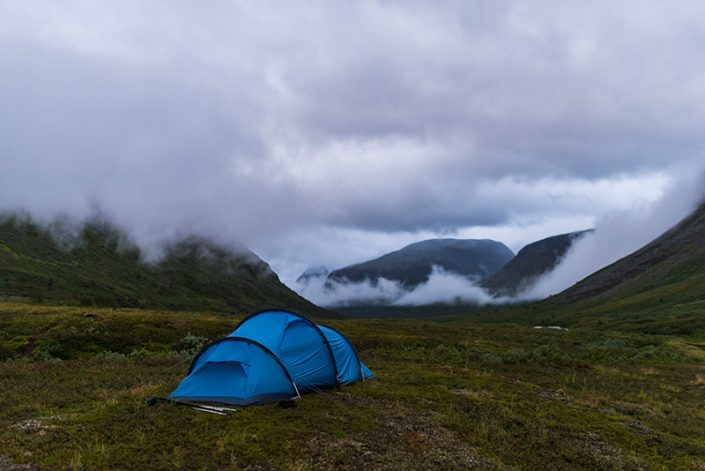
The Fjällräven Abisko Shape 3 tunnel tent held its own in the storms of Sarek.
The advantage of dome tents is that many are freestanding, so you can pitch them without pegs – on bare rock or a wooden platform, for example. Dome tents also often have a smaller footprint, making it easier to find a spot in tight places. Their vestibules are usually fairly small.
Tent weight
Think carefully about weight before you buy. It matters most on treks with long daily distances where you move camp every day. On bike tours and similar trips, a light tent that packs down small also makes a big difference.
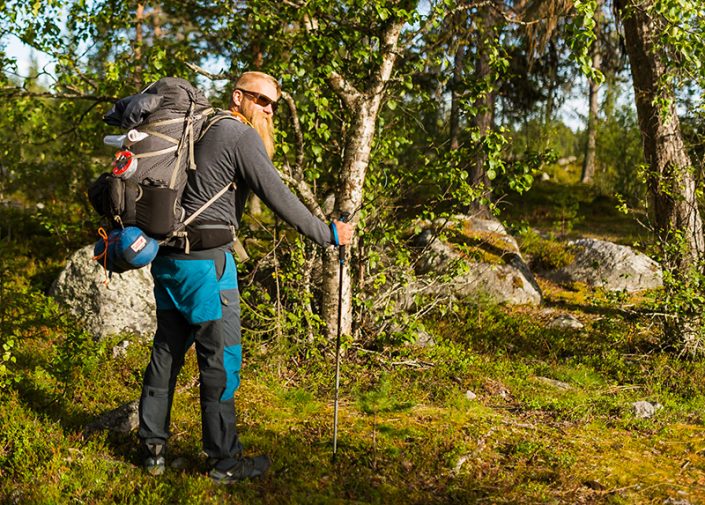
Check the weight of a trekking tent – on long treks, you'll be glad to carry a light one. Pictured: the Fjällräven Abisko Shape 3 strapped under a backpack, without poles.
You'll find our ultralight tents in the lightweight hiking section.
All-season or summer tent?
If you'll use your tent all year round, consider whether you want one tent that also works in winter, or a lighter tent for summer plus a separate one for winter.
Your budget
When buying a tent, remember that paying a bit more up front can make more sense in the long run. If you use your tent a lot, a cheaper one may not last as long – or you end up disappointed, buy a new one, and the old one sits on the shelf gathering dust. On the other hand, if you only camp a few times a year, there's probably no need for the most expensive tent on the market.
Pitching and the small details
Every tent pitches differently. Two very similar-looking tents can go up at noticeably different speeds. Tents have lots of small details in the guylines, doors, zips and ventilation – and when you're tired after a day on the trail, any extra fiddling gets irritating fast.
Once you've pitched a more expensive and a cheaper tent of a similar design a few times, you'll quickly notice that beyond durability and build quality, there are plenty of small things that justify the higher price.
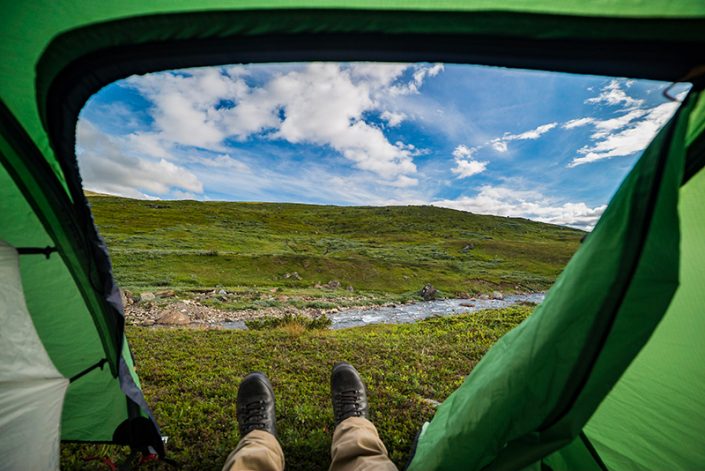
Tent poles
Tent poles are made from three different materials. The cheapest tents, mainly meant for campsites, usually have fibreglass poles. Fibreglass isn't the most durable option, it's often impossible to fix on the trail, and once broken you'll need to buy a new pole.
Trekking tents usually have aluminium poles, which handle more wind and are lighter than fibreglass. An aluminium pole can be repaired on the trail.
Really lightweight tents use carbon fibre poles. They're more expensive, but also durable.
Other things to bear in mind
You can extend your tent's lifespan with careful use and proper care. Always clear out dirt and debris when packing up, and make sure the tent is thoroughly dry before storing it at home. Some tents use cotton thread in the seams, which needs to get wet and swell before the seams become waterproof.
For that reason, don't apply Seam Sealer to a new tent's seams – but on a used tent, it's worth resealing the seams at some point.
Keep an eye on the zips so that dirt, sand or mud doesn't get caught in them. Give them a clean every now and then – an old toothbrush works well.
We also stock a wide range of tent accessories, and some tents have optional extras such as footprints. A footprint gives you a tough groundsheet under the tent that protects the floor on rocky or stony ground and helps keep moisture out on really wet sites.
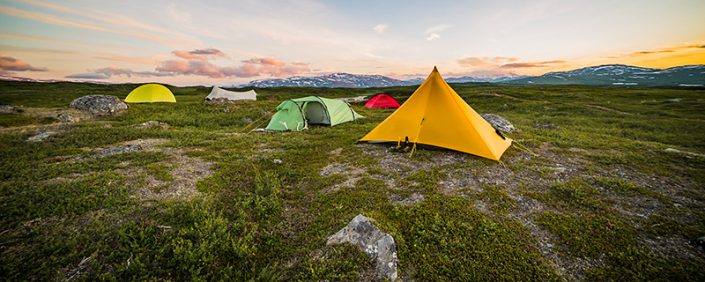
There are lots of different tents on the market at all kinds of prices. Choosing one can feel daunting at first – that's when it pays to ask our outdoor experts. Our staff in store are always happy to help you find the right tent.
Welcome to our online store and stores!