What on earth is a hydrostatic head rating?
With many clothes, tents and other gear, you'll come across a hydrostatic head rating. It's a value measured in a laboratory that shows how waterproof a fabric is. In the test, water is pressed against the fabric at increasing pressure, and the pressure at which water starts to seep through is recorded. This figure is then converted into millimetres – the height of a column of water, in millimetres, that would produce the same pressure. So even though it involves water and millimetres, it's not the same as the millimetres of rainfall in a weather forecast.
Hydrostatic head ratings
- 28,000 mm – For clothing in demanding conditions, where the fabric gets compressed (e.g. carrying a backpack, kneeling on wet ground).
- 10,000 mm – For shell jackets used on lighter hikes
- 5,000 mm – Enough for clothing used for casual outdoor activities and the occasional shower.
- 3,000–5,000 mm – Typical for trekking tent floors.
- 1,500 mm – A sufficient rating for a tent flysheet to keep the rain out.
- 1,200 mm – A rating you may find on ultralight tent floors.
Hydrostatic head in clothing
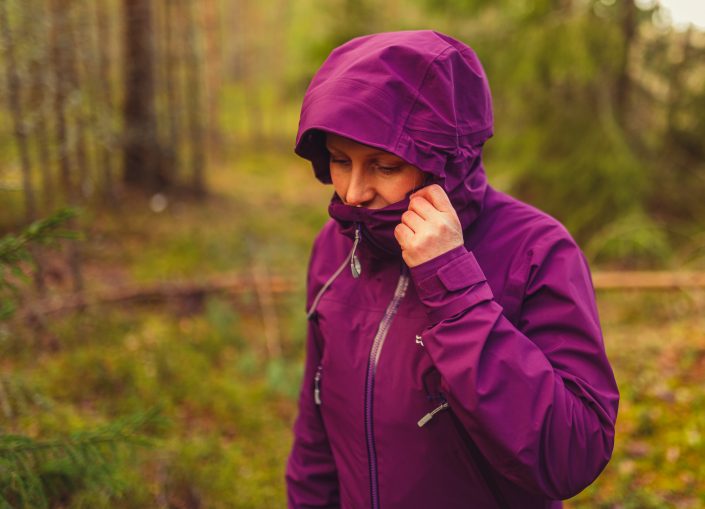
In clothing, a rating of 5,000 mm works for casual outdoor activities and occasional showers. 10,000 mm is suitable for hiking, for example, but long spells of heavy rain may cause problems. Trekking brings more demanding situations: when you're carrying a backpack, rainwater gets pressed between the shoulder straps and your jacket. The same goes for kneeling on wet ground or sitting on a wet bench – the fabric has to withstand far more than usual. In these situations, and in persistent rain, the 28,000 mm rating typical of a Gore-Tex membrane is no exaggeration. Gore-Tex is also known for keeping its performance with use and repeated washing.
Hydrostatic head in tents
Tent and tarp fabrics face a slightly different challenge from clothing. A flysheet never gets compressed, so even 1,500 mm is a perfectly good rating. 5,000 mm is unusually high. Tent floor ratings vary a lot: if you choose your pitch carefully, the 1,200 mm floor of an ultralight tent can be enough, especially in good weather. In changeable conditions, though, the 3,000 – 5,000 mm floors of trekking tents are the safer choice. For some tents you can buy an extra groundsheet, known as a footprint, which protects the tent floor and adds an extra layer of waterproofing.
Read more:
Waterproof shell jackets in our online shop
Waterproof shell trousers in our online shop
A guide to waterproof Gore-Tex products