Studded running shoe comparison and winter runner's guide
Have the slippery winter conditions caught you off guard these past few days? Looking for grip on solid ground, only to feel your foot slip time after time? Have you been searching for shoes that let you run safely without worrying about falling? In recent years, studded running shoes have become the go-to footwear for winter runners, with enough grip to get you through even the worst icy conditions. No more tiptoeing across black ice. You can enjoy your runs in winter weather too. Below you'll find a comparison of different studded shoes, plus tips on winter running gear.

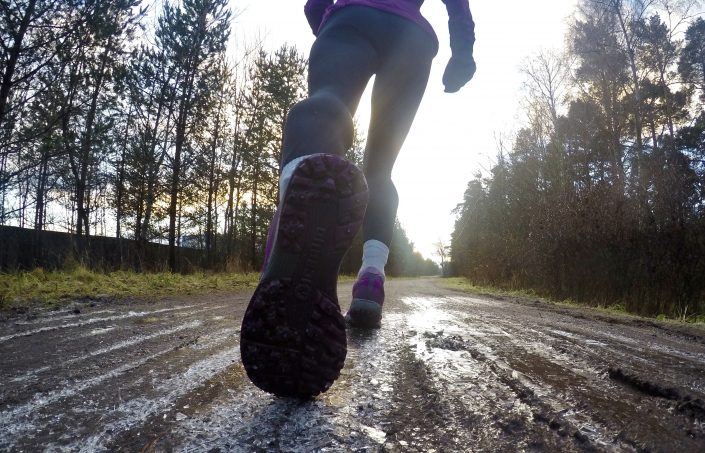
Studded shoes are worth getting if you run on even slightly slippery surfaces. With studs underfoot, you don't have to tiptoe and can keep your stride relaxed. That way you avoid direct injuries as well as the muscle tightness and overuse injuries that come from an unnatural stride. The quality of studded shoes has improved enormously, so one pair will see you through several winters.

Start by working out what you actually need from a studded running shoe. Do you want something lightweight, or are you after a well-cushioned model? Is a smooth heel-to-toe roll important to you, and what kind of last suits your foot? Do you sometimes run in wet conditions? If so, a GORE-TEX shoe might be a good choice. The table below lists the studded running shoes available at Scandinavian Outdoor and their key features. There are also models designed more for walking, which you can find here.
| Icebug DTS3 Bugrip GTX | Icebug Orbit 2 BUGrip GTX | Salomon Speedspike CS | Salomon Spikecross 3 CS | |
| Fit | Separate women's and men's models | Separate women's and men's models | Unisex | Unisex |
| Sole and
studs |
BUGrip® sole, 19 studs
|
BUGrip® sole, 19 studs
|
Contagrip® sole, 15 studs | Contagrip® sole, 9 studs |
| Grip | 4.5/5 | 4/5 | 4.5/5 | (estimated 3/5) |
| Weight (US8/US10) | 285/344g | 252/313g | 291/341g | 342g/ 305g |
| Last | Fairly wide | Fairly narrow | Fairly wide | Medium |
| Drop | 12mm | 7mm | 6mm | 11mm |
| Torsional
stiffness |
9.5/10 | 9/10 | 4/10 | 6/10 |
| Cushioning | 9/10 | 4/10 | 7/10 | 7/10 |
| Waterproofing | Fully waterproof | Fully waterproof | No (Climashield™ membrane at the toe protects against moisture)
|
No (Climashield™ membrane over the instep protects against moisture)
|
| Other | Easy-to-use BOA lacing dial | Lightest GORE-TEX shoe. | Quicklace™ quick lacing
|
Quicklace™ quick lacing, reflectors |
| Price | €169 | €169 | €149 | €139 |
The table above can look a bit daunting if you're not a seasoned pro at buying running shoes. To start with, focus on grip, last, cushioning and waterproofing. All the shoes above are designed mainly for everyday runs. For faster sessions, there are shoes with a more responsive roll.
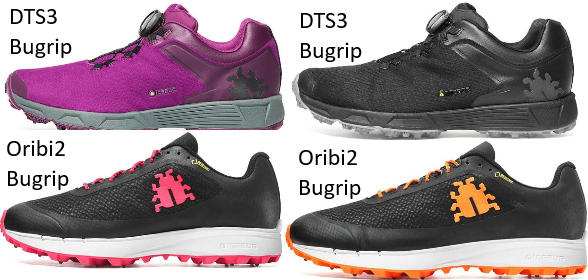
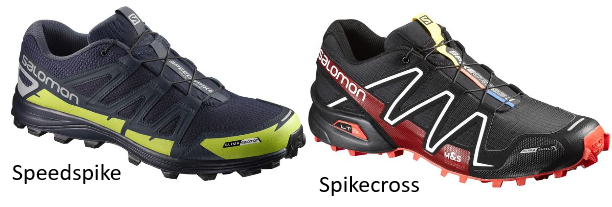
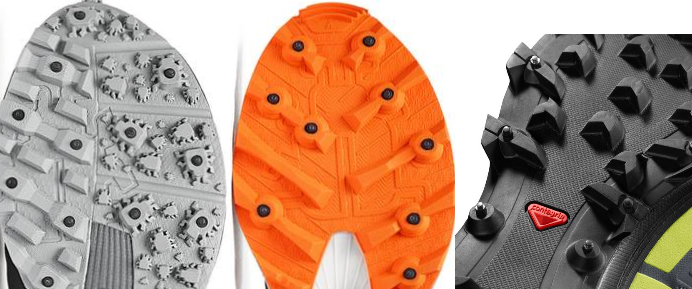
Let's start with grip. Icebug models have "smart studs" in the BUGrip® sole that retract slightly on rocky ground. Closely spaced studs ensure sufficient grip (you generally need 15–20 studs). Salomon's Contagrip® sole has deep lugs and sturdy studs. The deep tread grips well on snow, but the Spikecross's sparse studs occasionally let go on ice. The Speedspike's central studs, on the other hand, give good support over tree roots.
The last plays a big part in how a shoe fits. If you know you have wide feet, keep this in mind when choosing. If your toes get cold easily and you wear thick socks, go for a slightly wider model to avoid unnecessary rubbing. It's also worth going one size up in running shoes so your big toe doesn't hit the end. My feet are a 38.5–39, and I always run in a size 40.
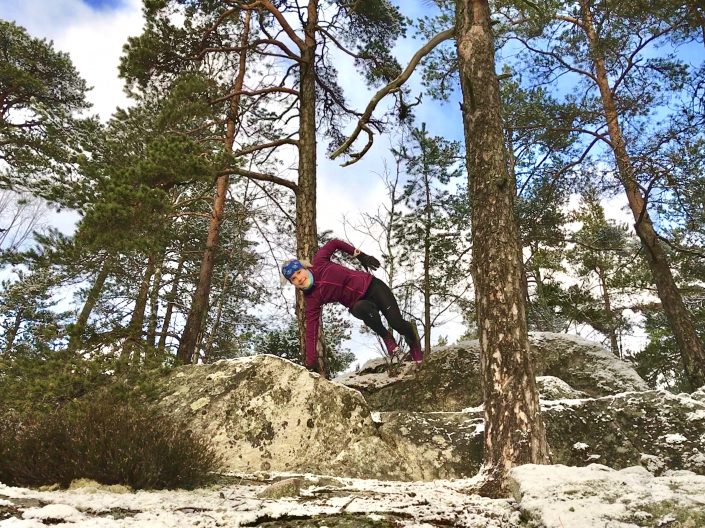
Cushioning is one of the most important features of a running shoe. As the name suggests, it absorbs the impact each time your foot strikes the ground. How much you need varies from person to person. Generally, lighter cushioning gives you a better feel for the ground and a smoother roll through each stride. Lightweight shoes work well for fast runs, but they put more strain on your legs. That's why more cushioning makes sense for longer runs on roads or icy paths. More cushioning is also recommended for beginners, runners with stiff ankles and heavier runners.
If you value dry feet or your toes get cold easily, I'd recommend a waterproof model. If you're lucky enough to live somewhere colder, where the snow stays dry, waterproofing isn't essential.

Winter running gear
Itching to test the grip of your studded shoes, but struggling to work out what to wear? Don't worry. Choosing winter running gear is fairly straightforward if you remember two key points: layering and protection from the wind.
Layering lets you adjust your kit to suit different sub-zero temperatures. I wear lightweight, windproof jackets and trousers in both autumn and winter, but I change the thickness and number of base layers underneath as the temperature drops. I prefer merino wool: it wicks moisture away from the skin better than synthetics, keeps you warm even when damp and is naturally antibacterial, so your clothes stay fresh even after a hard, sweaty session. Merino wool is a sustainable choice and doesn't itch like ordinary wool.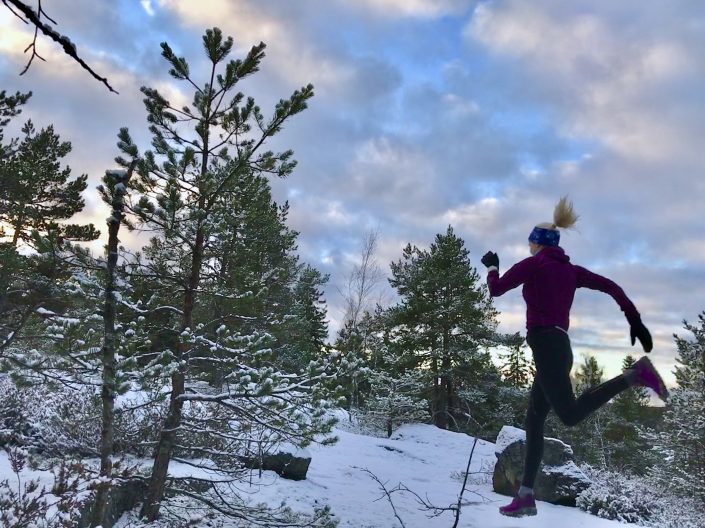
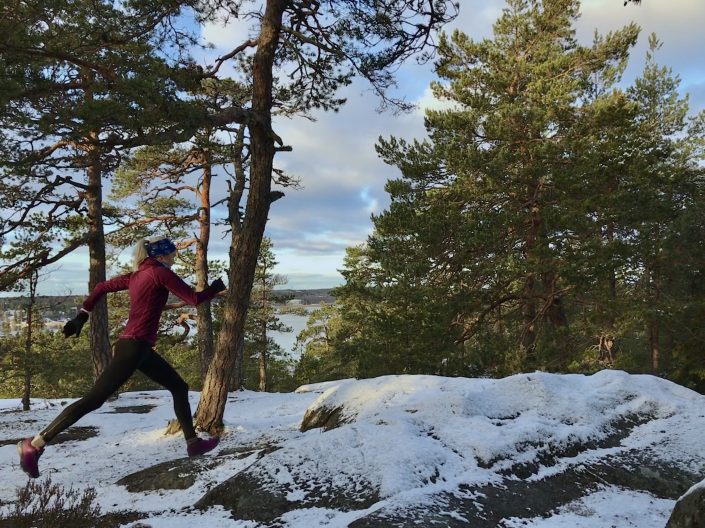
A good run also depends on warm gloves, socks, neck gaiters and a hat. How much these matter varies a lot from person to person, depending on the circulation in your hands and feet. I'm one of those people whose tolerance for cold ends the moment a minus sign appears in front of the temperature. After getting frostbite in my toes a couple of times, I've learned how to find warm, well-made gear for any weather. Go for thicker sports socks, gaiters and windproof gloves, especially if your hands and feet get cold straight away. Remember to protect your neck with a couple of Buffs and wear a hat that at least covers your ears. You lose a lot of heat through a bare head, so wearing a beanie helps keep your fingers warmer too.
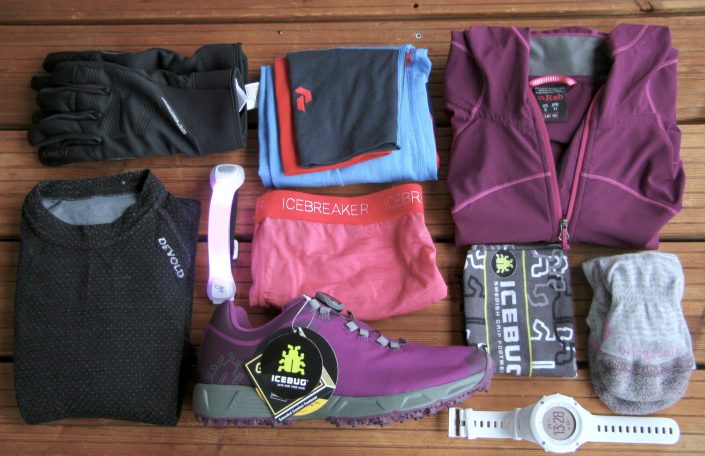
Winter running checklist (or a runner's Christmas wish list ;)):
– Windproof, breathable jacket + trousers (e.g. softshell)
– Moisture-wicking base layer top and bottoms (e.g. merino wool)
– Merino wool sports bra + briefs
– Thicker-than-usual socks (e.g. merino wool multisport socks)
– Warm, ideally windproof gloves
– Buffs for your neck (e.g. merino wool)
– Hat
– Head torch if needed
– Reflectors!

Here's to great winter runs,
Eve
Sources: Juoksija magazine 9/2017 ("Talven pitopiikit" article), icebug.fi, salomon.com