A guide to off-track and backcountry skiing
In deep snow, skiing is a natural and energy-efficient way to get around. Off-track skiing is a completely different sport from skiing on groomed trails. Even if you didn't enjoy skiing as a kid, you might still take to backcountry skiing. Moving quietly through a winter landscape gives you a freedom all of its own. You're not tied to the tracks, so you can go wherever you like.
Gear and technique
Clothing
- Choose the right clothing: breathable, suited to layering and not too warm.
- A windproof jacket and/or a waterproof shell jacket and trousers are useful whatever the weather.
Skis and kit
- Backcountry skis are the recommended starting point for deep snow (fell skis, forest skis or skishoes).
- Fell skis suit open terrain and hard, wind-packed snow.
- Forest skis keep you afloat in soft, deep snow in the forest.
- Skishoes are versatile and work in a wide range of places.
Boots and bindings
- For fell and forest skis, you can choose NNN BC bindings and boots or specialist bindings such as Finngrip Erä / Easy bindings.
Poles
- Adjustable telescopic poles let you adapt to snow depth and terrain.
- In snow, a large basket stops the pole from sinking too deep.
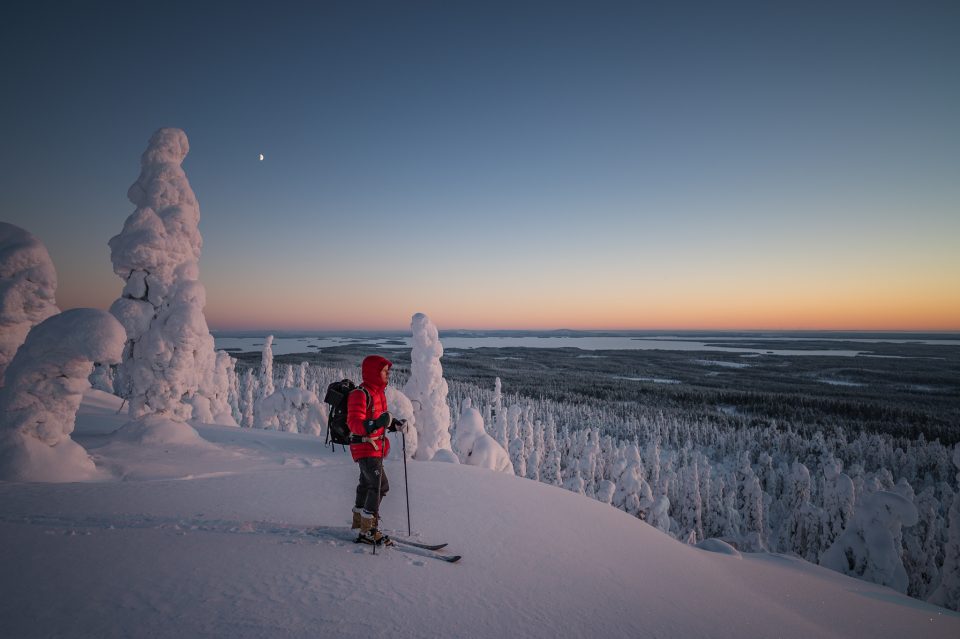
On a groomed trail you get good glide and can pick up real speed with little effort. Off-track, especially in soft snow, you won't get the same rush. The ski doesn't glide far under the snow, and going can be hard work. Ease off the pace, though, and it gets easier. At walking speed it can even feel effortless. Sometimes off-track skiing is more like walking with skis on, except you don't have to lift your feet in the same way and you can slide the skis forward.
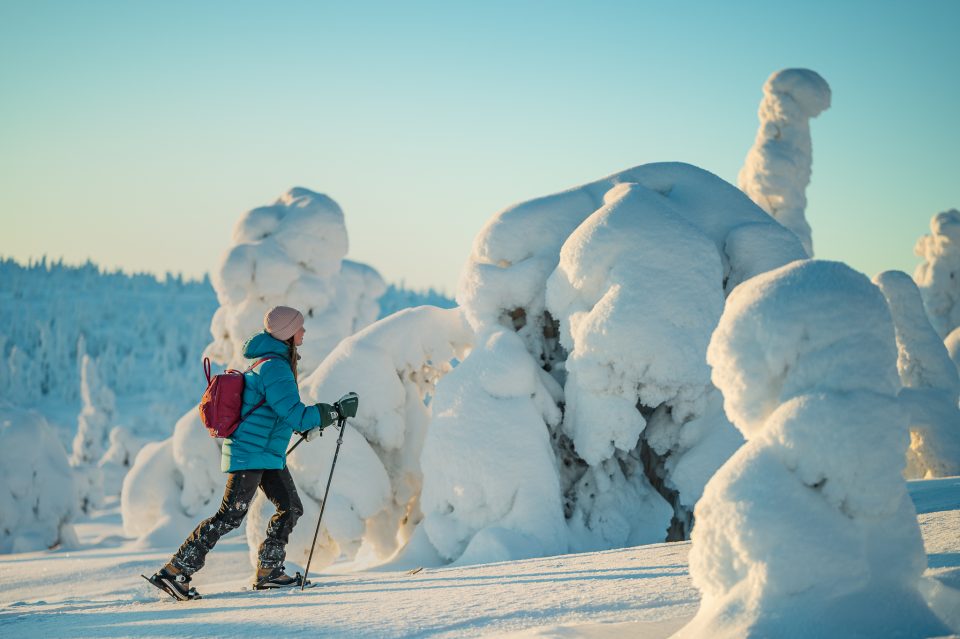
In late winter the snow crust may be firm enough to carry a skier, which makes progress even easier. In the end, nature and the snow conditions on the day always set the pace.
Off-track skiing calls for the right clothing. In clothes that are too warm or don't breathe well, you'll work up a sweat quickly, even in winter. On a windy day, though, you'll need protection from the wind. Winter rain isn't unusual either, and that's when breathable, waterproof shell layers come in handy.
Also read our article on the three-layer system.
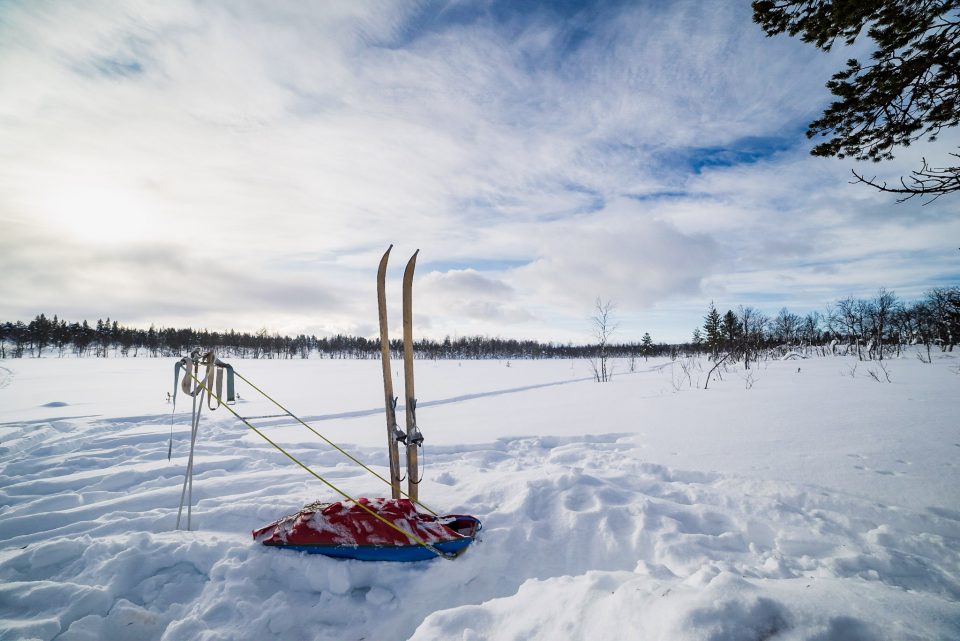
There are several types of ski to choose from. If there isn't much snow, or the crust holds well, you can get by on ordinary cross-country skis. In most cases, though, you're better off with backcountry skis. We stock three options: fell skis, forest skis and skishoes.
Fell skis work best on the fells and on hard snow with a firm crust. Forest skis are a good choice when the crust won't hold you, as is typical in forested terrain. Skishoes work almost anywhere and make a good all-rounder. Even so, fell skis are usually better on the fells and forest skis in the forest.
Fell skis
Fell skis are the most common choice for skiing in Lapland, where you also cross open terrain such as fells and mires. They come in different lengths and widths. In soft snow, a wider ski gives better flotation and more stability underfoot.
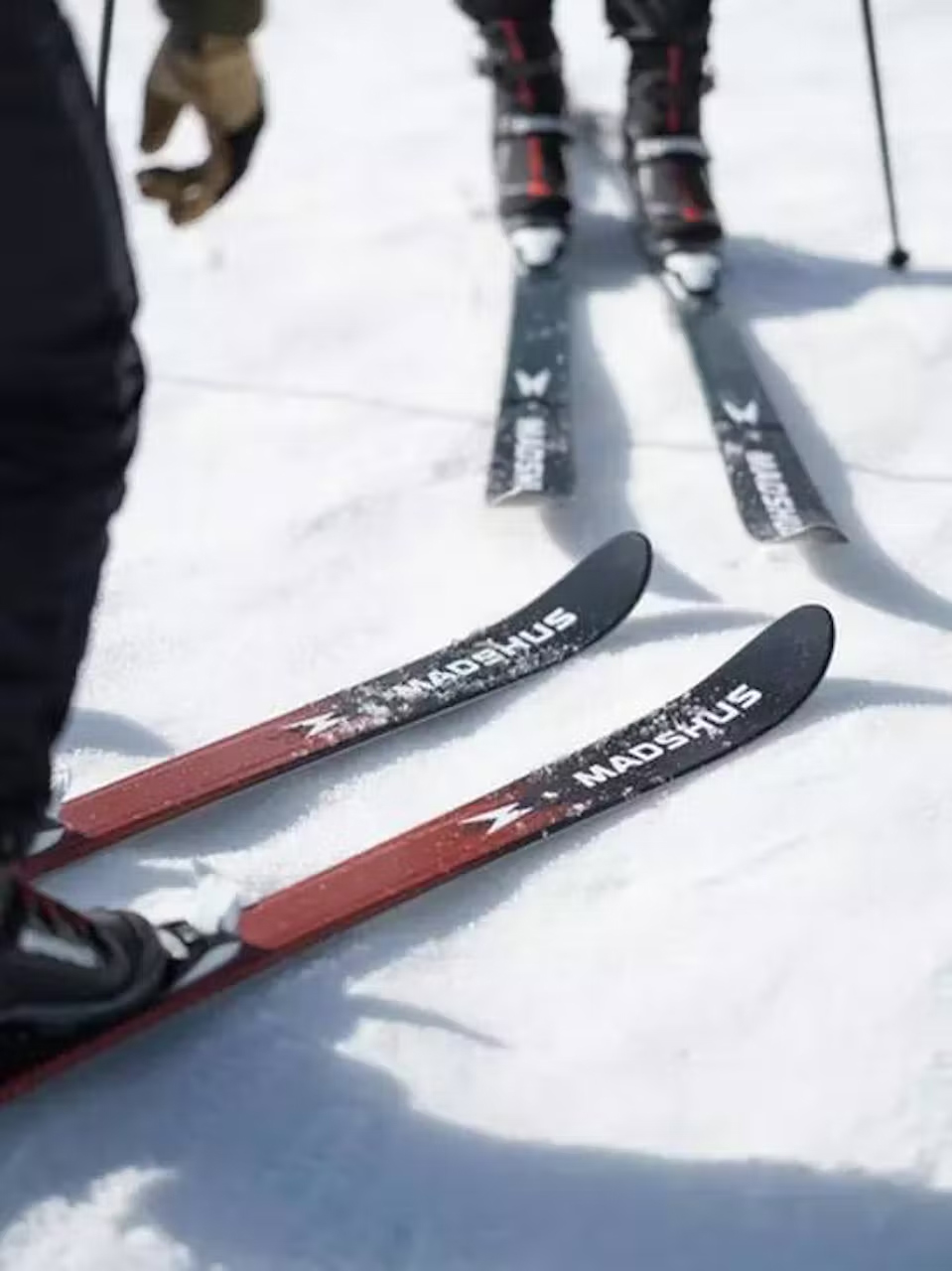
As the name suggests, fell skis are made for the fells, where the snow is often wind-packed. The steel edges bite into even hard snow and give you grip when traversing. A long ski is also easy to stride on and faster on descents.
Fell skis are often paired with an NNN BC binding, which needs an NNN BC boot. Together they give you a sturdy, stable setup. For a wider ski, go for the wider Magnum binding.
Forest skis
Forest skis are a good choice for really deep, soft snow, the kind you often find in forested areas. A longer, wider forest ski gives good flotation, but it's harder to turn in tight spots.
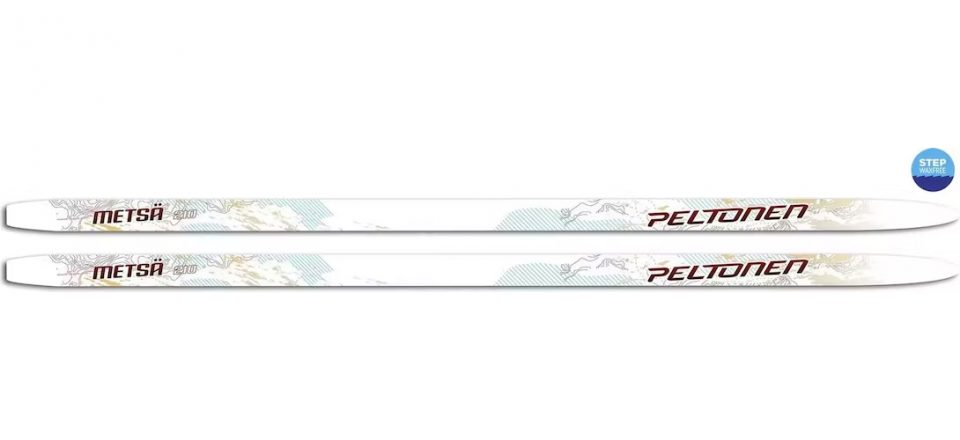
In really deep snow, a long, wide forest ski is often the only type that won't sink right in. On open fells, however, forest skis are awkward to ski on.
A common binding for forest skis is the Kuusamon Uistin Finngrip Erä binding, which works with boots that have a welt, or the Finngrip Easy 5.0 binding, which fits most winter boots. Another option is OAC's EA binding. Pair it with a boot that has a flexible sole and good ankle support.
If you want a really sturdy binding, the BC binding mentioned above, with a BC boot, also works well on forest skis.
Long forest skis can be close to three metres long. You'll usually need a roof rack to transport them, which can be a bit of a hassle.
Skishoes
Skishoes are a versatile off-track ski. The shortest 120 cm model behaves a little like a snowshoe, while the longer models are proper skis you can stride on. Skishoes are wide, so despite their short length they give plenty of flotation, though not quite as much as forest skis.
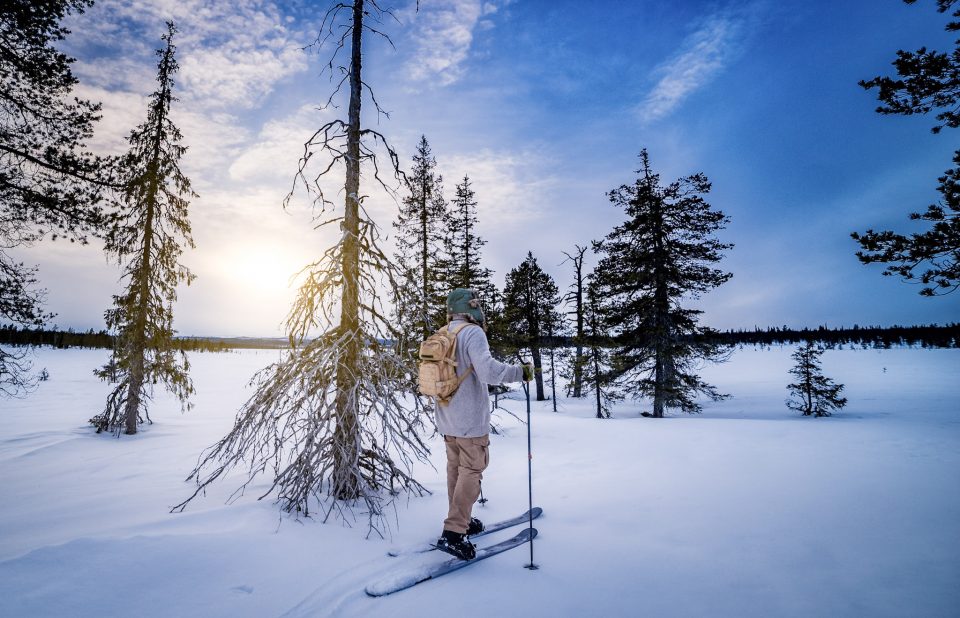
The longer skishoes also have steel edges. Because the ski is wide, it's hard to get it on edge, so grip when traversing is weaker than on a fell ski. In deep snow, though, it performs well: it floats reasonably well and offers some edge grip. Skishoes handle a wide variety of terrain.
OAC off-track skis come with the EA binding, so choose a boot with a flexible sole and good ankle support. The binding isn't as stiff as an NNN BC binding and boot combination, and you'll notice that on hard snow on the fells and on downhill runs. In deep snow, though, stiffness isn't always what matters most. On a ski tour in particular, skishoes are handy because you may not need separate camp shoes or snowshoes.
Short skishoes usually fit in the boot of a car and are easy to store at home. A short ski is also easier to manoeuvre in tight spots.
Also read our OAC skishoe buying guide.
The right poles for off-track skiing
For off-track skiing, pole length is usually 0.85 × your height. Different snow conditions let the pole sink to different depths, so an adjustable telescopic pole is a good choice. Fit a large snow basket to stop the pole from sinking too deep.