Packing lists for ski trekking and winter hiking
Winter is a brilliant time for hiking. But the cold season can be dangerous if you set off with inadequate kit or skills. In this article, we'll walk you through putting together your own packing list, whether you're heading out on a week-long ski tour or a weekend trip in winter conditions.
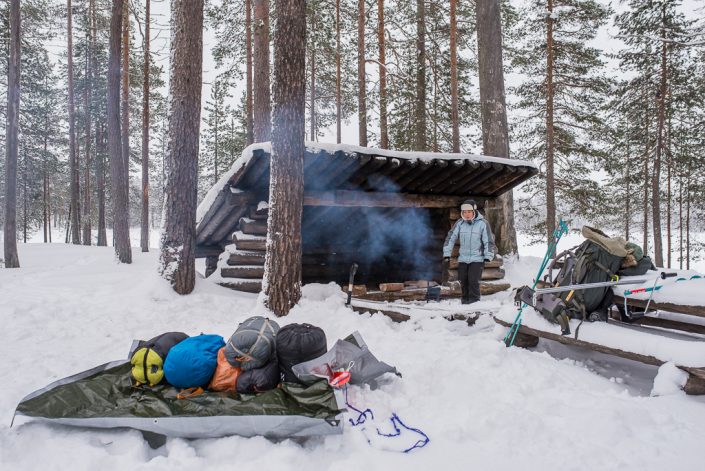
There are many ways to do a ski tour or winter hike, so packing lists can vary a lot from one type of trip to another.
You'll find plenty of packing lists online, but take them with a pinch of salt – the lists in this article included. What matters most is learning your own needs and building your packing lists around them.
Good winter hiking gear is important, but you also need to know how to use it. Experience is the best help when packing. Over time you get to know yourself and your needs and, most importantly, the destinations, weather conditions and problems you've dealt with teach you what's worth taking and what isn't.
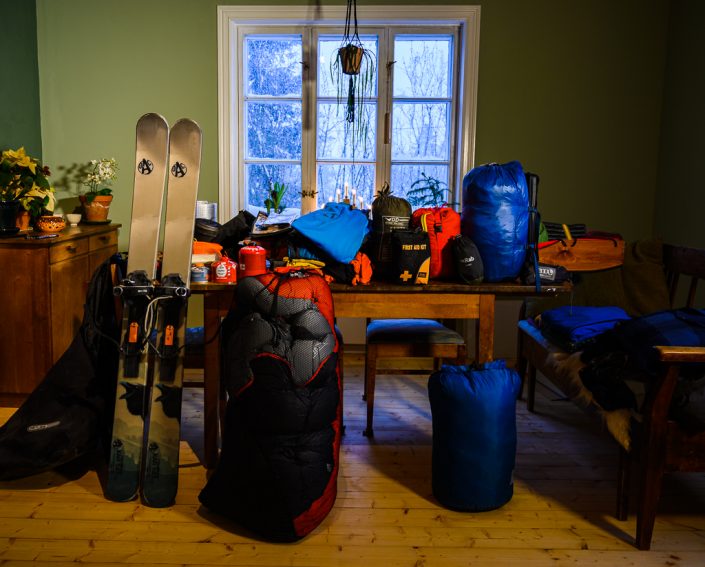
You have to start somewhere to gain that experience, so we recommend getting to know your gear and clothing on short trips first. Always test new kit before taking it on a longer ski tour. It's also worth servicing and checking the gear you already own before you set off.
When choosing clothing and equipment for a winter hike, look at quality and durability. Nothing is more frustrating than kit breaking mid-trip. Proper gear is also safer and more enjoyable to use. A well-made product is a responsible choice: it lasts a long time and holds its resale value.
Planning your packing list
Splitting your packing list into sections makes it easier to keep track of. You can write it on paper or use a digital tool. A good way to make sure nothing gets left behind is to tick items off as you pack them.
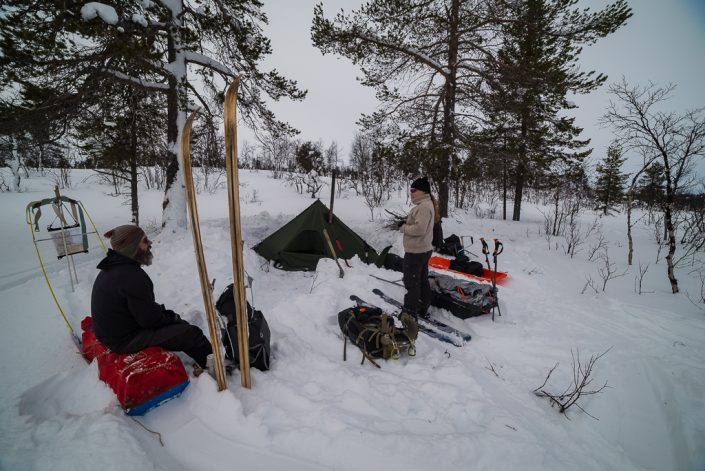
Not all your kit needs to be new and expensive. You can modify gear yourself, borrow it or buy second-hand.
You could divide your clothing and gear like this, for example:
- Clothes you wear and gear you carry on you
- Ski equipment, snowshoes or similar, if needed
- Gear packed in your backpack or pulk
- What food to take?
- Travel bag for the car
Clothes you wear and gear you carry on you
Check your destination and the expected weather in advance, and plan your clothing around how you'll be travelling. Will you be walking, snowshoeing, skiing or perhaps cycling? Make a list of everything you'll be wearing, and lay it all out the night before so it's ready in the morning.
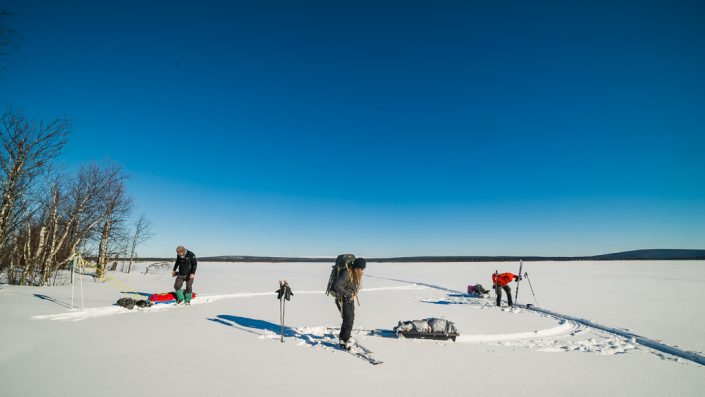
Think about what else you'll need on the move and where you can stash it so it's quick to reach and won't go missing along the way. With gloves on, it's easy to drop things into deep snow – and they can be hard or impossible to find again.
The gear you carry on you will usually include a map, compass, GPS device, phone and head torch.
Ski equipment, snowshoes or similar, if needed
Decide in advance how you'll be getting around at your destination, and whether you need to bring any extra equipment, spare parts or tools just in case.
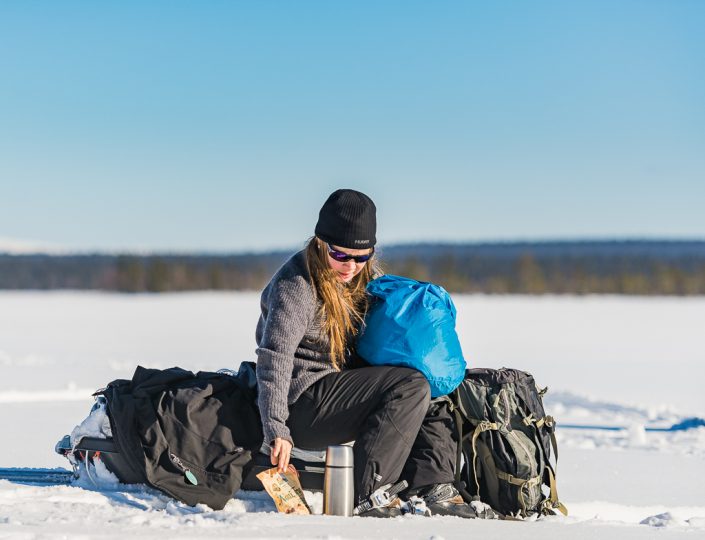
Gear packed in your backpack or pulk
It's worth dividing the gear for your backpack or pulk into sections too. For example:
- Clothing
- Shelter
- Sleeping – sleeping bag and mat
- Food and cooking/eating kit
- First aid
- Toiletries
- Fire-lighting kit
- Small items
When packing, think especially about what you might need while on the move: snacks, drinks, spare parts, extra layers or perhaps ski goggles. Pack these somewhere you can find them easily.
Here are our tips for choosing a shelter:
Tips for buying a sleeping bag and mat:
What food to take?
Plan your food as a separate list, even day by day. You can make a menu for each day, or simply count how many breakfasts, lunches, dinners, evening snacks and so on you'll need. Always take extra food in case something unexpected happens and the trip runs longer than planned.
Bring easy-to-eat, energy-dense snacks for when you're on the move, too. A little treat also does wonders for morale on a tough day.
Travel bag for the car
Having a travel bag in the car is often really handy. When the clothes and gear you need for the drive are packed in their own bag, you won't have to dig through your backpack or pulk to find them.
Sometimes the journey to your destination is long enough that it makes sense to stop overnight on the way, so plan for that in advance as well. If you're sleeping in the car, don't pack your sleeping bag and the like into your backpack or pulk yet. The same goes for your tent if you plan to sleep in it.
Your travel bag could include, for example:
- Clean underwear
- Clean socks
- A smarter shirt and trousers for the journey home
- A hat for the journey home
- Toiletries
- Phone charger
- Food and drink
Also think about what you'll wear on your feet while driving. Winter boots can make driving awkward, so a separate pair of shoes for the car might be a good idea.
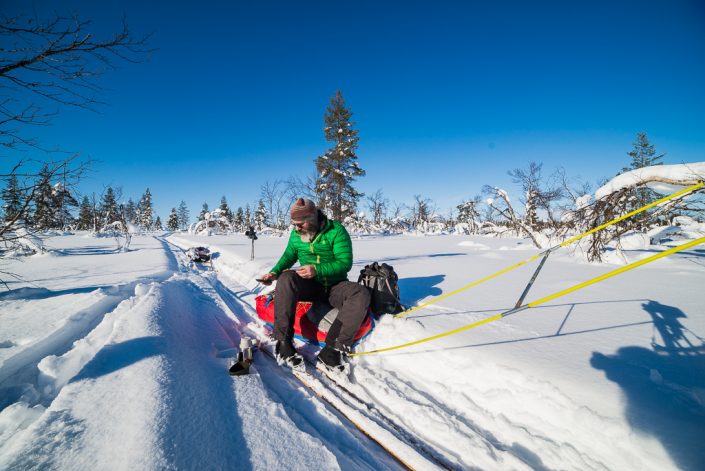
Winter hiking depends on good, reliable gear. Think about which items are so essential that losing or breaking them would be too dangerous – a map, compass, stove or head torch, for example. You may even want to carry two of these. Experienced company is also a good idea. You'll learn a lot from seasoned hikers, and they can help if problems arise.
Example packing list for a week-long ski tour in the Lapland wilderness:
Clothes you wear and gear you carry on you:
- merino wool underwear and base layer top
- two pairs of merino wool socks
- merino wool long johns
- mid-layer top
- Hiking trousers
- Winter boots
- merino wool liner gloves
- mittens
- beanie
In your pockets:
- map and compass
- neck tube
- head torch
- energy bar
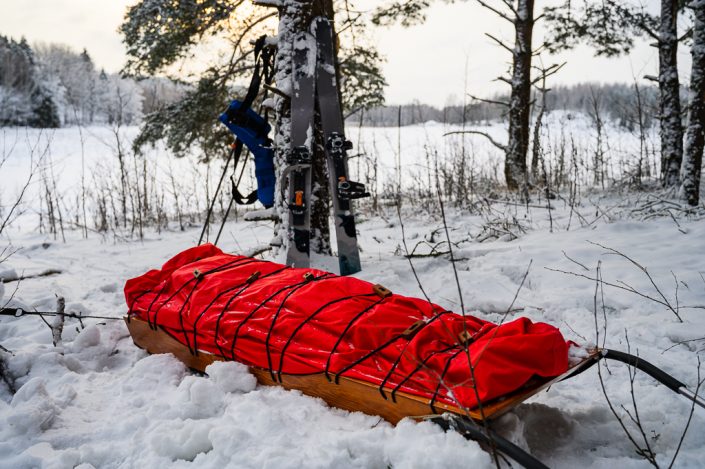
In the pulk:
Within easy reach:
- lightweight down jacket
- shell jacket
- shovel
- ski goggles
- sunglasses
- sunscreen
- warmer hat and gloves
- knife
- fire-lighting kit
- toilet paper
- fleece
- tarp
- water bottle – empty if it's very cold
- vacuum flask with a hot drink
Shelter:
- four-season tent
- snow stakes
Cooking and eating:
- food bag in a waterproof dry bag
- one or two stoves + maintenance kit
- stove fuel
- fire-lighting kit
- pots + coffee pot
- food bowl + spoon
- kuksa (wooden cup)
- second vacuum flask
- second water bottle
Sleeping:
- sleeping bag in a waterproof bag
- one or two sleeping mats
- sleeping bag liner
Clothing, in a waterproof dry bag:
- fleece
- underwear
- thicker merino wool base layer set (for camp and sleeping)
- several pairs of spare socks
- wool socks
- fur hat
- balaclava or neck gaiter
- spare gloves
Small items:
- first aid kit
- GPS
- phone
- second head torch
- spare batteries for head torches
- camera and spare batteries
- repair kit
- toiletries (toothbrush and toothpaste)
- personal medication
- wallet or cash in a waterproof bag
As you can see, that's a lot of clothing and gear, so we recommend taking a pulk with pulling poles and a harness. If there's any real depth of snow, you'll need skis or snowshoes. Skis get you further – covering long distances on snowshoes over a multi-day winter trip is seriously hard work.
If you're travelling on touring skis, you'll probably also want camp booties and snowshoes for around camp. Good camp booties keep your feet warm, and in deep snow you won't get far without snowshoes. Snow rarely holds the weight of someone in boots alone.
Have safe trips – and take a look at our video on the topic:
Read more about the basics of winter hiking here:
https://scandinavianoutdoor.fi/elamaa-ulkona/talviretkeilyn-perusteet/