How to choose skate skis, boots and poles
Skate skiing hasn't been through the same upheaval as classic skiing in recent years, but for many people it's the right way to move on the trail – and perhaps an easier way into the sport. Together with the ski specialists at our Kuninkoja store, we've put together a few things worth considering when you're buying skate skiing gear.
10 tips for buying your gear
- Choose the right type of ski
Skate skis differ from classic skis – you don't need to worry about grip. Instead, weight, stiffness and materials determine glide and directional stability. Choose a model that matches your skill level and goals. - Ski length matters
Skate skis are usually around 5–15 cm longer than the skier. Longer skis give you more stable glide, while shorter ones are easier to control. - Stiffness affects how the ski performs
A ski's stiffness is often a more important factor than its length. A ski that's too soft won't hold its line, and one that's too stiff is hard to control. - Think about your skill level and how you'll use them
Beginners can start with more affordable, slightly softer skis, while more experienced skiers benefit from stiffer, lighter gear. - Choose boots with good ankle support
Good ankle support and a stiff sole are key in a skate boot, because the movement is dynamic and powerful. - Boot fit is decisive
Your boots should fit snugly. Boots that are too loose reduce control, while boots that are too tight are uncomfortable and can cause chafing. - Pole length is based on your height
Skate poles are longer than classic poles. Pole length is usually calculated from your height (roughly height × 0.9). - Pole material makes a difference
Carbon fibre makes a pole lighter and stiffer, which improves power transfer and reduces flex during the push. - Try gear on if you can
We recommend fitting skis and boots in store or asking a specialist for advice – the right size and stiffness are usually best found by measuring. - Choose sensibly
More affordable recreational gear works well for beginners, but a slightly better set can make skiing noticeably more enjoyable and efficient in the long run.
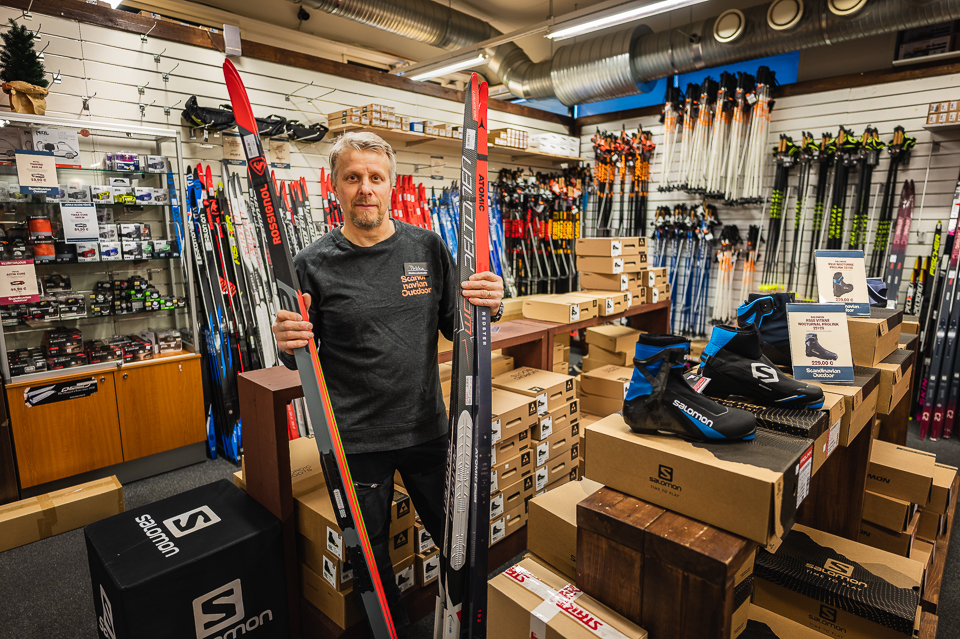
Pekka is one of the ski specialists at our Kuninkoja store.
Skate skiing and gear: the basics
As with classic skis, there are models for every type of skier. The differences are smaller, though, because skate skis don't need grip. The biggest differences come down to the ski's core, materials and base. More affordable recreational skis use softer, more forgiving materials. These don't support the skier's weight as well and give a little during the push-off, so the ski doesn't behave quite the way you want it to. That's why recreational skis are generally better suited to lighter skiers.
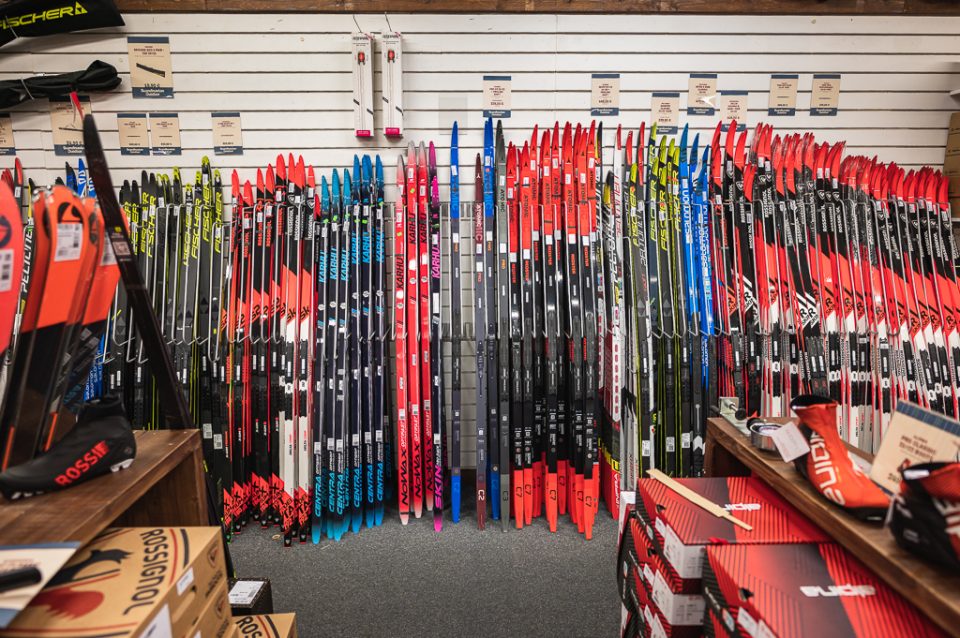
Move up to performance and race skis, and the materials and cores get lighter but also stiffer and stronger. The base materials absorb wax better too. The result is a lighter, more torsionally rigid and faster-gliding ski that handles the skier's weight and push-off better. In practice, these skis are easier to ski on both the flat and uphill, and they're quicker on the glide. Thanks to these materials, there are also more options in these ranges for heavier skiers.
What to consider when choosing skate skis
Skate skis are around 5–15 cm longer than the skier. As with classic skis, longer skis give you more directional stability, while shorter ones are more agile and easier to control. Taller skiers have less choice, as ski lengths usually top out at 195 cm. That's no reason to worry, though – there's a suitable ski for every skier, even if it's slightly shorter than the recommended length.
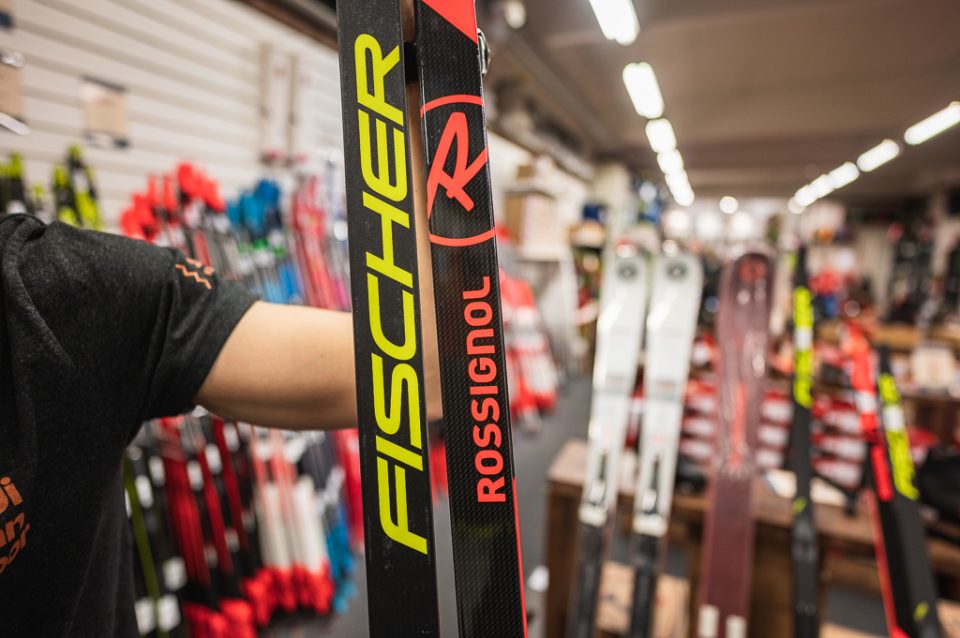
With skate skis, too, stiffness matters more than length. If a ski is too soft, it won't stay stable underfoot – especially on hard-packed snow – and it won't go where you want it to. On the other hand, if a ski is too stiff, it's hard to control during the push-off, particularly for recreational or less experienced skiers. You have to load an overly stiff ski heavily all the time, and skiing loses its ease and flow. A stiffer ski can be made to work on a firm surface, but it takes good skill and technique.
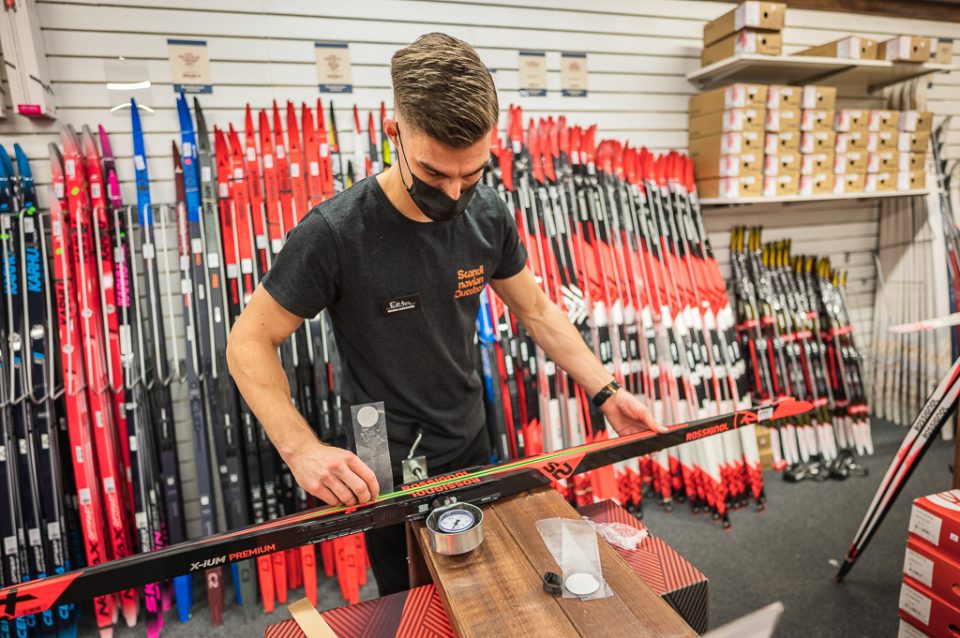
Our specialists check the stiffness of every pair of skis, using flex testers and a flat-board test, among other methods, so you end up with skis that match what you're looking for.
Unlike classic skis, skate skis can – and should – be chosen from a category slightly above your skill level. If you only ski occasionally, you can start out with more affordable gear, such as the Rossignol Delta Sport Skate, but skis one step up in price are often faster and easier to ski on. That makes both your everyday skiing and your training easier.
Good options for fitness and performance skiers from the 2025 range include the Rossignol X-ium Race Skate and the Salomon S/Race Skate 24/25, which is already very close to a race ski. If you're after a race ski, our range includes the Fischer Speedmax 3D Skate and the Rossignol X-Ium Skating Premium+ +side 24/25.
How do I choose the right boots?
When choosing skate boots, you'll want to look at slightly different things than with classic boots. Fit and a last that suits your foot are still the most important criteria, but skate boots can be fairly snug – you don't need much extra room in them.
In front, the sturdier skate boot; behind it, a classic boot.
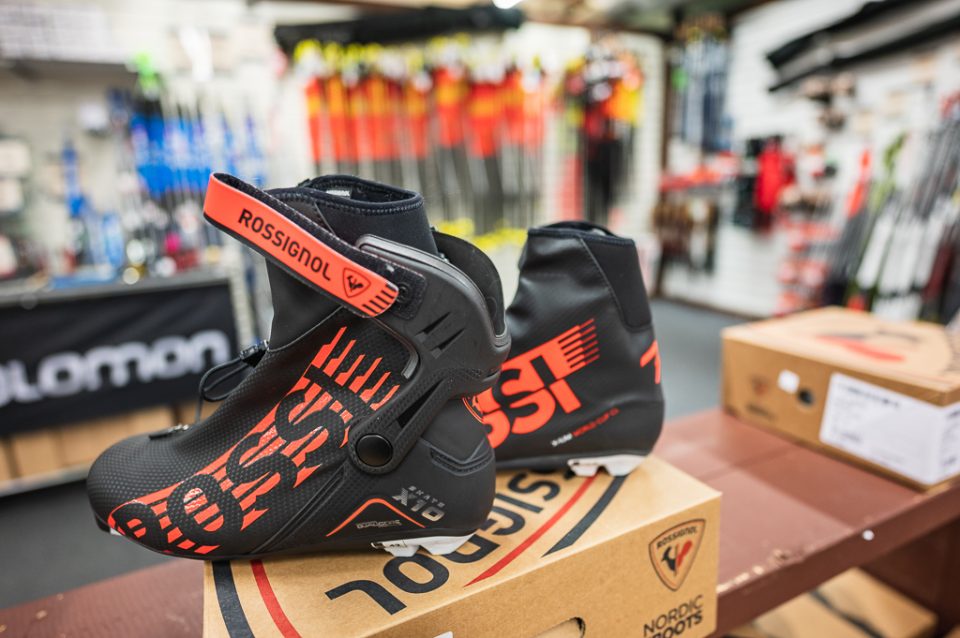
The key features of a skate boot are a stiff sole and ankle support. The most affordable models use more plastic, so the sole and ankle support are more forgiving and comfortable, but they don't support you as well. Performance and race boots use carbon fibre: the sole is stiffened with a carbon plate and the ankle support is moulded from carbon. In the top race boots, the sole, heel cup and ankle support are a single carbon-fibre moulding, giving you maximum support. As with classic boots, these race boots aren't as comfortable or as warm.
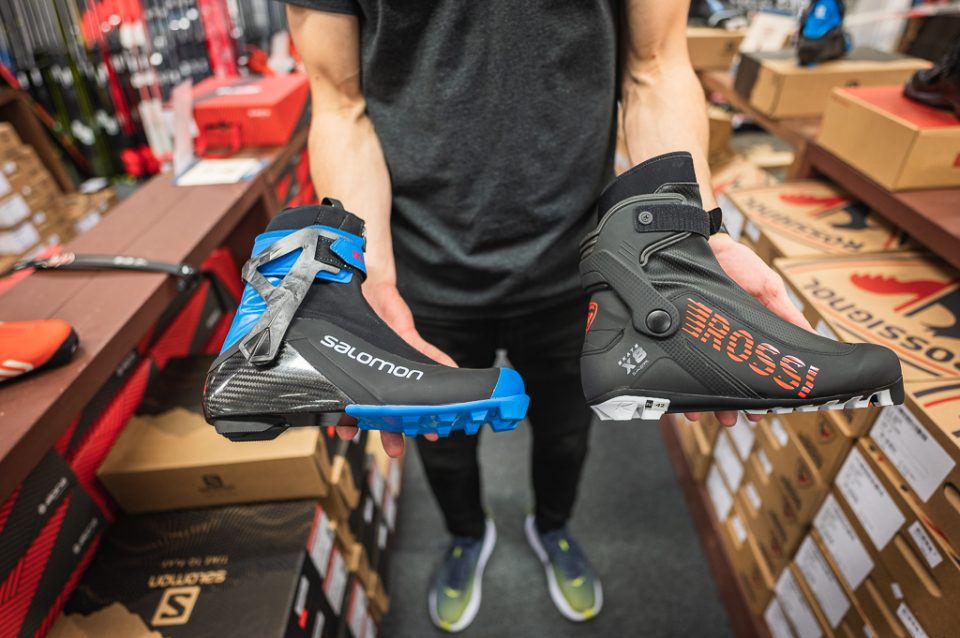
A good boot for recreational skiers is the Rossignol Prolink. For performance skiers, consider the Rossignol X-ium WCS Skate and the Salomon S/Race Skate Boa, while if you're looking for a top-level race boot, take a look at the Salomon S/Lab Skate Boa.
Which poles are right for me?
Today's poles are made from glass fibre and carbon fibre. Carbon makes a pole lighter, so there's less swing weight at the tip and the pole swings through more easily. Carbon poles are also stiffer, so they don't bend when you push and all your power goes into the snow. It's also important that the grip and strap fit your hand well.
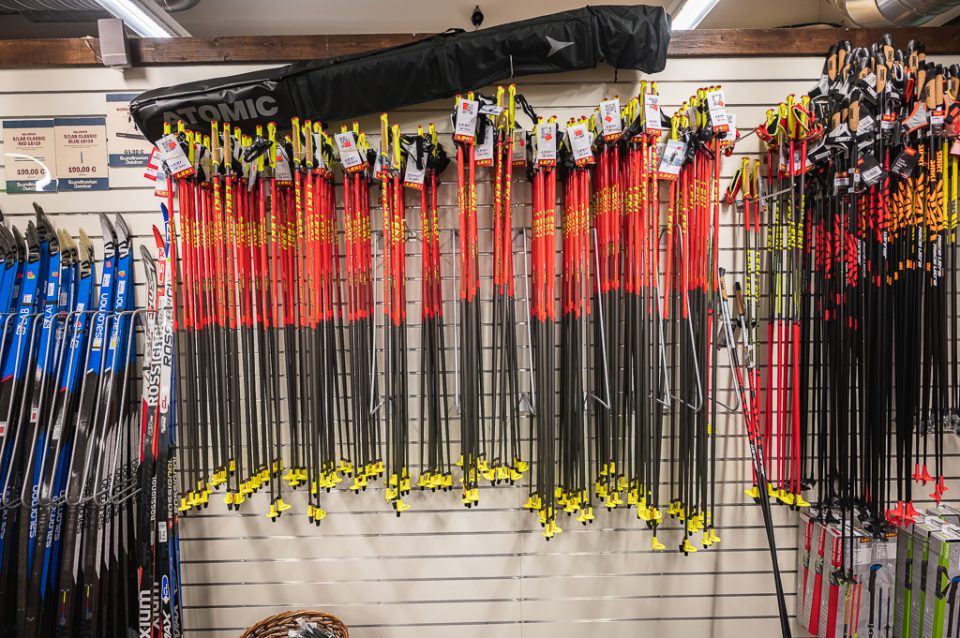
Skate poles are longer than classic poles, and you can work out the right length by multiplying your height by 0.9. Because skate poles are longer, materials – carbon fibre in particular – matter even more: longer poles flex more easily if they're made from cheaper materials.
If you don't log many kilometres and you're not skiing at high speed, the One Way Storm 6 Dark is a solid choice for the occasional skier. Even recreational skiers should seriously consider a full-carbon pole, such as the One Way Storm 2. If you train with specific goals or ski a lot, go for the Start Race Ultra, which combines minimal weight, high stiffness and a smooth swing.
Here you'll find tips on buying classic skis and gear. Here you'll find advice on waxing your skis the easy way.
You'll find all our skate skis, boots and poles here.



