How do you choose skis, boots and poles for classic cross-country skiing?
As the weather turns colder and winter draws closer, it's a good time to check the condition of your old ski gear and perhaps upgrade to something new. Classic skiing equipment in particular has changed a lot in recent years. With help from the ski specialists at our Kuninkoja store, we've put together this guide to what you should consider when buying classic cross-country skiing gear.
10 tips for buying classic skiing gear
- Choose the right type of ski for classic skiing
Classic skis differ from skate skis: they have a grip zone (kick zone) that lets you push off, something glide wax alone can't give you. - Ski length is based on your weight and skill level
Ski length affects how your weight is distributed and how well the grip works. Manufacturers' size charts will help you find the right length. - Choose the right ski stiffness
Ski stiffness affects grip. A ski that's too soft won't glide, and one that's too stiff won't grip. - Boot fit is crucial
Your boots should fit snugly without pinching. This improves the connection between foot and ski and reduces discomfort. - Classic poles are sized for the classic technique
Classic poles are shorter than skate poles. A common rule is your height × 0.83–0.85. - Your choice of pole matters
Carbon fibre poles are lighter and stiffer, which improves your push and feel on the snow, especially on longer sessions. - Try things out and ask an expert
If you can, try on boots and poles in store or ask the staff for advice. The right fit and length are usually easiest to find by testing in person.
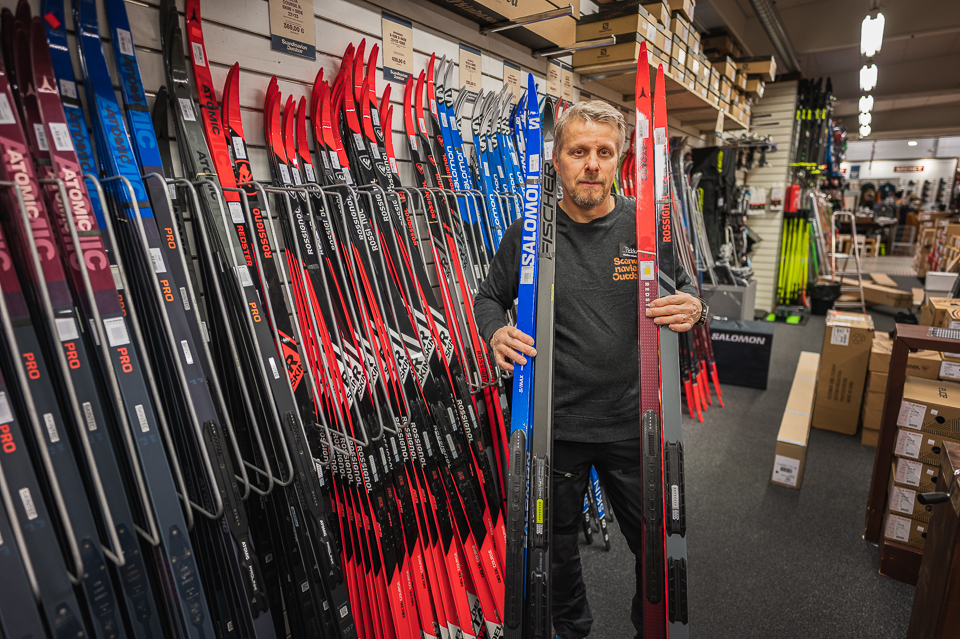
Pekka is one of the ski specialists at our Kuninkoja store.
What types of skis are there and how do they differ?
Whether you're a Sunday skier or a racer, there are models for every level, in both traditional waxable skis and waxless skis. Recreational skis use more forgiving materials, and their construction makes it easy even for beginners to get the ski to grip. As you move up the range, the core changes from wood to a light, torsionally stiff honeycomb core, and the base materials improve, making the skis faster.
In recent years, new waxless skis have arrived on the market that make skiing and ski maintenance much easier. Traditional waxable skis haven't gone anywhere, though, and they're often the strongest option in any conditions – provided you get the waxing right.
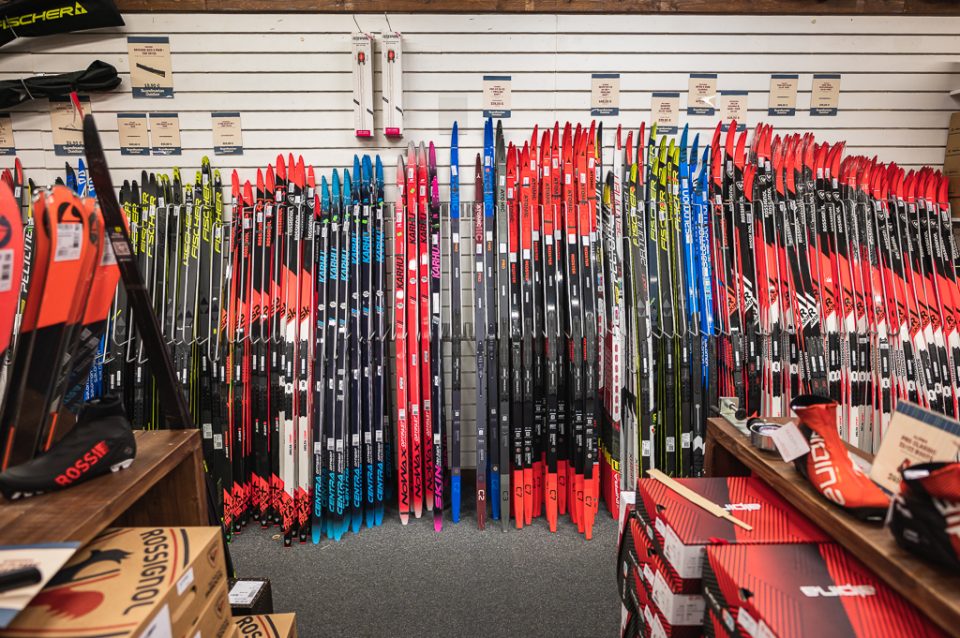
That said, the various waxless skis have now come very close to waxable ones. Skin skis in particular have become hugely popular in recent years, and for good reason: their grip and glide are almost as good as a waxed ski, yet you spend very little time waxing and maintaining them compared with traditional skis. The glide zones can be waxed just like on regular skis, but grip wax is replaced by skins fitted into the base. The skins wear with use, but every manufacturer's skins are easy to replace.
Another reason for their popularity is the wide range of conditions they handle. In practice, skin skis work in almost any conditions – the exception being icy tracks. On top of that, adjustable bindings let you fine-tune the skis to suit the day's snow. The bindings attach to mounting plates on the skis, so there's no need to drill them in. Depending on the binding, you release the lock with or without a tool, then slide the binding forwards or backwards. Moving it forwards gives more grip; moving it back gives more glide.
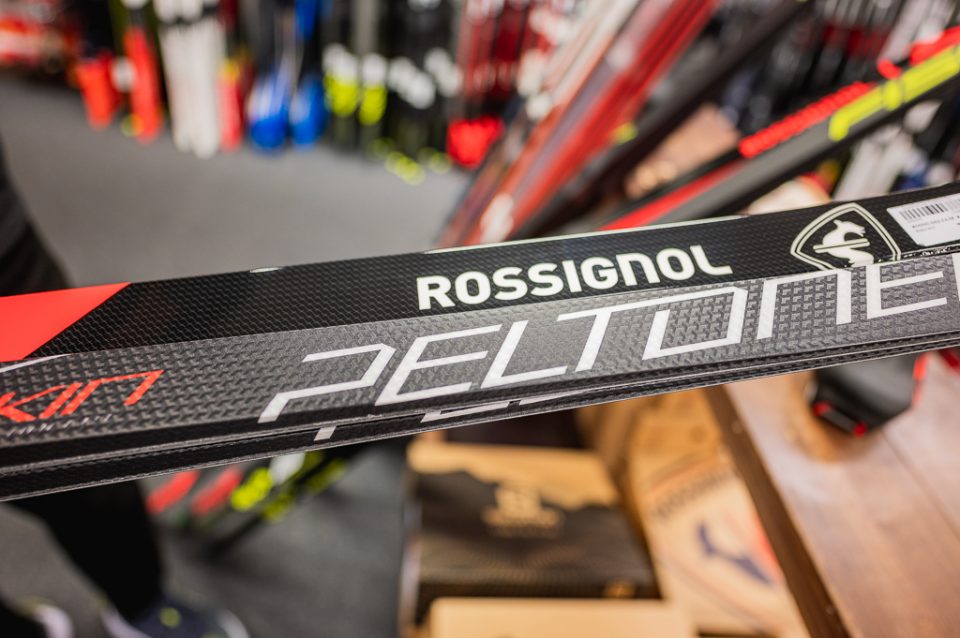
The other very low-maintenance option is so-called nano skis, which need no wax at all. Nano skis have a coating along the full length of the base that provides both grip and glide. They suit occasional skiers who value easy care above all else. Their range of conditions isn't quite as wide as skin skis – nano skis work better the wetter the snow. One advantage is that they're less sensitive to the skier's weight, as there's no separate grip zone.
How do I choose classic skis?
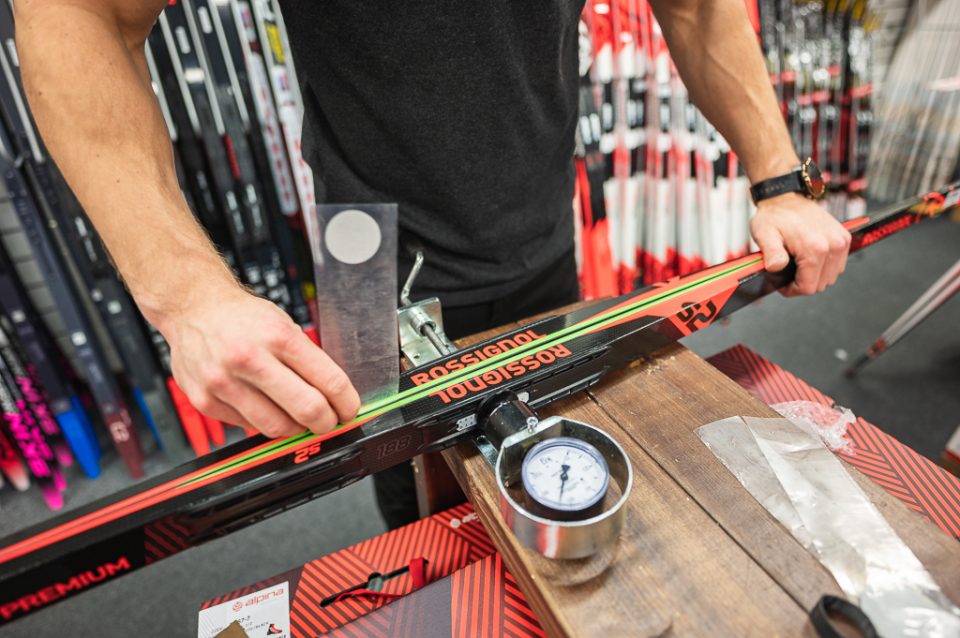
Classic skis should be roughly 15–25 cm longer than you are. Shorter skis are more agile, while longer skis track more steadily. The stiffness should match your weight to ensure good grip and glide. A ski that's too soft won't glide, because the grip wax or skin drags on the track. A ski that's too stiff can't be pressed down onto the snow when you kick, so you get no grip. Our specialists check the stiffness of every pair using flex testers and a board test, so you end up with skis that genuinely suit you.
When choosing classic skis, think about your skiing background and how many kilometres you expect to cover, the conditions you'll ski in most and how you'll mainly use them – relaxed tours on the trails, or focused training for ski marathons.
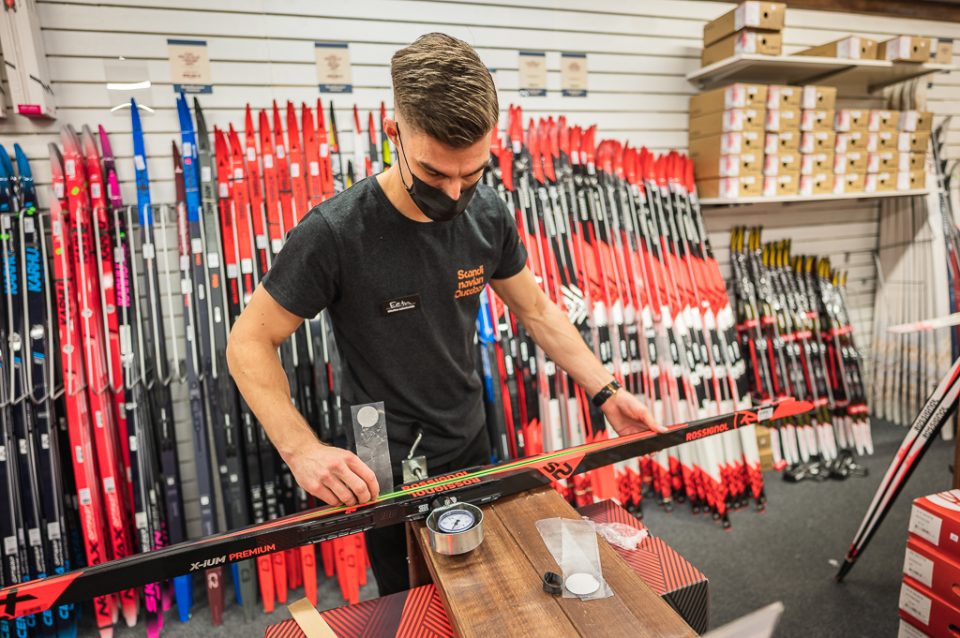
If you haven't skied much lately or you're just taking up the sport, go for skis that are easy and forgiving. Good examples from the 2025 range are the Fischer Twin Skin RC, the women's Atomic Women’s Pro C3 Skintec and the men's Atomic Pro C3 Skintec.
Fitness skiers, regular skiers and those with a solid skiing background can choose a higher-performance ski that asks a little more of your technique and fitness. These skis are faster and more "responsive" – in other words, they accelerate into the glide more readily after each kick. Competitive amateurs and racers can opt for race skis, which demand good technique and skiing ability, such as the Rossignol R-Skin RS 25/26 +side, Rossignol X-ium Premium Double Poling+side and Fischer Speedmax 100 Double Poling Sprint Plus 25/26.
What should I look for in boots?
The most important factors when choosing classic boots are the last and the right size. The boot should fit your foot well, with about a centimetre of room at the toes so they can move freely. A boot that's too small gets cold in hard frost, while a boot that's too big makes it difficult to get the ski to grip.
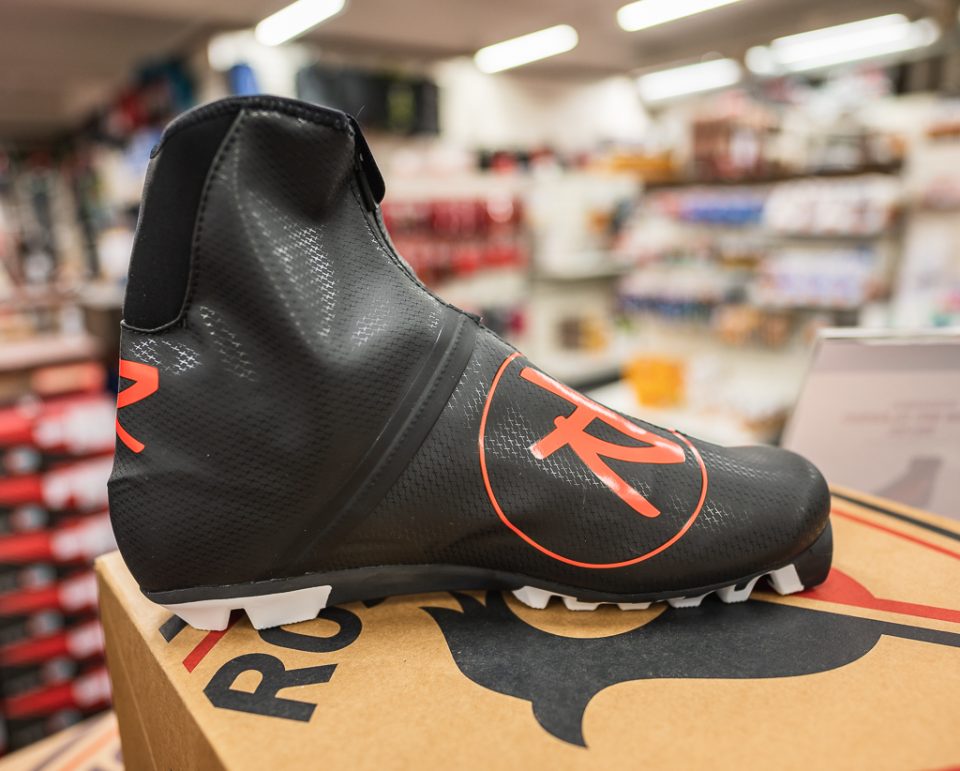
Classic boots come with two binding systems: SNS and NNN. The latter is also sold under two other names, Prolink and Turnamic. With skin skis in particular, choose an NNN-compatible boot, as these bindings are adjustable. These days, all new skis and boots use the NNN system, as SNS has been phased out.
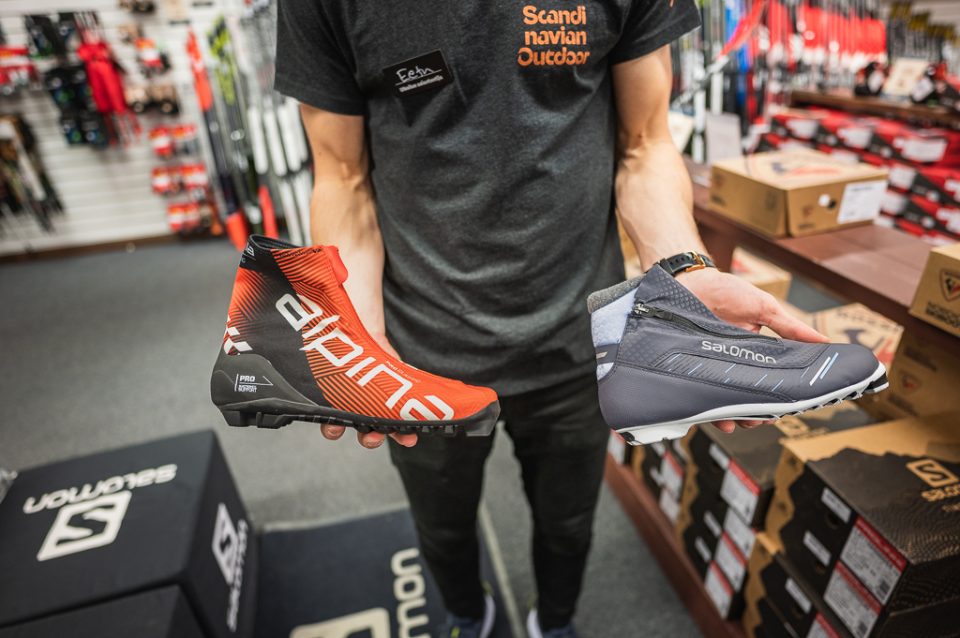
Left: a firmer boot for active skiers and racers. Right: a recreational boot with a soft inner lining.
Recreational boots usually have a warm, soft lining, a roomier last and more ankle support, like the Salomon RC8 Prolink.
Boots for active skiers and racers have a snugger, more precise last, less support around the ankle and a more flexible sole. This gives you a better feel for the ski and makes it easier to get grip. Examples include the Rossignol X-9 Classic Boots 25/26 and the Salomon S/Race Classic 25/26. The trade-off is that race boots aren't as comfortable or warm as recreational ones.
If you're after a top-end boot, we stock the Salomon S/Lab Classic Boa 25/26 with Boa lacing.
How do poles differ?
Poles today are made from glass fibre and carbon fibre. Carbon fibre makes a pole lighter, so there's less swing weight at the tip and the pole swings through more easily. Carbon poles are also stiffer, so they don't flex when you push and all your power goes into the snow. It's also important that the grip and strap fit your hand well.
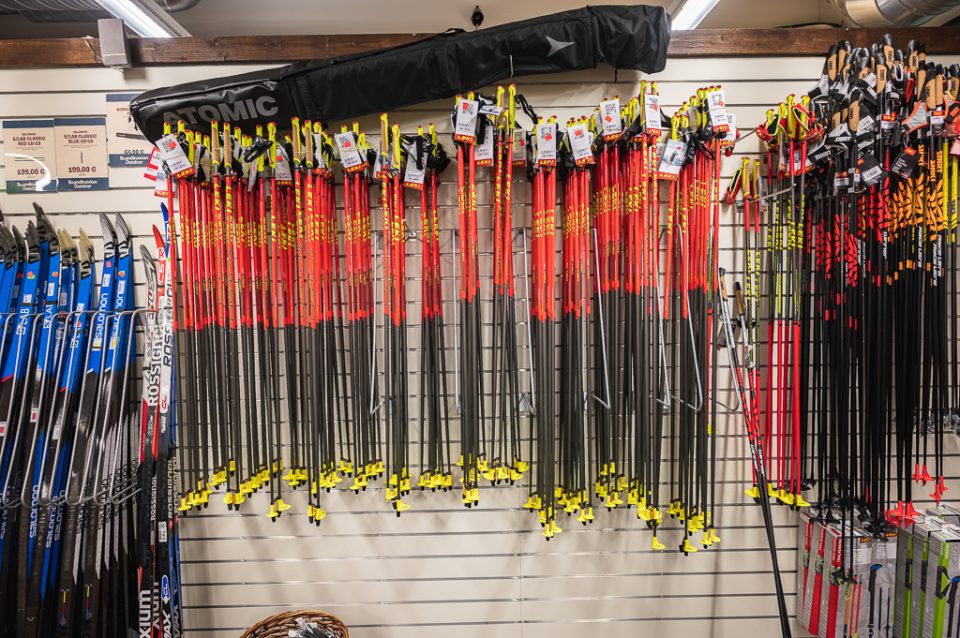
As a recreational skier, though, you don't need the most expensive race poles straight away. The One Way Storm 6 Dark, for example, combines the lightness of carbon with the impact resistance of glass fibre. Active skiers and racers should go for a full-carbon pole such as the One Way Storm 2 or the Start Race (Ultra).
To work out your classic pole length, multiply your height by 0.83–0.85. A shorter pole is easier for diagonal stride and climbing, while a longer pole suits flat terrain and double poling. If you're between two sizes, consider the longer one – you can always cut it down.
You'll find tips on buying skate skis and gear here. For simple instructions on waxing your skis, look here.