How to lighten your pack
Anyone who has done a few multi-day hikes knows that a lighter pack is more comfortable to carry than a heavy one. A heavy pack holds you back: your daily distances get shorter, things start to ache, and a lot of weight can even become a safety risk. Above all, though, it comes down to comfort.
7 tips for lightening your pack
- Review your gear: leave out what you don't need and avoid kit that does the same job twice
- Choose your pack: it's often your heaviest single item, so consider a lighter one
- Tent: look for a lighter option
- Sleeping bag: switch to down if you haven't already
- Sleeping mat: a light inflatable mat saves both weight and space
- Stove and food: a lightweight canister-top stove and dehydrated meals
- Make a list of your gear and compare your options systematically
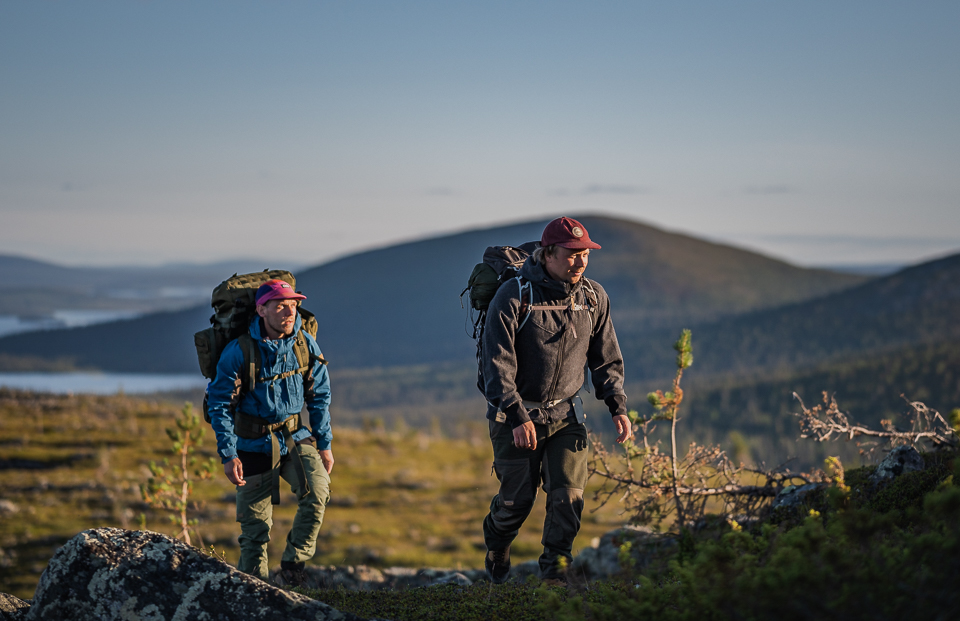
Where does the weight in your pack come from?
You might wonder whether it's worth shaving just a hundred grams off a piece of kit – you'll hardly feel it on your back. But if you choose every item with the same mindset, the savings soon add up to several kilos. Most of the weight comes from your heaviest items, but all the small things count too once you add them together. In this article we focus mainly on the big items, where cutting weight is easiest.
If you're buying your first hiking gear, this matters even more. Your body isn't yet used to carrying heavy loads, and you can often get lighter kit for the same money – so your new hobby doesn't fizzle out after one painful trip.
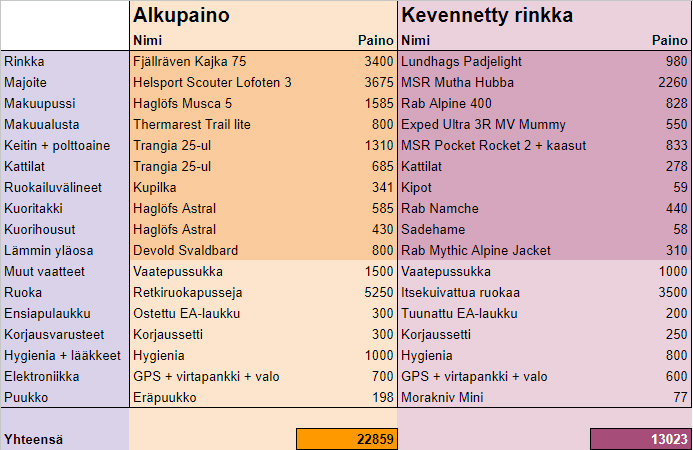
At an in-store event, we put together two complete hiking kits from our shop shelves. We also weighed small accessories and trail food. We started with a heavy pack and then set about lightening it. It contained more or less everything you'd normally carry on a multi-day hike. The pack started at almost 23 kg and ended up around ten kilos lighter.
Losing ten kilos is huge – it's practically a different sport. You'll notice that nothing aches, you can actually enjoy the walk, and it opens up new possibilities. You can go on longer trips or bring something extra, such as a packraft, so you can combine hiking and paddling. It's also easier to travel by bike or kayak when your kit packs down small.
Lightening your gear
Start by asking whether your pack holds anything you don't really need, or items that do the same job. Think of your clothing as a system: in cold weather you should be able to wear everything at once and stay warm. If you carry several of the same item – shirts, trousers and so on – you're probably carrying unnecessary weight.
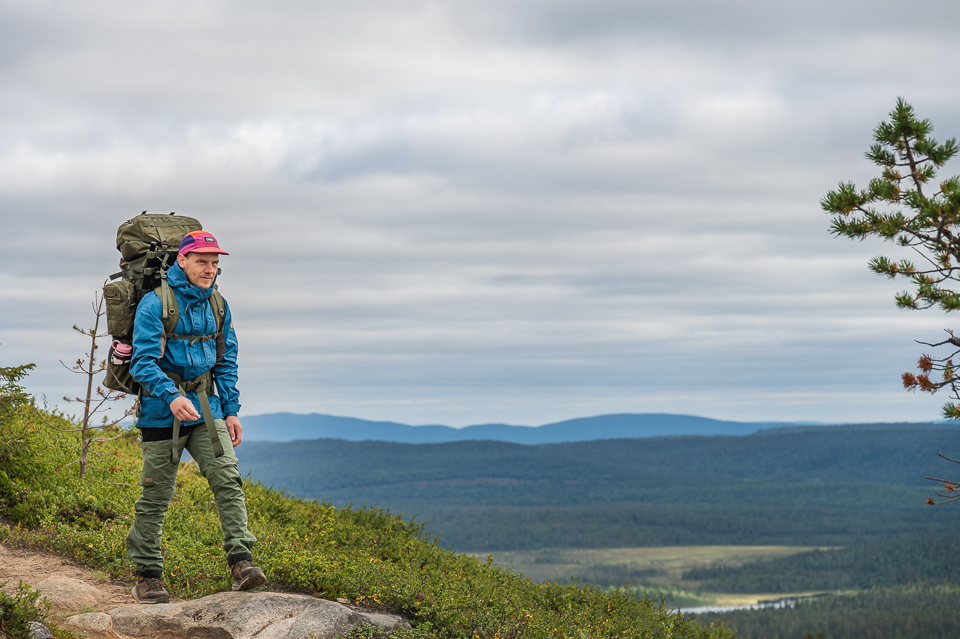
The backpack is often a hiker's heaviest item. Large, heavy packs are of course suited to many kinds of trips: they usually have a sturdy carry system, and thicker materials stand up to years of use.
If you're setting out to cut weight, start with the gear inside your pack. Once you notice that your kit takes up less space, you can think about switching to a smaller pack. What matters most is that everything still fits inside.
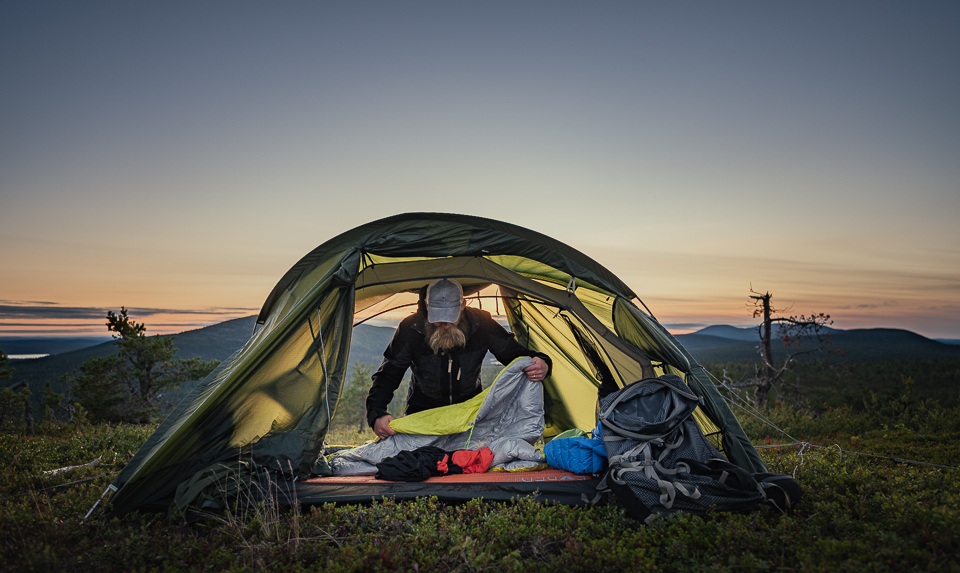
Another heavy item is the tent. Extra weight can mean tougher materials, but not always. There are also light tents made from durable materials – though that shows in the price. Then again, if you look around, you'll soon find tents that are well made, light and don't cost a fortune.
Sharing a tent with someone else often saves a lot of weight. A good target is under 1000 g per person. That's hard to hit with a solo tent unless it gets really cramped, but with two-person tents and larger it becomes much easier.
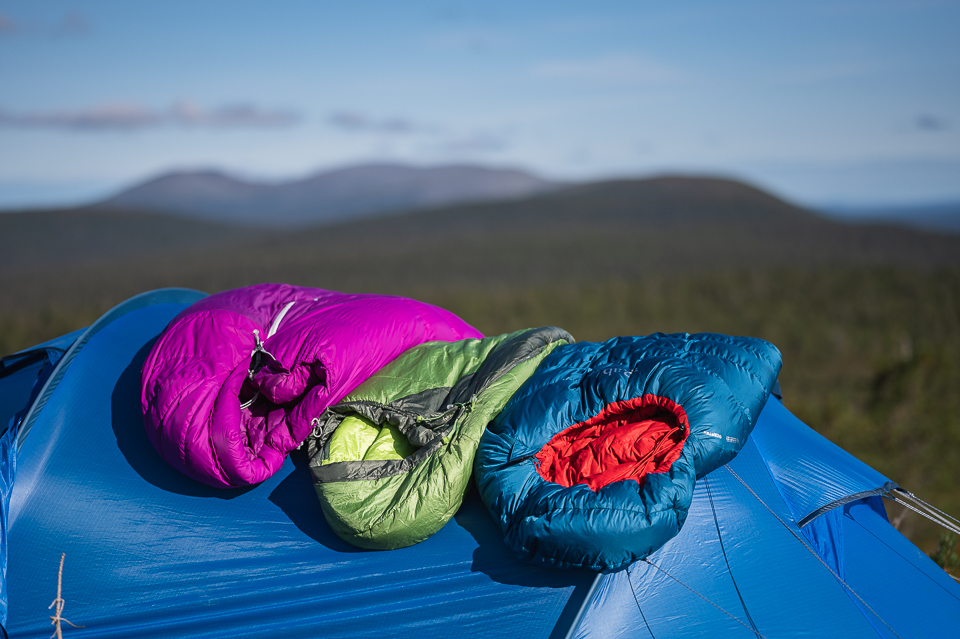
A sleeping bag can also be bulky and heavy – cheaper synthetic bags often are. Check the comfort temperature too: in summer a lighter bag will do, while winter frost calls for more. If you camp all year round, you'll probably need two sleeping bags, which you can also combine on really cold nights. So plan your sleep system as a whole.
A lighter sleeping bag may have a thinner shell fabric, but otherwise the quality doesn't suffer – your wallet just gets lighter too.
A well-made down bag packs down very small and saves a good deal of weight. Many hikers use a quilt in summer – a blanket-like design that fits snugly around your sleeping mat. That way you don't need insulation underneath you, which gets compressed under your body and stops insulating anyway.
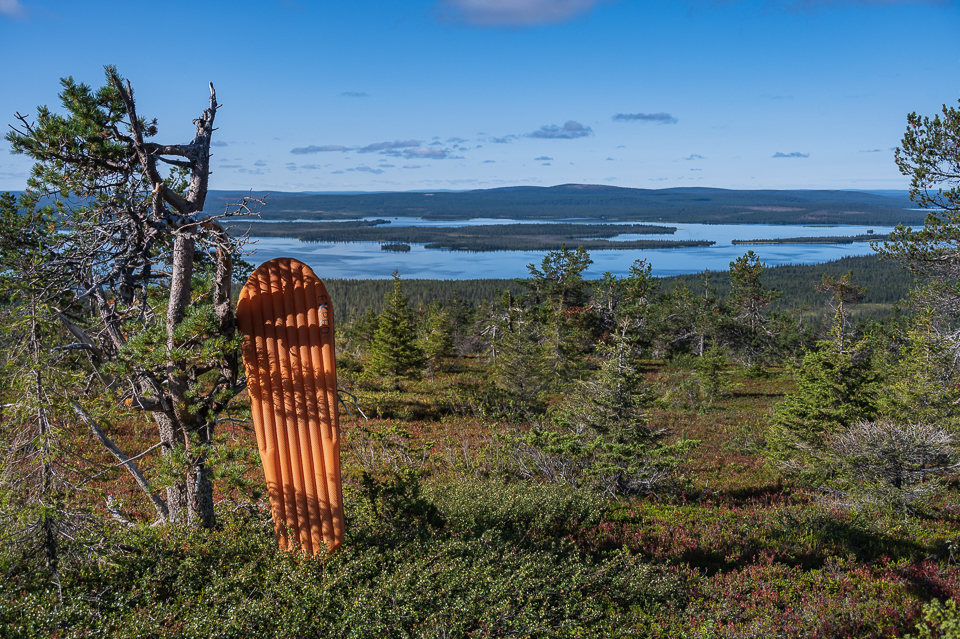
An inflatable sleeping mat saves a lot of space and often weight as well. Mummy-shaped mats, which taper towards the feet, are lighter. In summer you can also go for a narrower and shorter mat – warm ground doesn't draw away as much heat if an arm or leg slips off the edge now and then.
The very lightest inflatable mats naturally use lighter materials and can puncture more easily. That said, it rarely happens if you're careful. Many hikers use them for years without ever needing to patch them.
Choose a mat with an R-value of around 3 and it becomes a versatile option that keeps you warm in spring and autumn too.
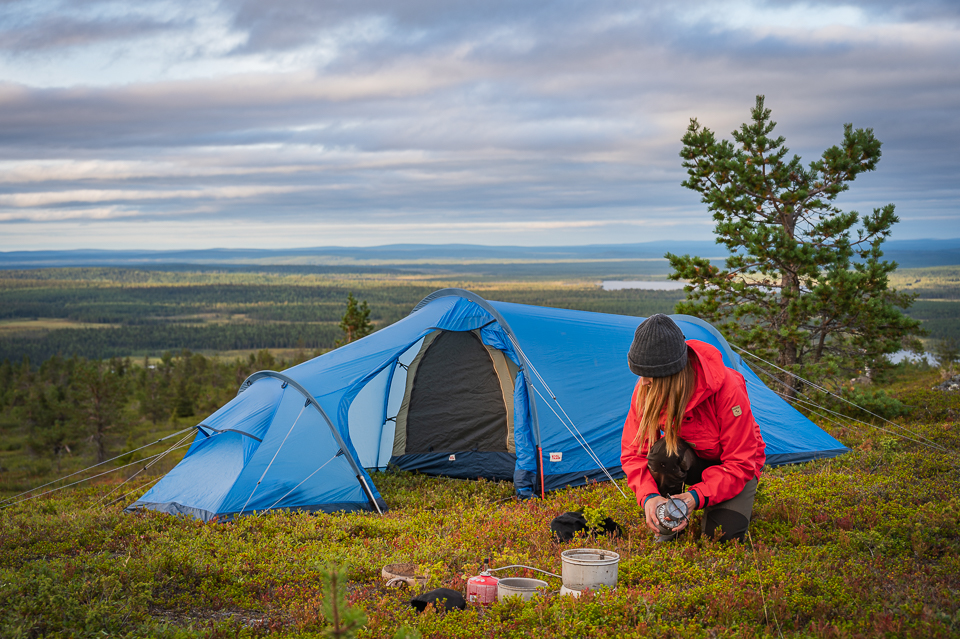
A camping stove and pot set can be surprisingly heavy. Big, sturdy pans are nice when you're cooking more elaborate meals, but for hiking you can go lighter. The simplest setup is a lightweight stove that screws onto a gas canister and a single light pot. Solo hikers can eat straight from the pot; if there are more of you, it's worth finding a light bowl as well.
With good planning you can save a lot of weight on food itself. Dehydrate your own meals and choose energy-dense ingredients. You rarely need to carry much water – you can treat it by boiling or with a water filter.
Is lightening your pack expensive?
The cost depends a lot on what you're comparing against. Well-made heavy gear often costs the same as, or even more than, well-made light gear.
Much depends on your own choices. In our lightweight hiking blog post, for example, we put together a heavy and a light pack from our in-store range – and the lighter kit actually came out slightly cheaper.
Practical tips for going lighter
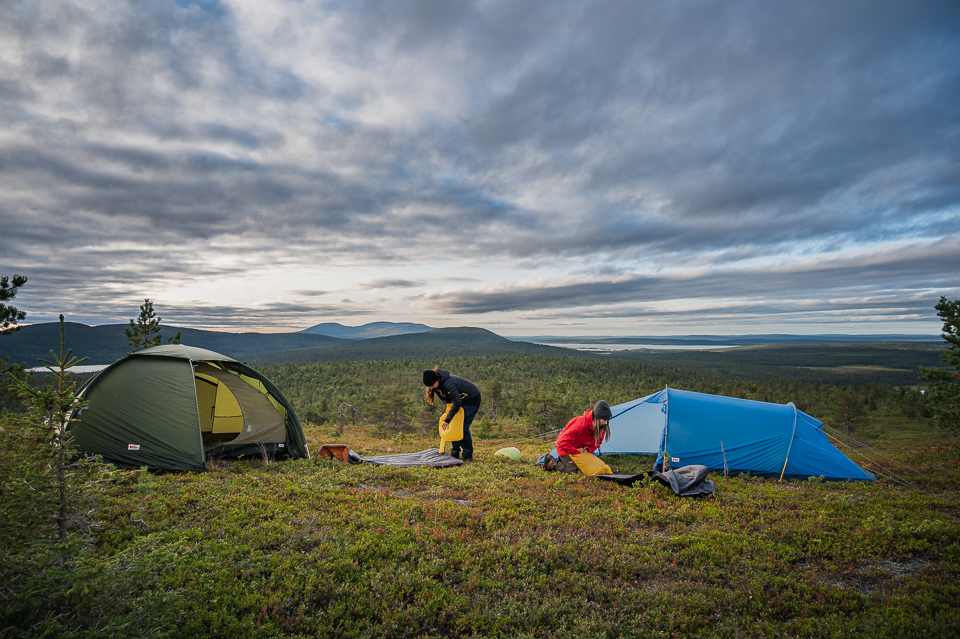
Make a list of your gear. You can use a free spreadsheet program or find websites made for exactly this. Weigh your kit and see what alternatives you have. Clothing, for example, is an area where careful planning saves a lot of weight. Weighing your gear usually comes as quite a surprise and makes you rethink things.
Pay attention to whether you've been carrying things you never actually used. First aid and repair kits should always come with you, though, even if you don't always need them.
If you hike in a group, agree on shared gear – not everyone needs their own of everything. You can share a tent and split items like a tarp or an axe.
You'll find our lightest hiking gear here.