A guide to choosing running shoes
In this guide, we go through what to consider when you're buying running shoes for flat surfaces such as tarmac.
If you're looking for trail running shoes, you'll find our tips here.
Fit is everything in a running shoe. You should have about a centimetre, or a thumb's width, of space between your toes and the end of the shoe. This stops your toes hitting the toe box. If there's too little room, it causes pain and, in extreme cases, you can even lose toenails, says Teemu.
TOP 5 tips for choosing running shoes
- Fit comes first: leave about a centimetre between your toes and the end of the shoe, so your toes don't hit the front and cause pain or toenail problems.
- The shoe shouldn't be too loose or too tight: lacing that's too tight can restrict circulation and lead to tendinitis, while a loose shoe lets your foot move around inside and can cause blisters.
- Choose a running shoe category to suit your needs:
- Max-cushioned shoes soften impact and suit beginners or recovery runs.
- Daily trainers work for a wide range of running.
- Light, responsive speed shoes are designed for more experienced runners.
- Consider your distance and pace: choose your shoe based on how far and how fast you run, as different shoes offer different balances of cushioning and responsiveness.
- Avoid pressure points and a poor fit: you shouldn't feel pressure around the collar, at the Achilles or along the sides, as it can make running uncomfortable.
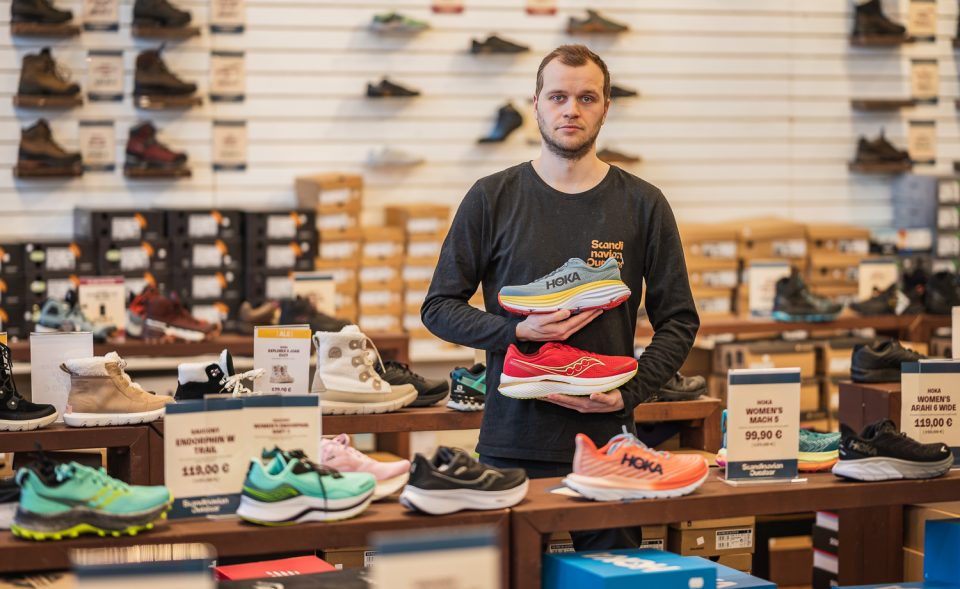
Teemu is our running expert and works in our marketing team. He's an active runner who takes part in a wide range of running disciplines.
A running shoe should feel snug, and your foot shouldn't move around inside it. You can adjust the fit with the laces, but lacing too tightly – or a shoe that's too tight – restricts blood flow to your toes and can lead to tendinitis. If the shoe or the lacing is too loose, your foot slides around inside and you'll end up with blisters.
You also don't want any other pressure points around the collar, near the Achilles, or along the outer and inner edges. The width of your foot matters when choosing. A shoe that's too narrow will cause exactly the kind of pinching described above.
Running shoe categories
The right shoe for you depends on your distance, running style and pace. Shoes can be roughly divided into three categories:
- Max-cushioned, soft running shoes
- Daily trainers
- Light, responsive speed shoes
Max-cushioned shoes
Max-cushioned shoes absorb the most impact. They're a good choice for beginners whose technique isn't fully developed yet.
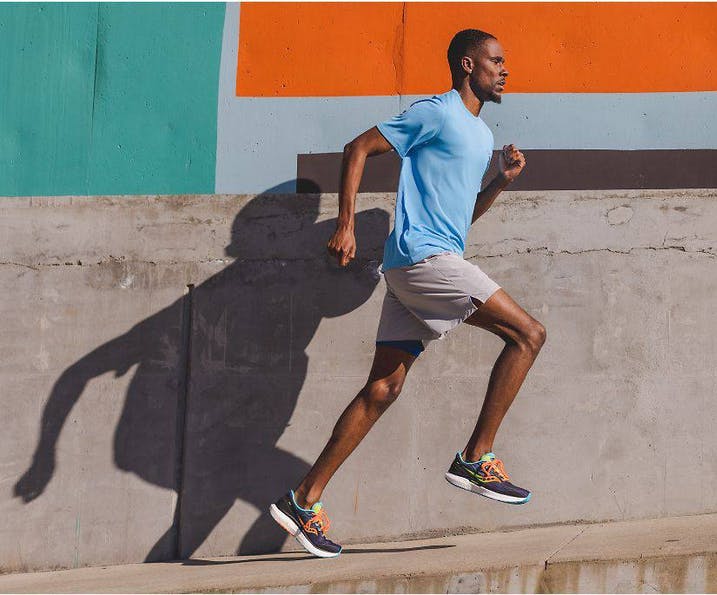
Max-cushioned shoes suit beginners and runners with joint problems, and work well as recovery shoes for experienced runners.
A well-cushioned shoe also suits runners who know their joints don't cope well with hard surfaces. Experienced runners use this type of shoe for recovery runs. It's a comfortable choice for long, easy runs.
These shoes have plenty of soft foam in the midsole, so the more cushioning you get, the less ground feel you have.
A max-cushioned shoe from our range:
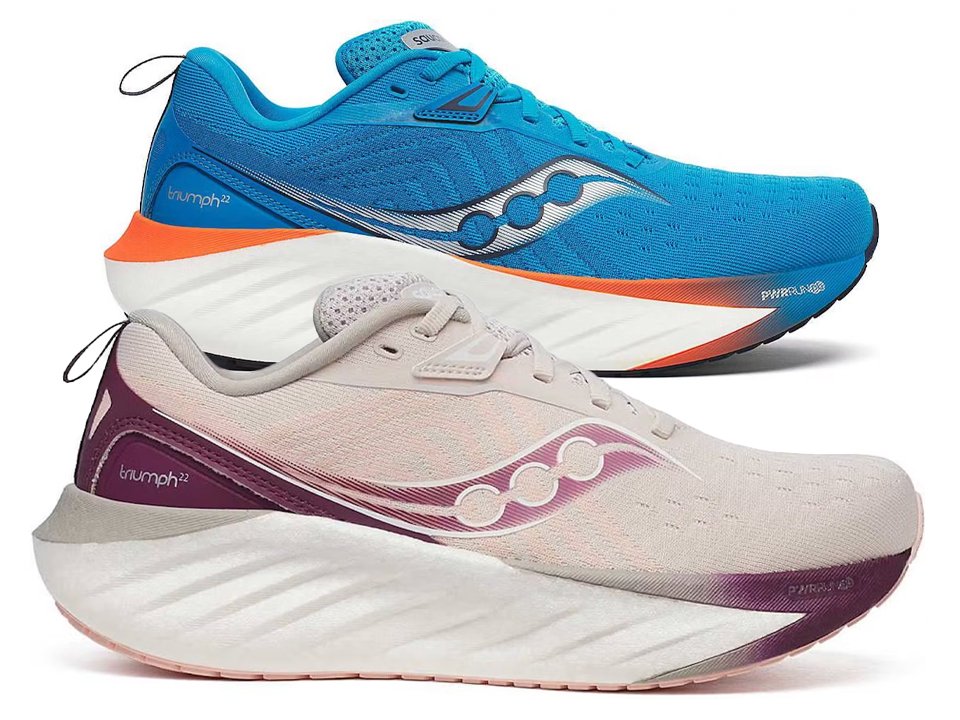
The beautifully soft PWRRUN PB midsole foam makes this shoe a great option for long, easy runs or recovery days. The rocker is moderate and rolls you forward nicely, even at a relaxed pace. A thick, padded tongue adds a noticeable amount of comfort.
Daily trainers
The all-rounder, known in English as the daily trainer. A true jack of all trades that adapts to almost any kind of running. There's less midsole foam than in a max-cushioned shoe, so it feels more responsive and gives you more ground feel. It suits most runners and most types of running. If you already have some running experience and only plan to own one pair, this is the category to choose from.
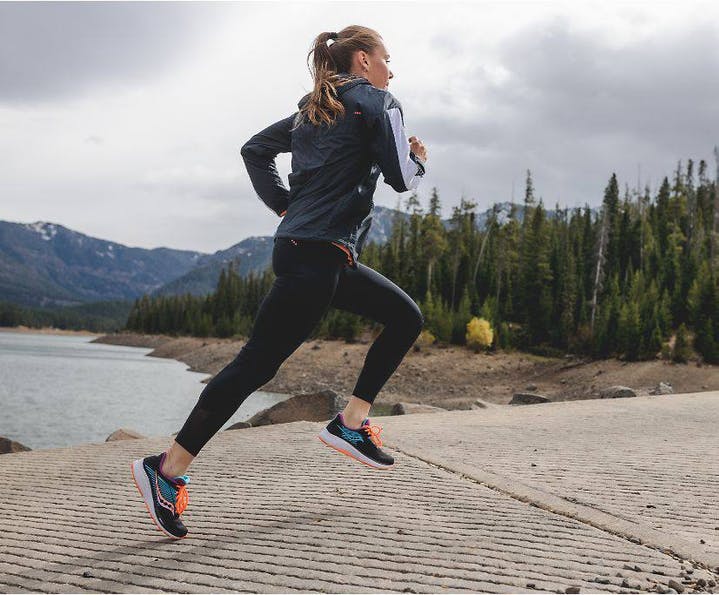
A daily trainer suits runners with some experience, or beginners who want to work on their running technique. Pictured: Saucony Women’s Guide 14.
A daily trainer also works for demanding runners putting in the miles. For beginners, it's a perfectly sensible choice if you want to progress and try different types of training. It shines on everyday runs, but as the pace picks up, some of your push-off gets lost in the midsole. On the other hand, at a slow pace on a long run, the foam doesn't quite provide enough cushioning – your foot spends longer on the ground, giving the foam time to compress under each step.
A few examples of daily trainers:
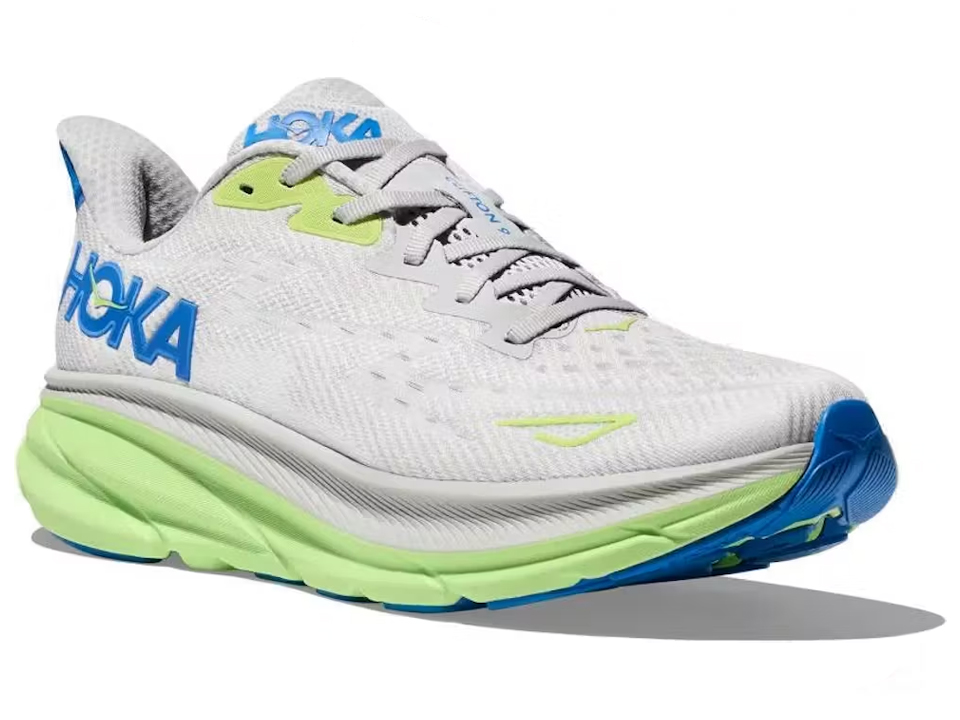
A skilfully refined rocker with no obvious point where it kicks in – instead, a smooth, gradual transition carries you into toe-off almost without you noticing. The upper is of medium thickness, adding durability and a bit of splash protection in the rain. True to Hoka style, there's plenty of cushioning without it feeling too soft. It suits all kinds of foot strikes. The heel counter is slightly roomy for narrow ankles, so you may need to play around with the lacing. As you'd expect, the outsole has generous rubber coverage for durability.
Stability: NEW BALANCE VONGO 6
A stability shoe that works brilliantly for everyday running. The upper is a typical medium weight – by no means heavy, but not see-through either. Weight has been saved by reducing the rubber on the outsole. The result is slightly lower durability, but an incredibly light shoe on the foot. That said, New Balance's “exposed” midsole foam holds up surprisingly well. The rubber is placed on the highest-wear areas of the outsole.
Light speed shoes
Shoes in this category have the least midsole foam, and the foam compound is the most responsive and firm. The shoe is light, so it moves with you without wasting energy. The midsole is firm, so generally speaking it calls for an experienced runner with good technique to avoid unnecessary joint strain or overuse injuries.
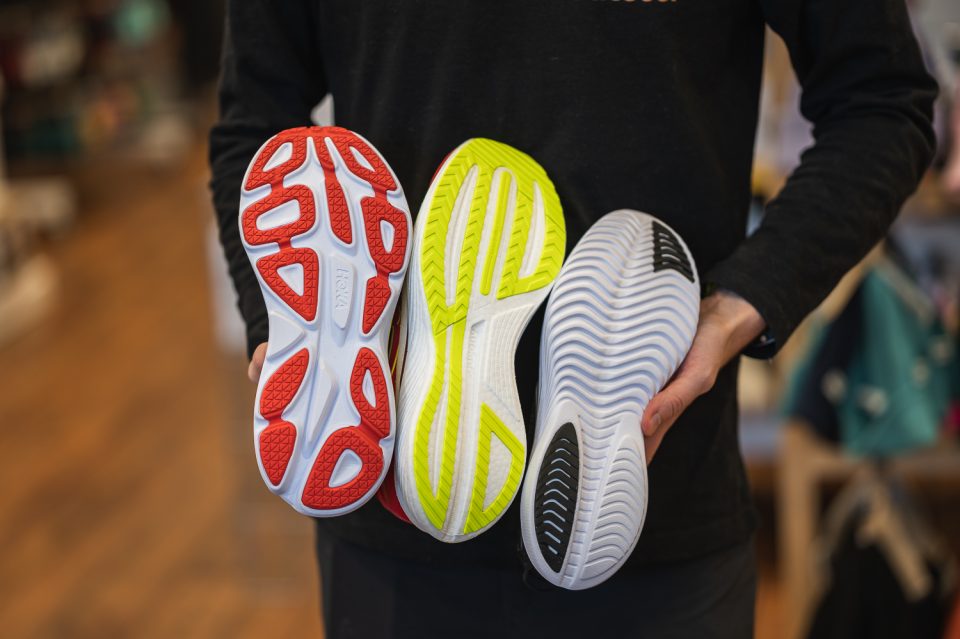
Much of the weight saving often comes from using less rubber on the outsole. The rubber is thinner and/or placed strategically on the areas that typically see the most wear. That leaves some of the midsole foam exposed, so the shoe wears faster and has a shorter lifespan. These shoes also work well for tempo runs and interval sessions.
We can't recommend these shoes to everyone straight off, and certainly not to beginners. Experienced runners generally either know they need a shoe in this category or want to add one to their rotation.
A few examples of our speed shoes:
This one sits somewhere between a light speed shoe and a daily trainer. The ride feels noticeably soft. The midsole is softer than in the previous version, so it also works as a daily trainer.
The drop is still a comfortable 8 mm, and the fit is almost sock-like. The tongue is stitched in very discreetly, adding to that sock-like feel. The heel stays locked in place even with light lacing. The upper may feel a touch thick for a speed shoe, but breathability can still be good.
The outsole has good rubber coverage, albeit thin.
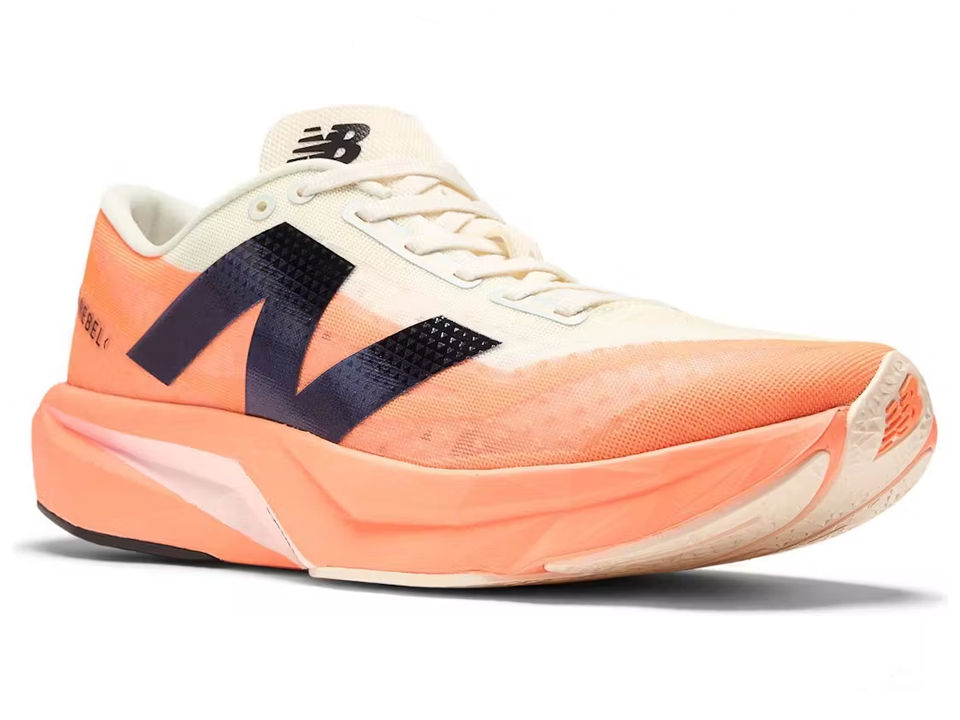
The New Balance FuelCell Rebel v4 is a light, versatile running shoe that's particularly well suited to faster sessions and races. Its updated midsole combines two different foam structures for an energetic, bouncy ride.
The tongue is small and very discreetly stitched in. There's enough foam in the midsole that you won't feel the impact on a longer tempo run, yet it stays bouncy throughout the session. Rubber reinforcements cover only the critical areas of the outsole to prevent wear; the rest is exposed blown foam, which has become much more durable in recent years. Expect it to last several hundred kilometres.
Much of the weight saving often comes from using less rubber on the outsole. The rubber is thinner and/or placed strategically on the areas that typically see the most wear. That leaves some of the midsole foam exposed, so the shoe wears faster and has a shorter lifespan. These shoes also work well for tempo runs and interval sessions.
We can't recommend these shoes to everyone straight off, and certainly not to beginners. Experienced runners generally either know they need a shoe in this category or want to add one to their rotation.
Other things to consider when choosing a shoe
Almost all shoes have a rocker, meaning the sole curves gradually upwards from the ball of the foot towards the toes. Rocker shape varies a lot from model to model. The idea is to roll your foot onto your toes for push-off more quickly. This shortens ground contact time, and the shoe almost carries you forward into the next stride on its own.
Drop is the height difference between the heel and the forefoot. There's no one-size-fits-all rule here – it's a personal choice that depends on your needs. As a general pattern, though, the faster the shoe, the lower the drop.
Our range also includes stability shoes. Neutral shoes are by far the most common; stability shoes are intended for runners who know they specifically need them.