Free to Hang — Hammock Camping Basics
Hammock camping has become very popular in recent years, and for good reason. With a little practice, a hammock is quick to pitch, the kit can pack down small if you want it to, and plenty of people simply enjoy lounging in one.
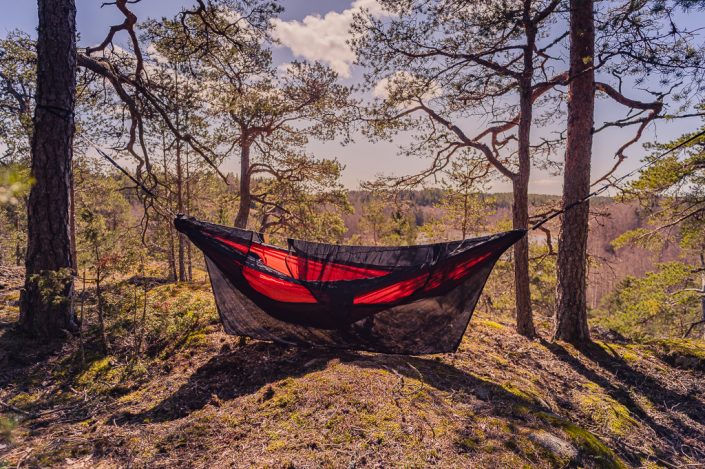
A hammock works especially well on rocky, stony or uneven ground where pitching a tent is awkward. If there are trees nearby, you can usually get a hammock up.
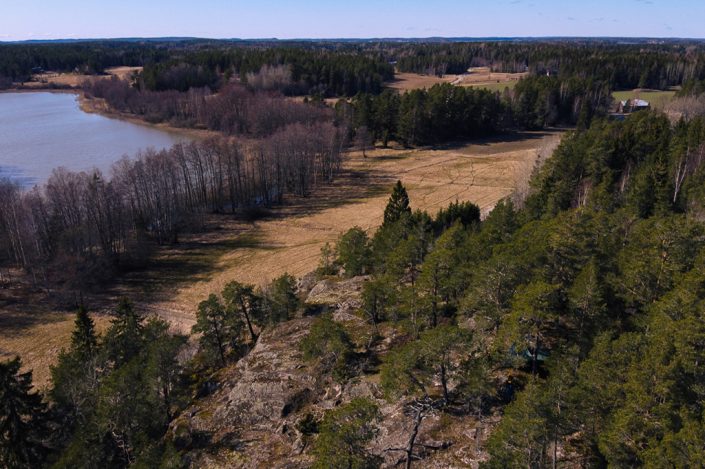
With a hammock, you can camp on a rocky viewpoint where pitching a tent would be a real struggle. The green tarp blends into its surroundings, making the hammock camper hard to spot even from the air.
If you plan to spend the night sleeping outdoors in a hammock, the hammock on its own isn't enough.
For a night in a hammock, you'll need the following kit:
- Hammock
- Tree straps + suspension hardware
- Tarp (shelter from the rain) + guylines and pegs
- Mosquito net (optional outside bug season)
- Underquilt or sleeping mat
- Sleeping bag or top quilt
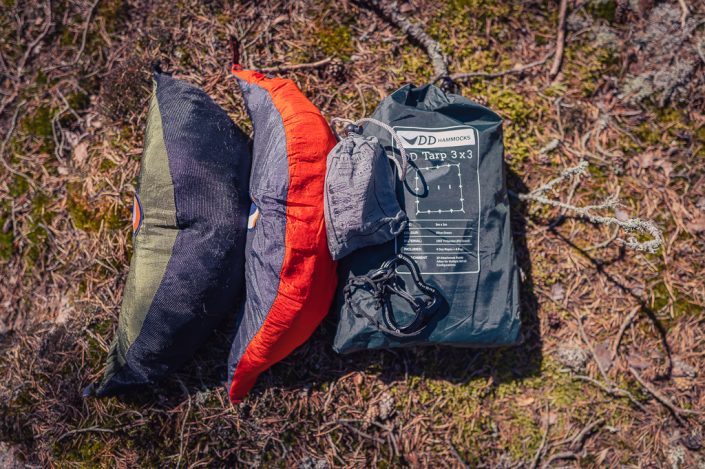
Pictured: Ticket To The Moon mosquito net, tree straps and hammock, with a DD Hammocks tarp. The setup is still missing a sleeping mat/underquilt and a sleeping bag/top quilt.
Choosing a hammock
We stock hammocks for all kinds of uses, from brands including Ticket To The Moon, DD Hammocks, Eagles Nest Outfitters, Sea To Summit, Robens, Bushmen and Amazonas. The hammock itself is usually a fairly affordable buy. Our models come in different sizes, often labelled single and double. Two people rarely sleep in the same hammock – the labels simply indicate a clear difference in size. A smaller hammock saves weight, while a larger one naturally gives you more room to stretch out.
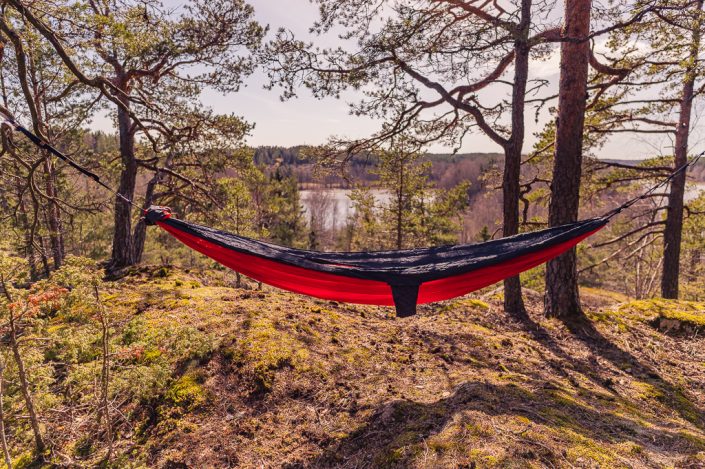
Besides size, the other key question is whether you want to use a sleeping mat or an underquilt with your hammock. If you prefer a sleeping mat, go for a double-layer hammock. Double-layer means there's a separate pocket for the mat, so it stays put. Without one, the mat tends to slide around every time you roll over, which can make for a pretty miserable night.
Hammocks don't usually come with the rest of the kit you need, so you'll have to pick everything separately. There are exceptions – some hammocks include a mosquito net and suspension hardware, such as the DD Hammocks Frontline Hammock.
Tree straps and suspension for your hammock
Tree straps are the webbing straps that wrap around the trunk. Because a hammock carries a lot of weight, you need to make sure the bark doesn't get damaged. Thin cord cuts into the bark, whereas a wider strap spreads the load and leaves it intact.
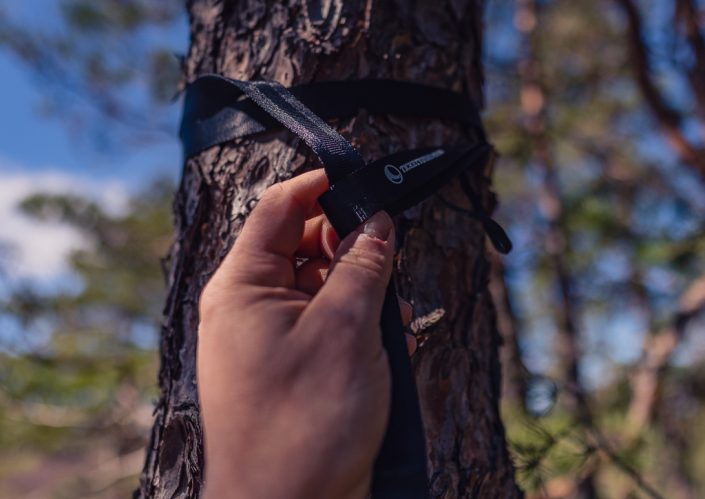
Pictured: Ticket To The Moon Moon-Strap tree straps.
There are plenty of ways to attach tree straps – just make sure you don't damage the bark. You can clip the hammock to the strap with carabiners, or use the hooks that come with some hammocks, as is usually the case with Ticket To The Moon models.
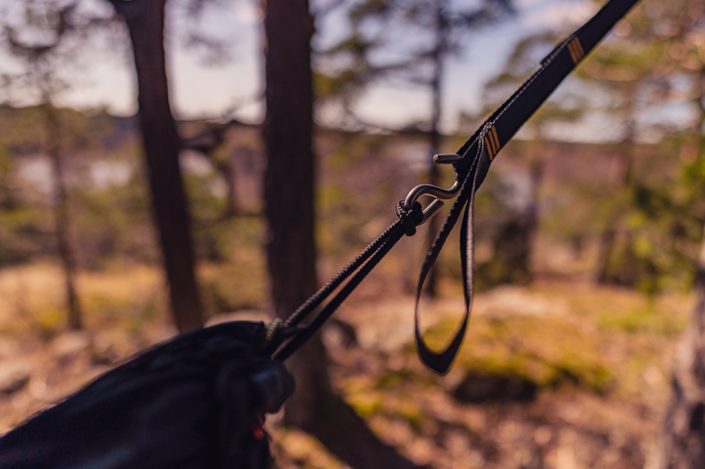
The hook supplied with Ticket To The Moon hammocks fits straight into the loops on the tree straps.
You can also add adjustable suspension between the hammock and the tree straps, such as DD Hammocks Whoopie Slings.
If you'd like to hang your hammock at home too, you can use fittings such as the Eagles Nest Outfitters Deluxe Hammock Hanging Kit or the Ticket To The Moon Hammock Anchor.
A tarp for your hammock
A tarp is a tarpaulin-like sheet of fabric that you can rig in countless ways for countless purposes. Some tarps are shaped specifically for hammocks, so they shield you from the wind on all sides. That's usually only necessary in freezing winter conditions. One example is the Ticket To The Moon Full Moon Tarp.
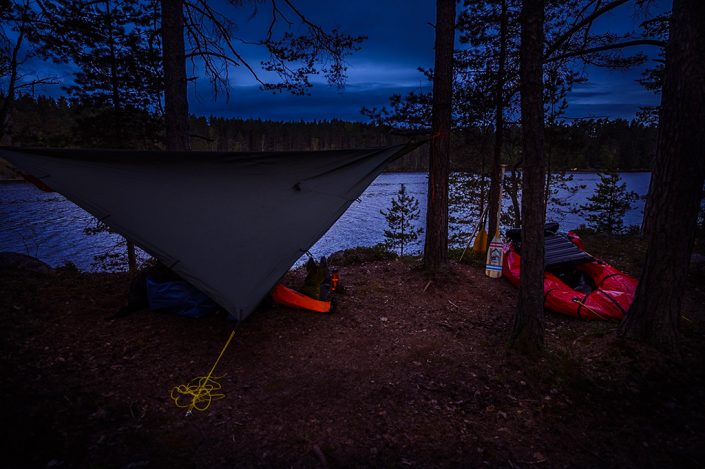
The DD Hammocks Tarp 3×3 is a good size for hammock camping and a sensible buy for the money.
More often, though, people use a square tarp pitched in a diamond shape over the hammock. That way the long diagonal runs along the hammock, giving you the best protection from rain.
You don't always have to pitch the tarp if you're confident it won't rain. You can also raise one edge on the side facing the view if you want to take in the scenery before you drift off.
Tarps come in a wide range of weights and fabrics. Heavier tarps are often tougher and last longer, but a lightweight tarp is nicer to carry and packs down much smaller. If you're travelling by bike, for example, you'll want to keep an eye on pack size as well as weight.
You'll also need cord and tent pegs to pitch the tarp.
A mosquito net for your hammock
When the midges and mosquitoes are out, you won't get much sleep without a net. A mosquito net also helps you stay warm – it blocks the wind and holds in a little of your body heat.
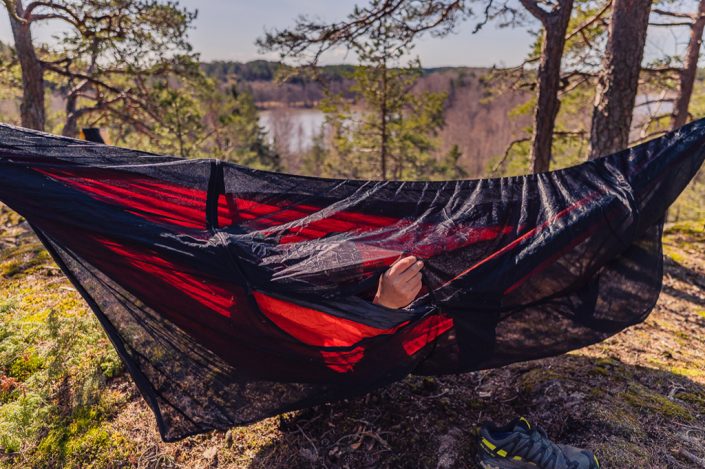
The Ticket To The Moon Convertible BugNet 360 mosquito net in black.
Hammocks rarely come with a mosquito net, so you'll usually need to buy one separately. Nets vary slightly in how they attach and come in different colours. A dark net is easier to see through in sunshine, a green one blends in a little better, and white netting is said to attract fewer insects.
Underquilt or sleeping mat for hammock camping
A sleeping bag on its own won't keep you warm in a hammock, even in summer. The bag gets compressed under your body, letting cold air reach you directly. Insulating against the cold from below is often even more important than insulating from above.
Double-layer hammocks have a separate pocket that holds the sleeping mat in place. Otherwise, using a mat in a hammock can be a real hassle. Mummy-shaped mats generally work better in a hammock, ideally with lengthwise air chambers so they flex more easily. It's also worth leaving an air mat slightly underinflated – it stays in place better and moulds to the shape of the hammock.
Most hammock campers, however, swear by an underquilt – also known as an under blanket. This piece of kit goes by many names.
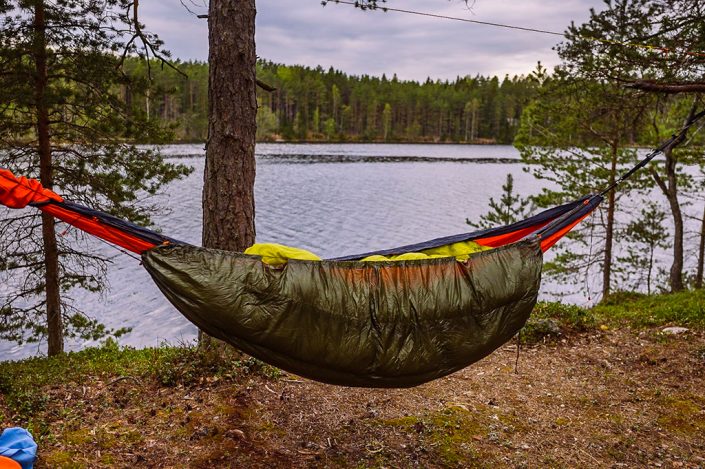
The Bushmen Glow -12 Underquilt attached to a hammock.
An underquilt hangs beneath the hammock, wrapping around it like a sock. It insulates the sides better than a sleeping mat does. Underquilts are rated the same way as sleeping bags, with a comfort rating that indicates the temperature at which you should, in theory, still sleep comfortably.
If you're using a mosquito net, it goes over the whole setup.
Sleeping bag or top quilt for your hammock
As mentioned, a sleeping bag alone isn't enough to keep you warm in a hammock, because it gets squashed flat underneath you and loses its insulating ability. That's where the top quilt (or simply quilt) comes in – it does away with the fabric and insulation underneath you altogether. In other words, it's more like a duvet than a sleeping bag.
Quilts also work with a sleeping mat on the ground, but they're especially effective in a hammock paired with an underquilt, which also wraps up the sides for insulation. A quilt saves weight and pack size compared with a regular sleeping bag, too.
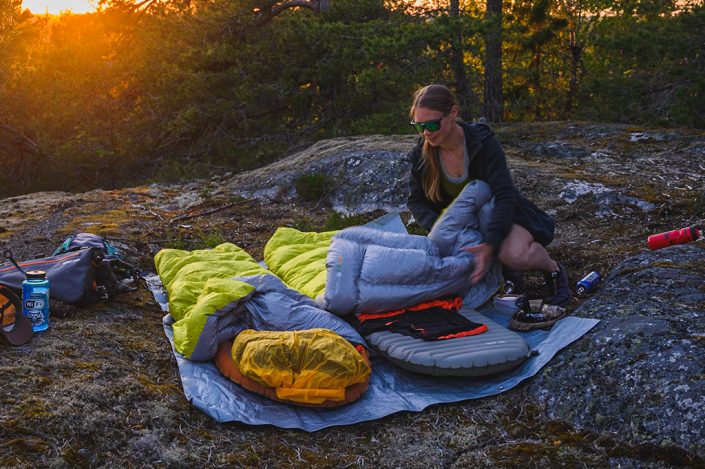
The Thermarest Corus quilt also works with a sleeping mat, no hammock needed.
Our quilt range changes with the season and availability, but we usually stock models from brands such as Rab, ENO and Thermarest.
You'll find our guide to choosing a sleeping bag here.
For more on down and its properties, read here.
More hammock camping tips
Don't hang your hammock too tight between the trees. The general advice is to let the suspension hang at around a 30-degree angle. Avoid lying straight along the hammock, or you'll end up curled like a banana. Lie at a slight diagonal instead and you'll find a much flatter, more comfortable position.
In the rain, water can run down the suspension lines and eventually into the hammock. There's an easy fix: take a short length of cord and tie it tightly around each suspension line, leaving the ends hanging down. Water running along the line will hit the cord and drip off it onto the ground.
Pitching a hammock can feel tricky and slow at first. Once you've dialled in your own setup, it gets easier every time, and eventually you'll have it up in no time without any head-scratching.
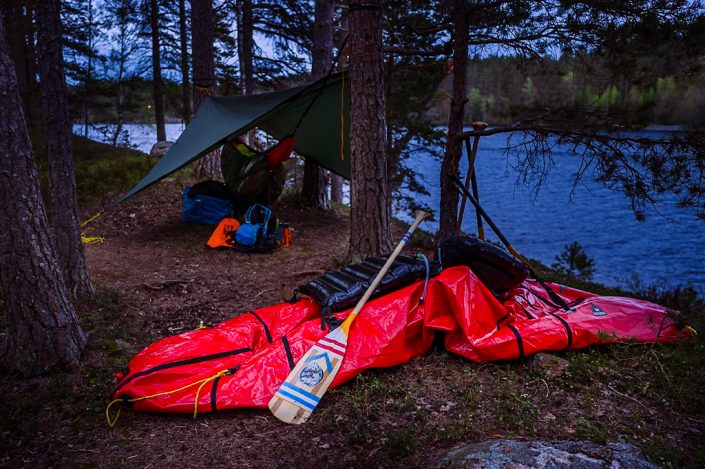
Not everyone enjoys sleeping in a hammock. If you already own a sleeping mat and sleeping bag, though, you can give it a go without a big investment. A tarp is a handy piece of kit for any camping trip anyway. A hammock and mosquito net won't cost a fortune, and if sleeping in one doesn't suit you, you can still use the hammock on day hikes or for lazing about in the garden.
Many underquilts also double as a top blanket with a sleeping mat when you're not using a hammock, so they're a versatile buy.
Watch the video where Jaska Halttunen of Fillaripäiväkirja shows his own setup:
Happy hanging!