Backpack sizes: what actually fits in each one?
Thinking about getting a rucksack but not sure what size suits you? You're not the only one, so we put together this guide to backpack sizes.
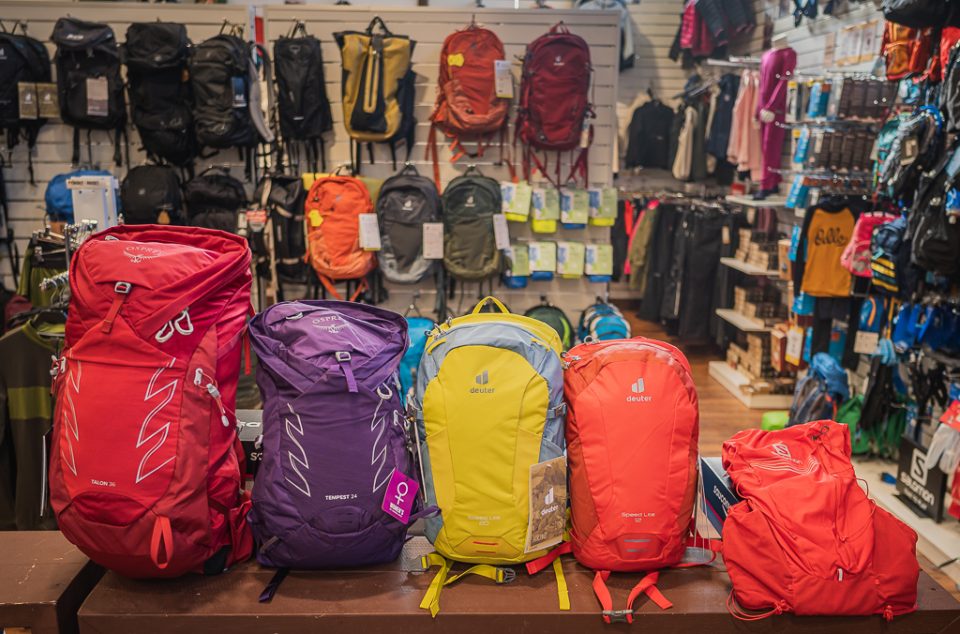
Pictured from left to right: Osprey Talon 36, Osprey Tempest 24, Deuter Speed Lite 20, Deuter Speed Lite 12 and Salomon Adv Skin 12 Set.
At the time of writing, we stock 187 backpacks. The smallest are hydration packs designed for fast-paced sports, while the largest are around 40 litres.
Choose a pack with features that match what you actually do. It needs to fit everything you're taking, but ideally it shouldn't be too big. An oversized pack weighs more, and you end up carrying weight you don't need.
Sometimes one pack won't cover all your adventures, and you'll need a couple in different sizes. Alternatively, you can go for a larger pack that compresses down. Compression straps let you cinch a bigger pack into a smaller one, so a lighter load stays firmly in place instead of shifting around inside.
What actually fits in different-sized packs?
To show you, we went to our Kuninkoja store in Raisio and tested five packs of different sizes.
Let's start with the smallest and work up:
12-litre running pack
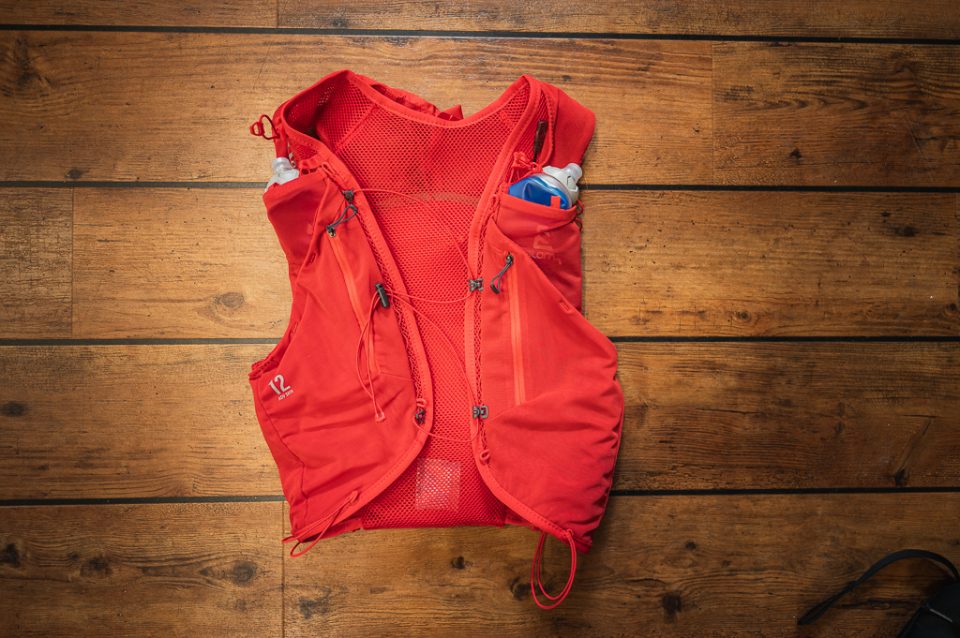
The vest-style Salomon Adv Skin 12 Set running pack.
Our smallest packs are running packs. Most of them are really hydration packs: they hold drinking bottles or a hydration bladder, and that uses up most of the space. The small pockets take an energy bar and your phone.
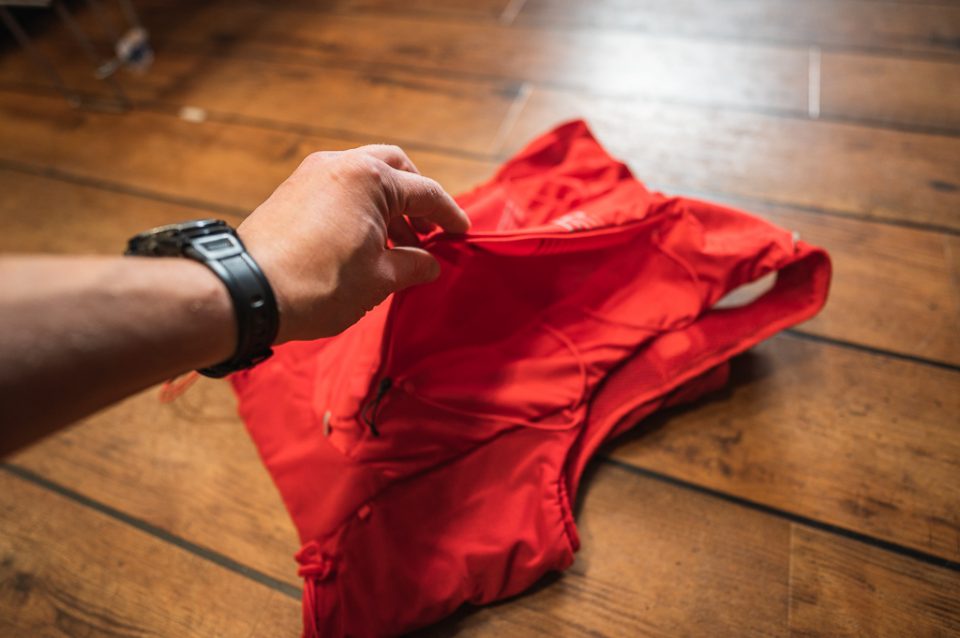
The Salomon Adv Skin 12 Set has an insulated sleeve for a hydration bladder, but it also comes with two 500 ml “soft flasks” that sit at the front. That leaves the full 12 litres at the back, which is quite a lot for a running pack. It also makes the pack a good fit for cycling, skiing and multisport.
As you can see in the photo, this pack is more like a vest and sits close to your back when you're moving fast, such as when running. It weighs 335 g. Inside, you can fit a lightweight insulated jacket, gloves, a beanie and an emergency blanket.
You'll find all our sports and hydration packs here.
12-litre pack for fast-paced sports
Small 10–20 litre packs suit activities where you want to stay light and aren't carrying much. The harness is designed for light loads, so heavy kit can feel uncomfortable on your back.
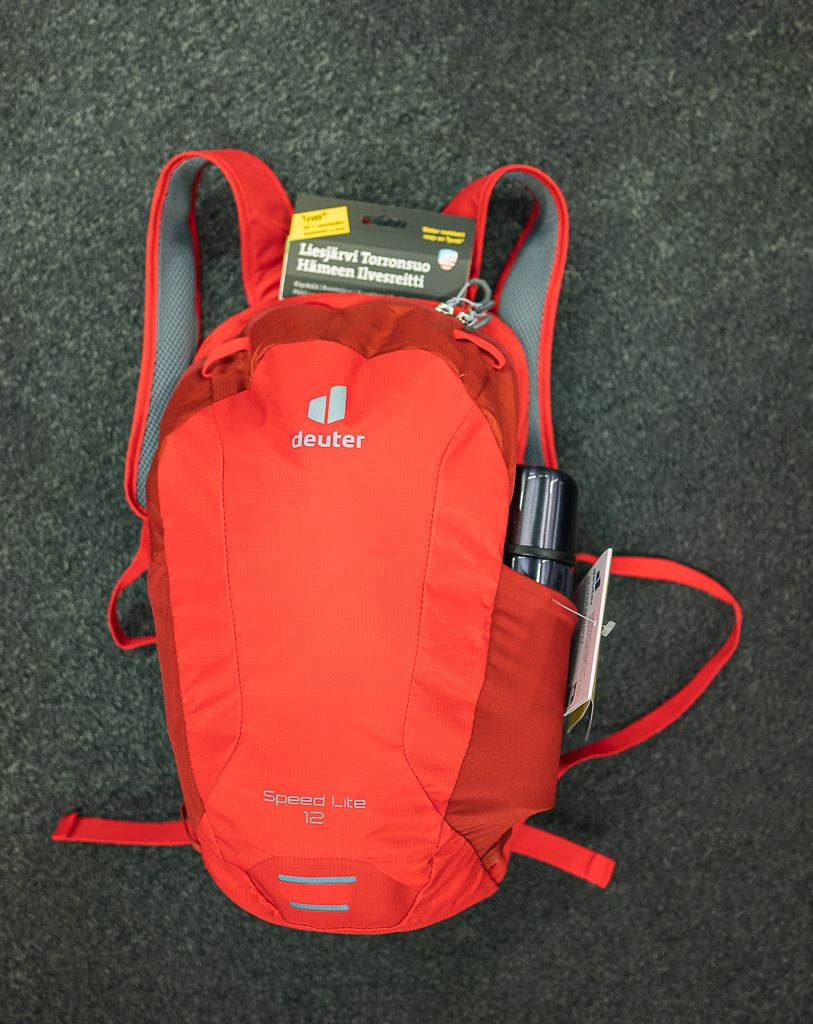
The small, neat Deuter Speed Lite 12 is made for fast-paced activities.
At 350 grams, the Speed Lite 12 is very light. It works well for cycling and day hikes when you want to move with a minimal pack.
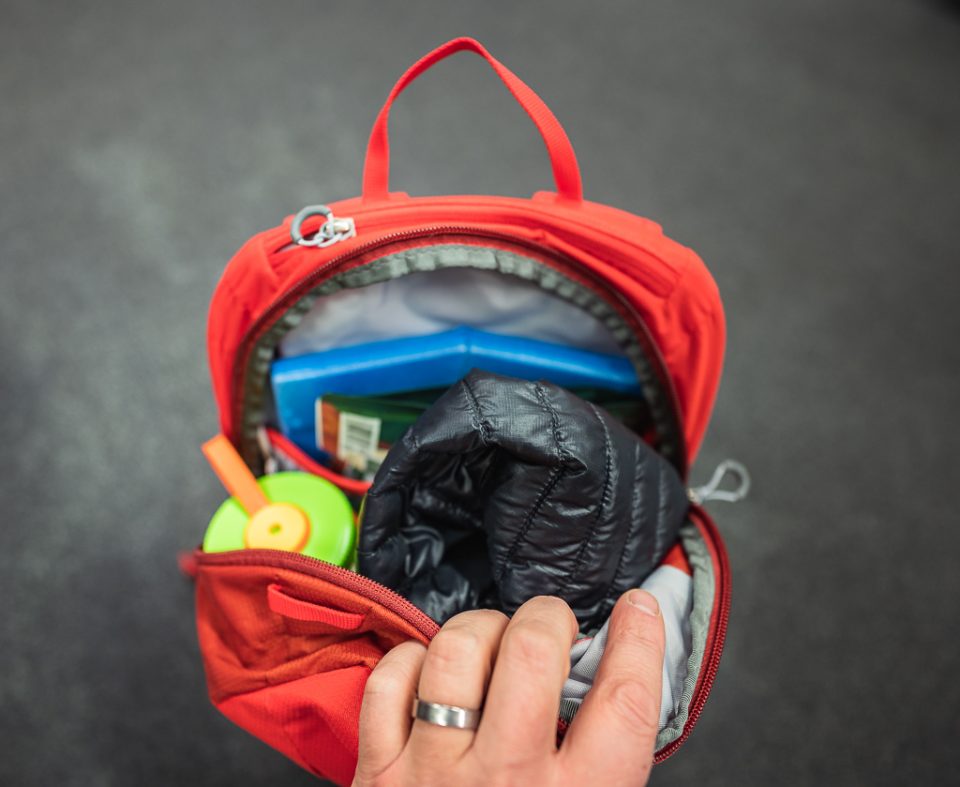
It has stretch side pockets for a water bottle, a valuables pocket for your keys and wallet, a stretch internal sleeve for a hydration reservoir of up to 2 litres or a sit mat, and a handy large main compartment.
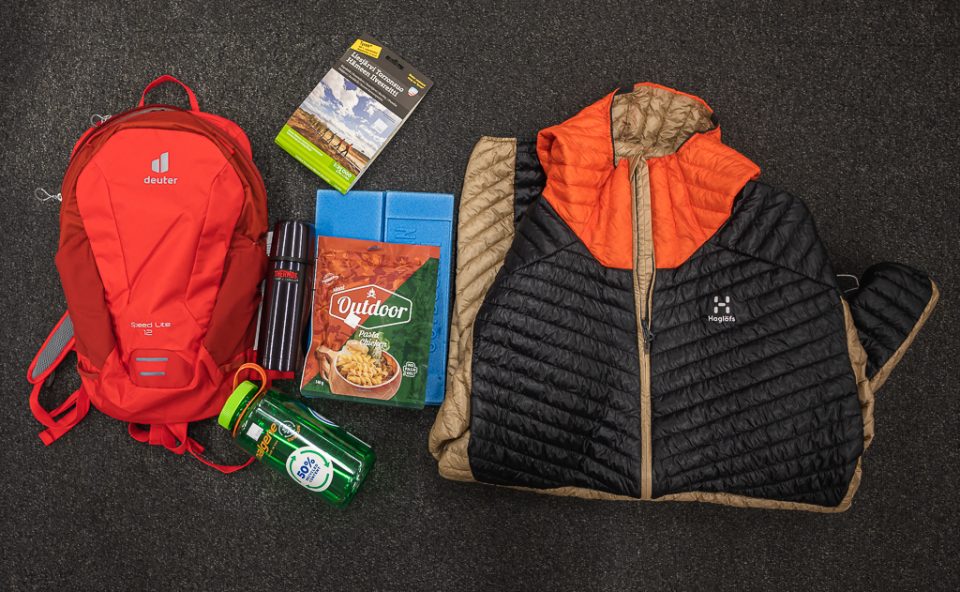
Despite the small volume, it holds a fair amount. The side pockets took a 350 ml vacuum flask and/or a 0.5-litre Nalgene bottle.
In the main compartment we fitted:
- sit mat
- 1-litre Nalgene bottle
- pouch of trail food
- map
- lightweight insulated jacket
20-litre pack for day hikes
A slightly bigger pack is more versatile than a 12-litre one. At 20 litres, you can carry a wider mix of kit.
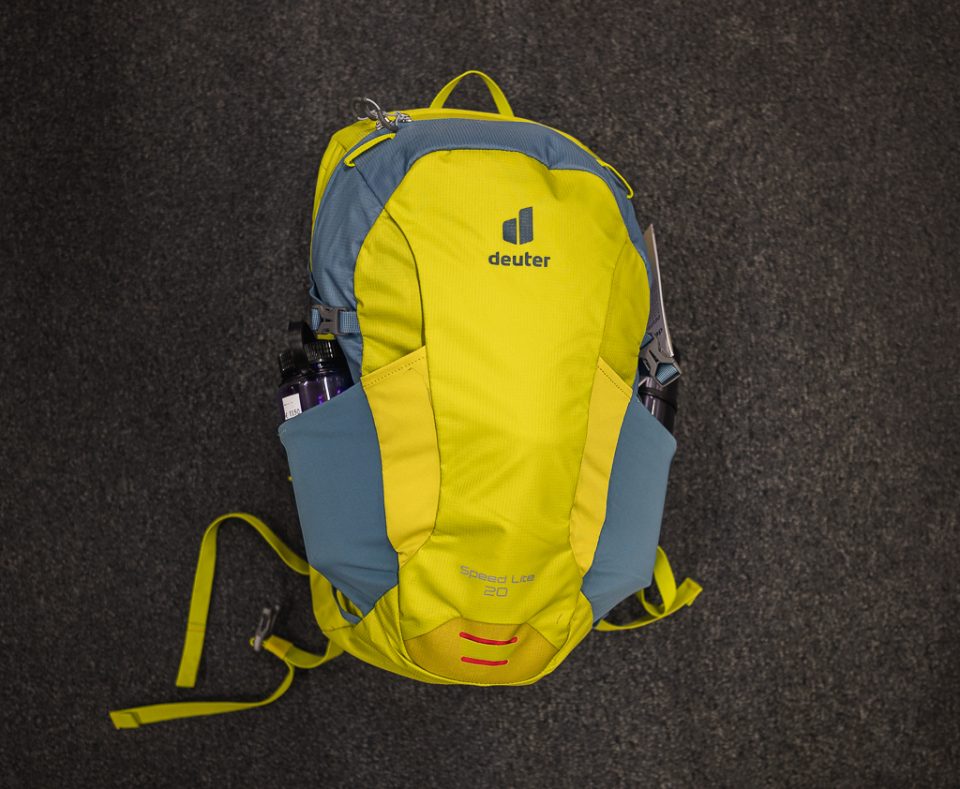
The Deuter Speed Lite 20 is a practical size for a hiking daypack.
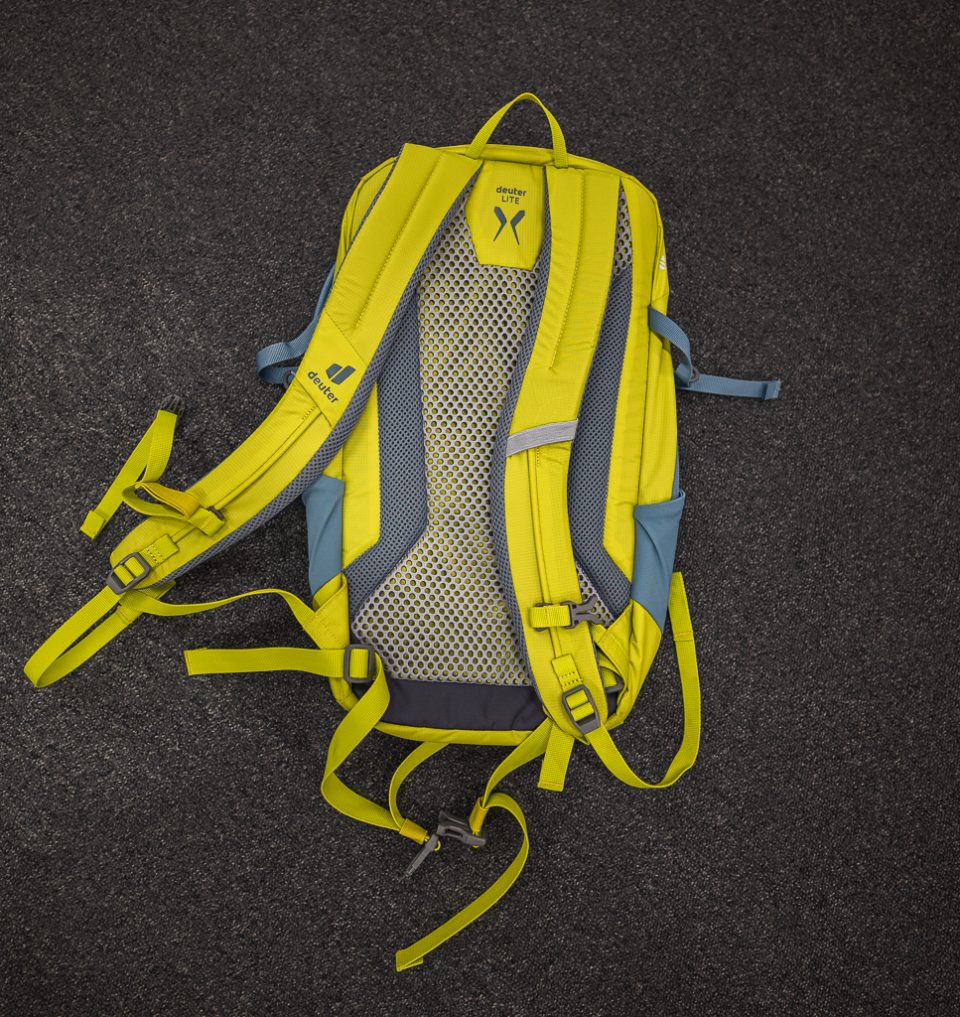
The weight goes up from 350 grams on the 12-litre model to 490 grams, but you get padded shoulder straps and better carrying comfort.
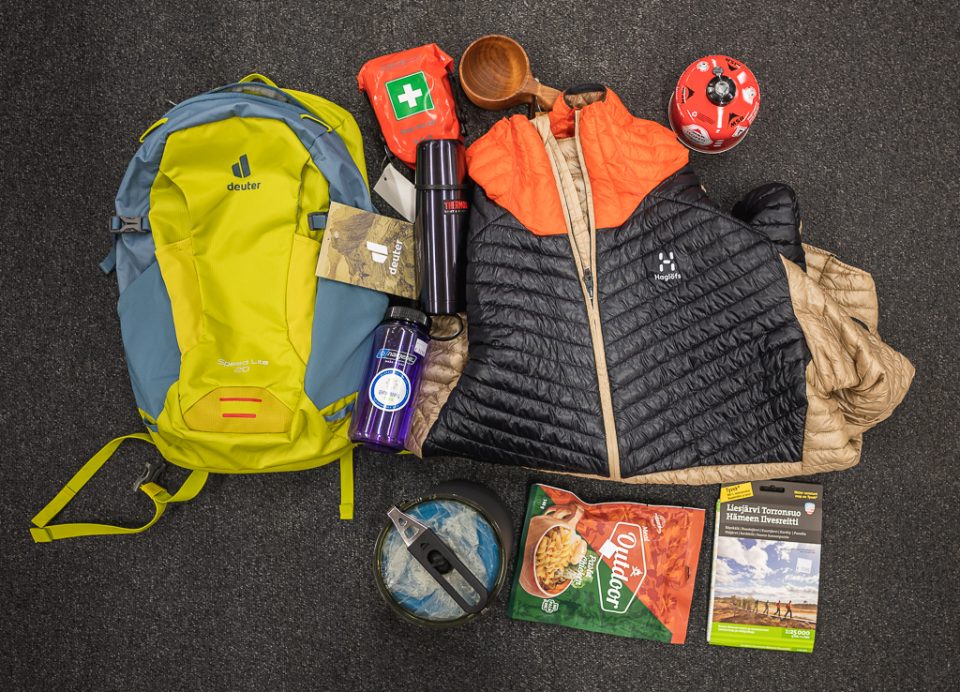
A 20-litre pack holds a surprising amount. The side pockets take a 0.5-litre Nalgene bottle and/or a 350 ml vacuum flask.
In the main compartment we fitted:
- lightweight insulated jacket
- pouch of trail food
- map
- camping stove with cookset
- 227 g gas canister
- map
- sit mat
- small first aid kit
- kuksa (wooden camp cup)
24-litre pack
Move up a size and there are plenty of packs to choose from. Alongside Deuter, Osprey is a popular brand, with its Tempest series designed for women and Talon series for men.
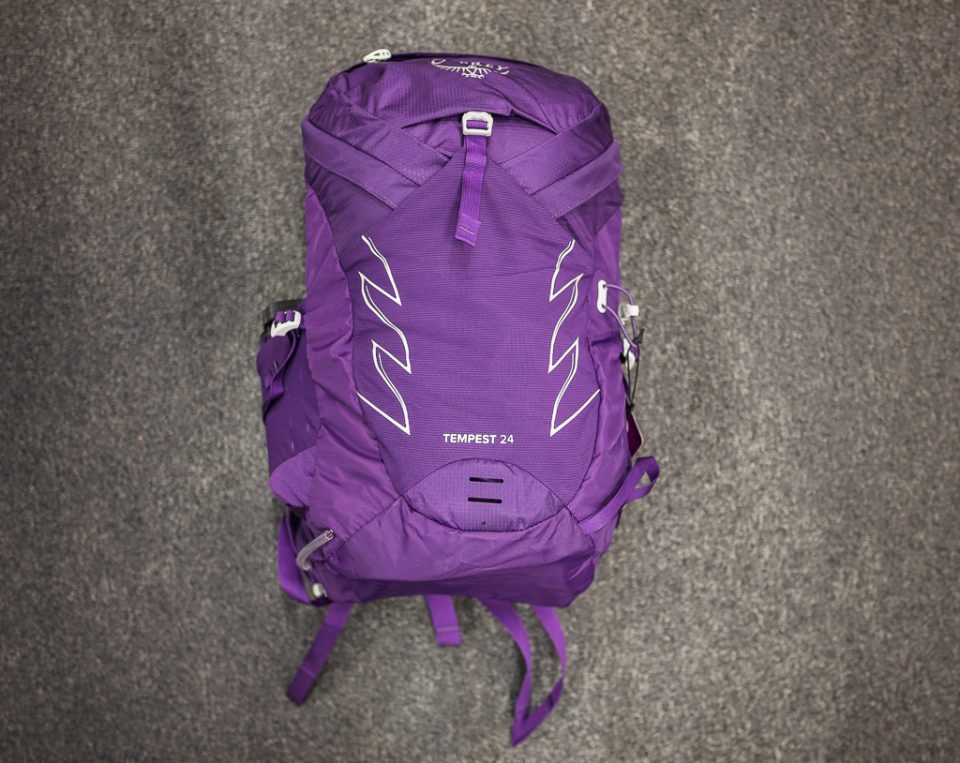
The Osprey Tempest 24 is still a compact daypack that handles a wide range of activities.
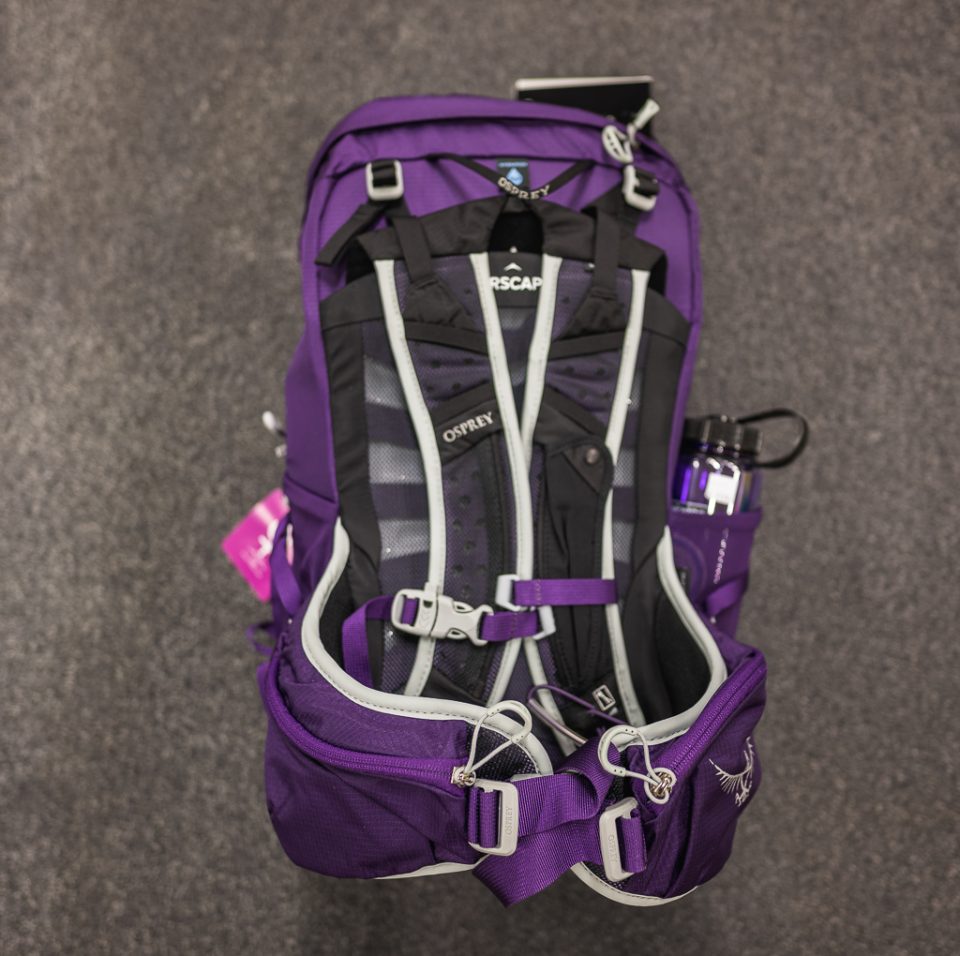
At 24 litres, you get a proper padded hip belt. Smaller packs usually only have a simple webbing strap.
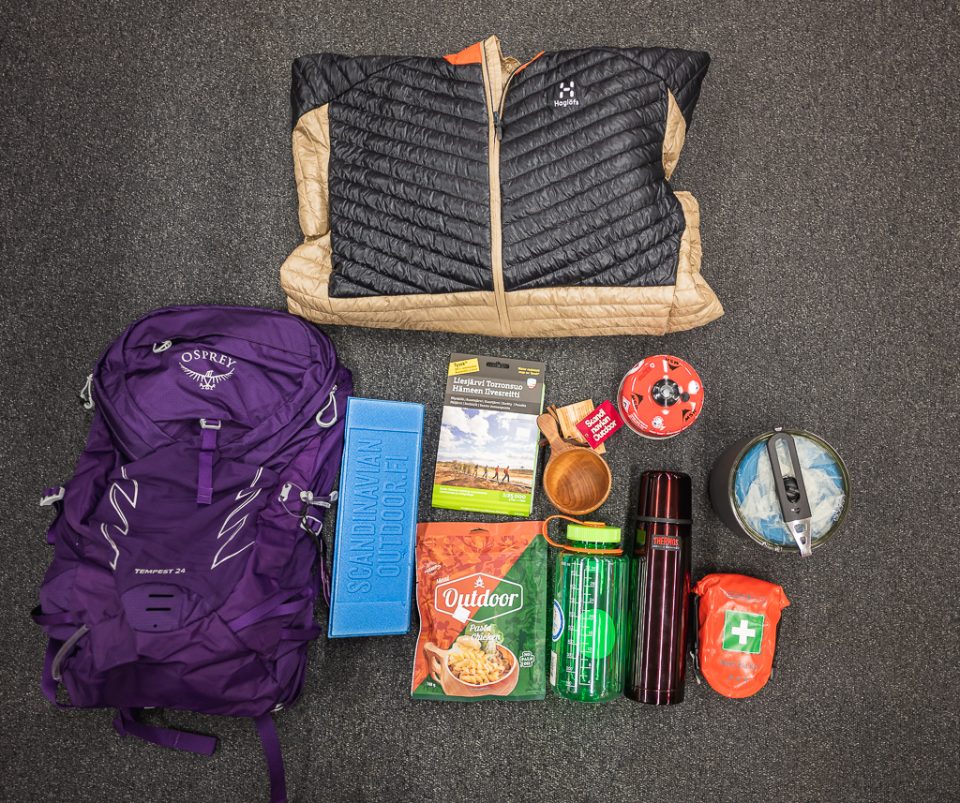
Again, the side pocket takes either a 0.5-litre Nalgene bottle or a smaller vacuum flask.
The main compartment easily took:
- sit mat
- map
- pouch of trail food
- 1-litre Nalgene bottle
- 750 ml vacuum flask
- kuksa (wooden camp cup)
- lightweight insulated jacket
- camping stove with cookset
- 227 g gas canister
- small first aid kit
On the back there's also a stretch kangaroo pocket for a top, gloves or a beanie. The lid has a roomy valuables pocket too, which we left empty this time.
36-litre pack or lightweight rucksack
There are plenty of sizes between the last pack and this one, but we're skipping ahead to the largest packs in our range.
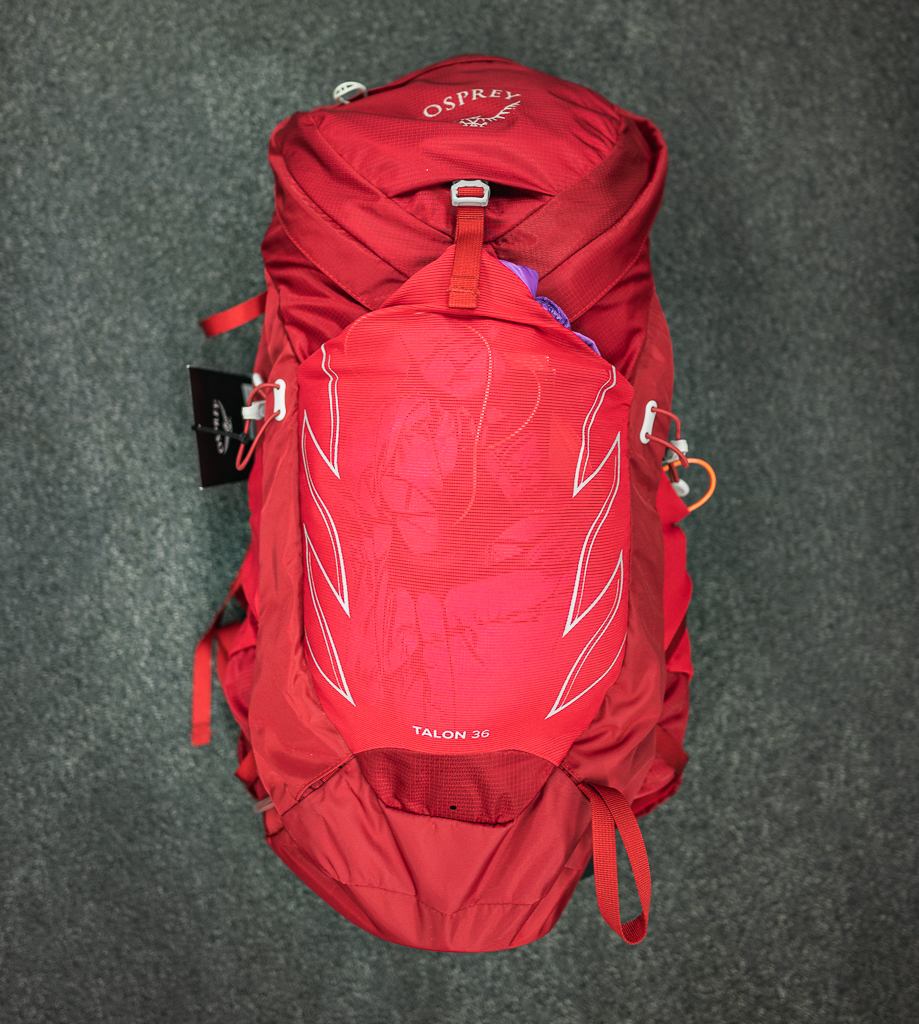
The redesigned Osprey Talon 36 swallows a lot of kit.
The largest packs hold enough for a lightweight hiker to head out overnight. A pack this size also makes sense if two of you want to share one pack on a day out, or if you use it for travel.
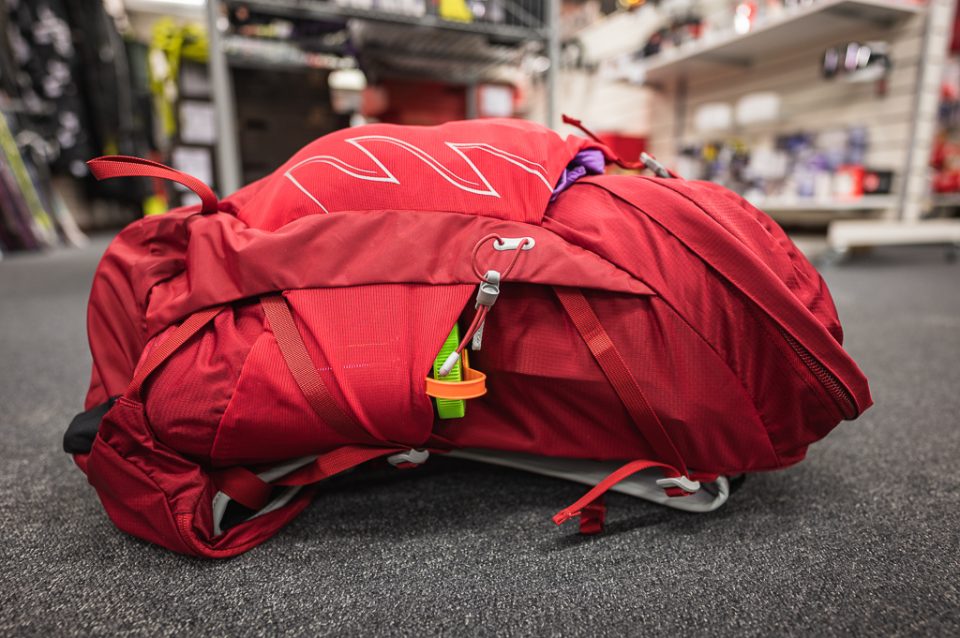
The side pockets are roomier than on the smaller packs, and a 1-litre Nalgene bottle slips in easily. The pockets are also deep, so even an empty bottle won't easily bounce out.
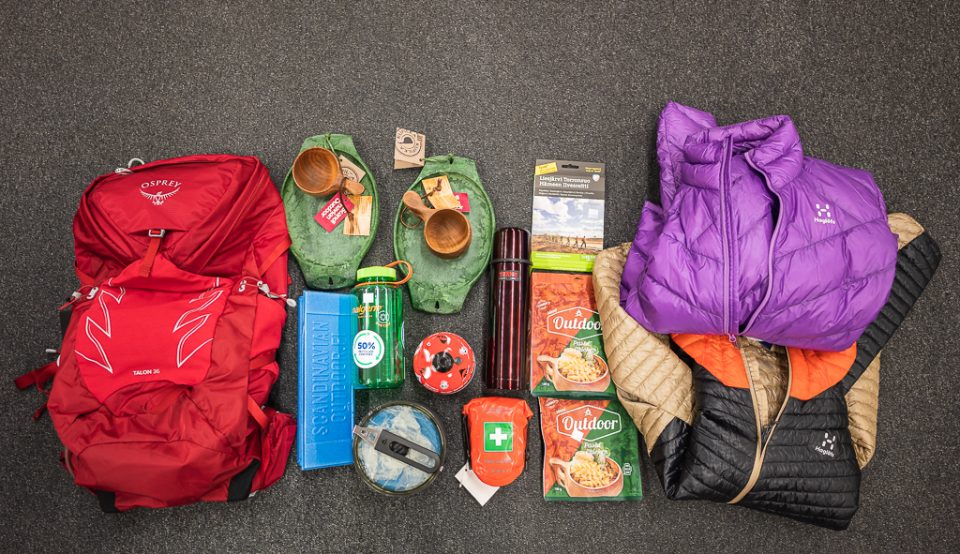
The updated Talon 36 packs in more than its size suggests, and it opens at the top under a lid. The harness is on par with a sturdy lightweight rucksack, and an HDPE framesheet gives the pack structure. There's also a smaller 34-litre version in size S/M.
We packed it with hiking kit for two people:
- 2 x sit mat
- 2 x Kupilka camp plate, spoon and cup
- 2 x pouch of trail food
- 2 x lightweight down jacket (one in the kangaroo pocket)
- 750 ml vacuum flask
- 227 g gas canister
- camping stove with cookset
- small first aid kit
- map
Summary
To sum up: larger packs have a harness designed for heavier loads, so they carry more comfortably. The smallest packs are the practical choice when you want to save weight and move more athletically.
For hiking, a good size is 20–30 litres for women and 25–35 litres for men. If you ride in a more aggressive, hunched position on the bike, check that the pack doesn't hit the back of your head.
Shop online, or come and try packs on in one of our stores.