Rucksack sizes: how much fits in each one?
Buying your first backpack can be tricky when you have no idea what will actually fit inside. This post aims to give you a better sense of what different backpack sizes can hold.
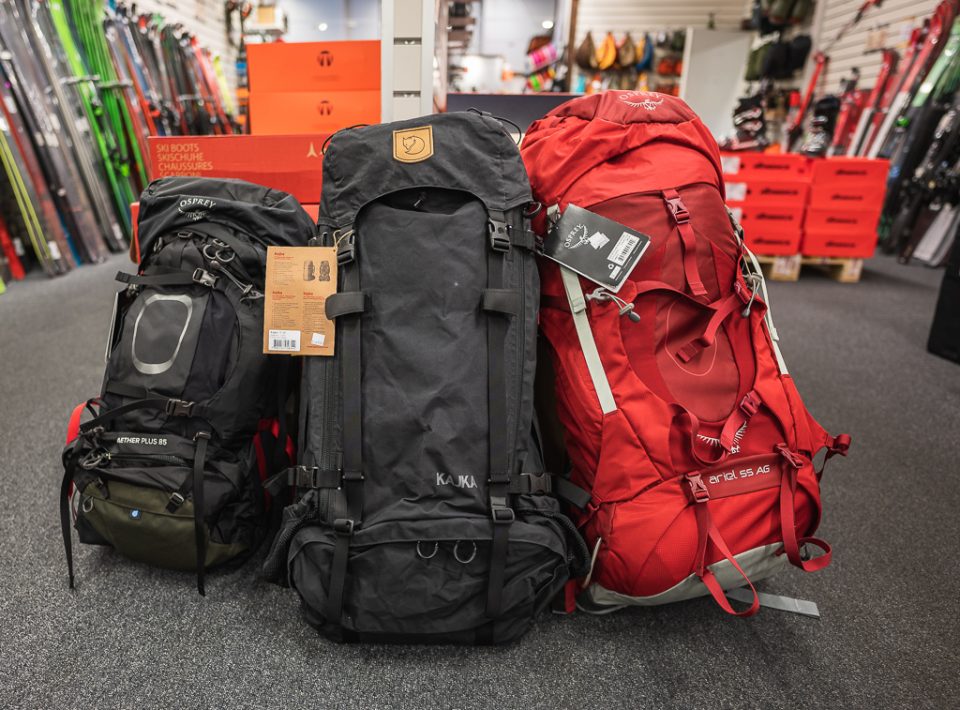
Pictured from left to right: Osprey Aether Plus 85, Fjällräven Kajka 75 and Osprey Ariel 55 AG.
A picture can be more misleading than a thousand words. Backpacks of different shapes look very different in size – and the one that looks biggest in the photo actually has the smallest capacity.
You can find all our backpacks here.
When buying a backpack, the most important thing is of course getting the adjustments to fit your back – and it needs to feel comfortable, too. Backpacks also come with a wide range of features, but in this post we're focusing mainly on size.
Your kit determines the size of backpack you need. A pack is most comfortable to carry when everything fits inside and you don't have to strap anything to the outside.
What actually fits inside backpacks of different sizes?
To show you, we headed to our Kuninkoja store in Raisio and tested three backpacks of different sizes. For the kit, we chose sleeping bags, sleeping mats and tents in sizes typical for the average hiker.
Let's start with the smallest and work our way up:
55-litre backpack
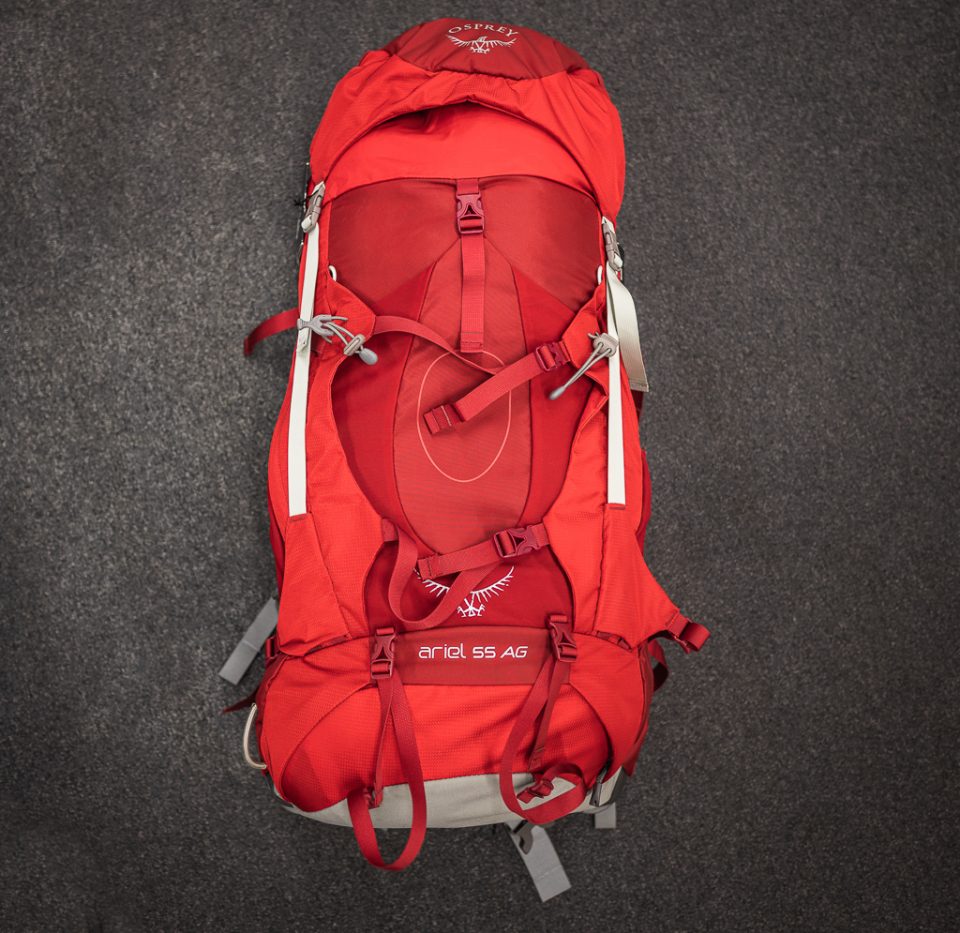
The women's-specific Osprey Ariel AG 55 backpack.
Osprey's Ariel series is popular with women, and the Aether series is its men's equivalent. Packs in this size range are a common choice for women, but if you're hiking solo with bulkier beginner's kit, you may run short of space. The pack looks really big because it's "flat", curved and wide. This shape helps bring the centre of gravity closer to your back, which is exactly where it should be.
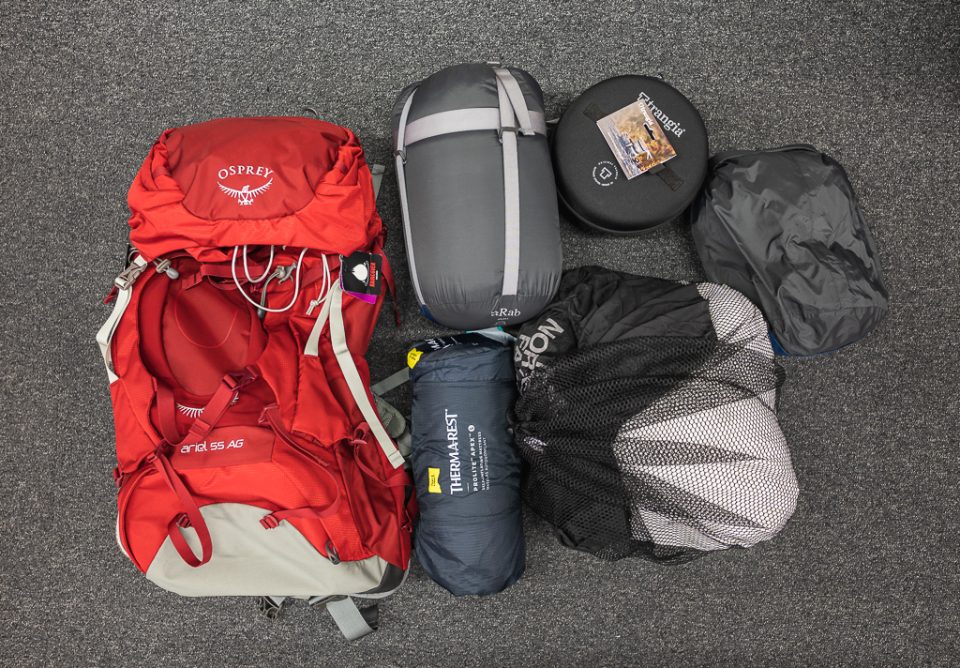
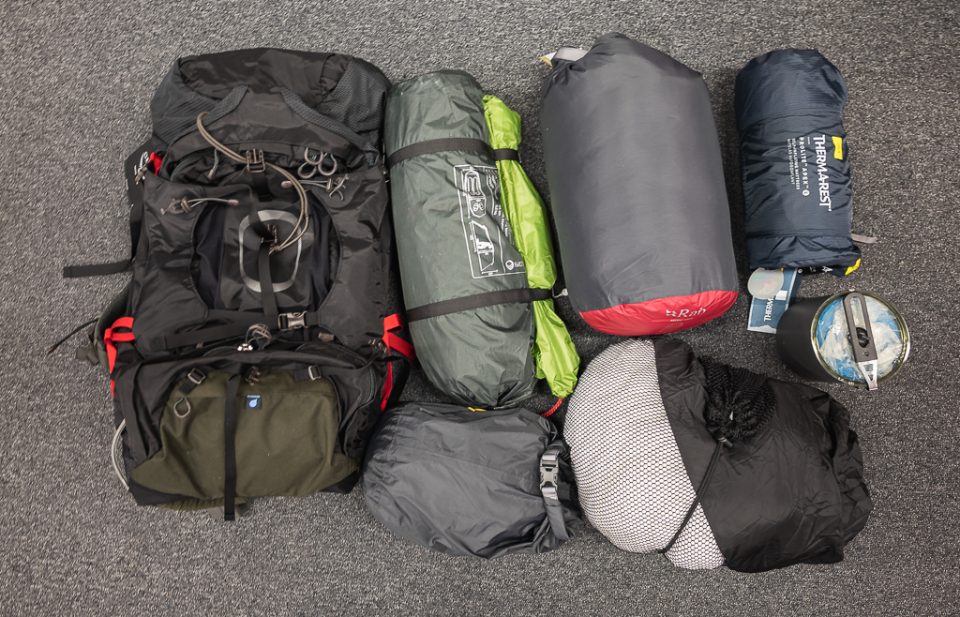
We packed the backpack with kit: a bag of pillows stood in for the clothing bag, and the black bag on the right of the photo represents the food bag. They're roughly the size a hiker who packs smart would need for about a week's trek in warm weather.
All the most common small items you need on a trek fit into the pack's smaller pockets.
What fitted in the pack:
- 3-season sleeping bag (Rab Solar 3 W, packed size 37 x 24 cm)
- Sleeping mat (Thermarest Prolite Apex Large, packed size 28 x 17 cm)
- Clothing bag
- Trangia stove and pans
- Food bag
With this kit, the pack was completely full, so your shelter has to be strapped to the outside – or your tent partner can carry it.
If you go for a sleeping bag and mat with a smaller packed size, you can still squeeze in a tent that packs down small.
75-litre backpack
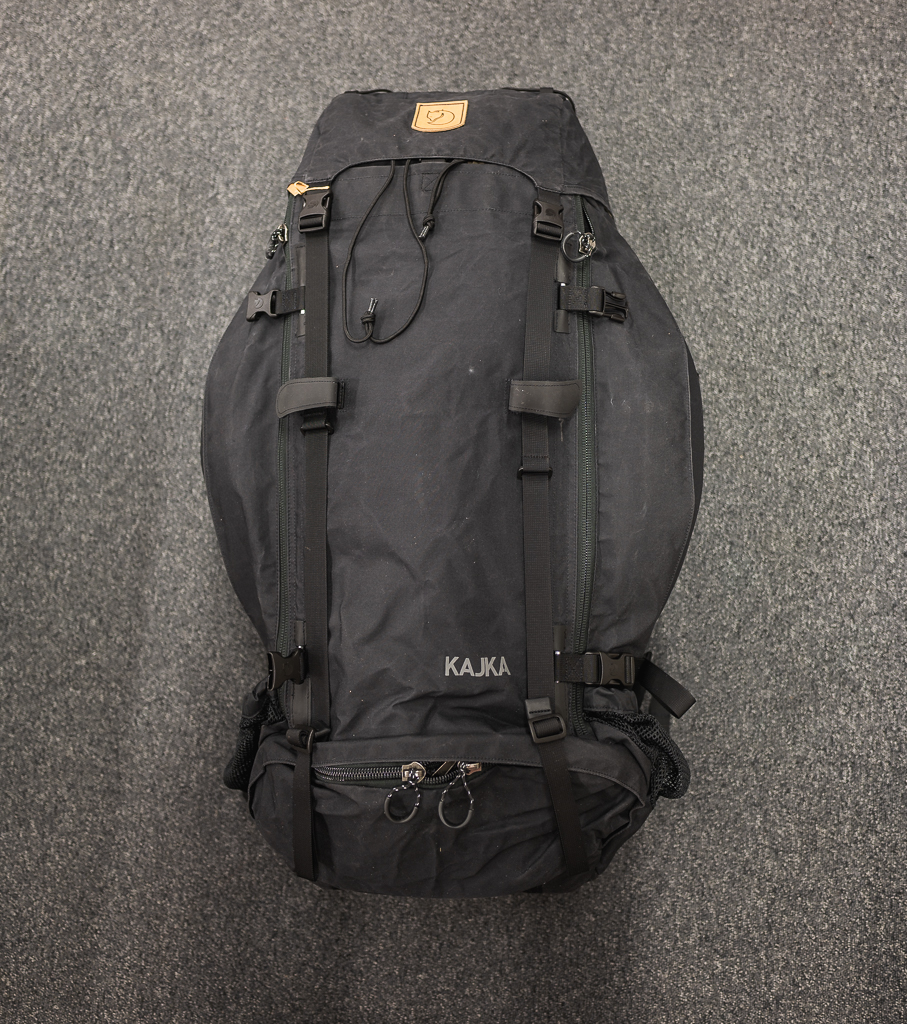
The legendary Fjällräven Kajka 75 backpack.
Year after year, Fjällräven's Kajka is one of the best-selling backpacks in the Nordics. The photo shows the older Kajka – the model has since been slightly updated.
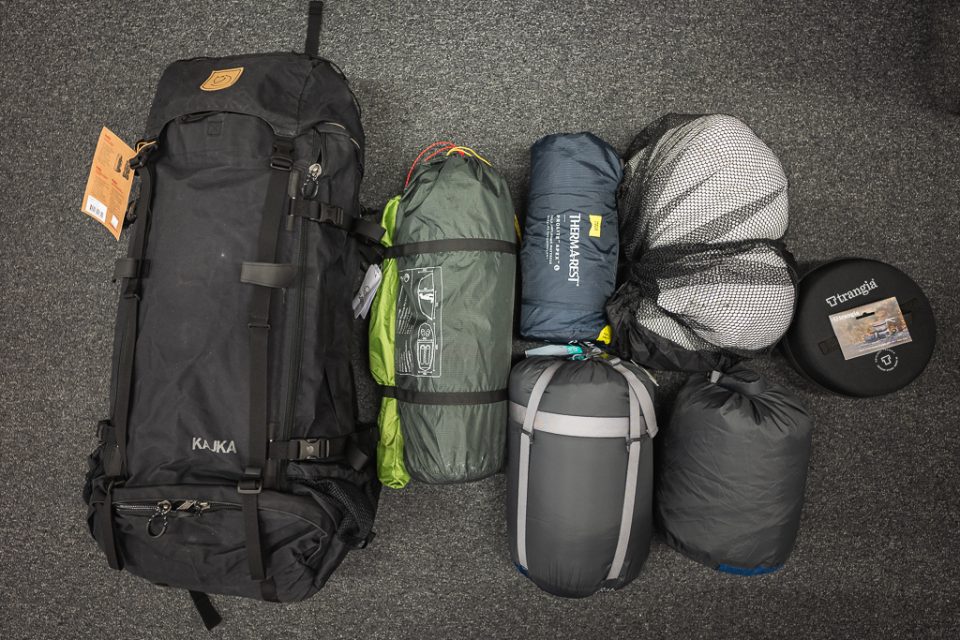
With an extra 20 litres of capacity and large side pockets, you can fit a lot more kit in. There was still plenty of room left for small items, but no space for anything else bulky.
What fitted in the pack:
- 3-season sleeping bag (Rab Solar 3 W, packed size 37 x 24 cm)
- Sleeping mat (Thermarest Prolite Apex Large, packed size 28 x 17 cm)
- 2-person trekking tent (Halti XPD Finland 2)
- Clothing bag
- Trangia stove
- Food bag
85-litre backpack
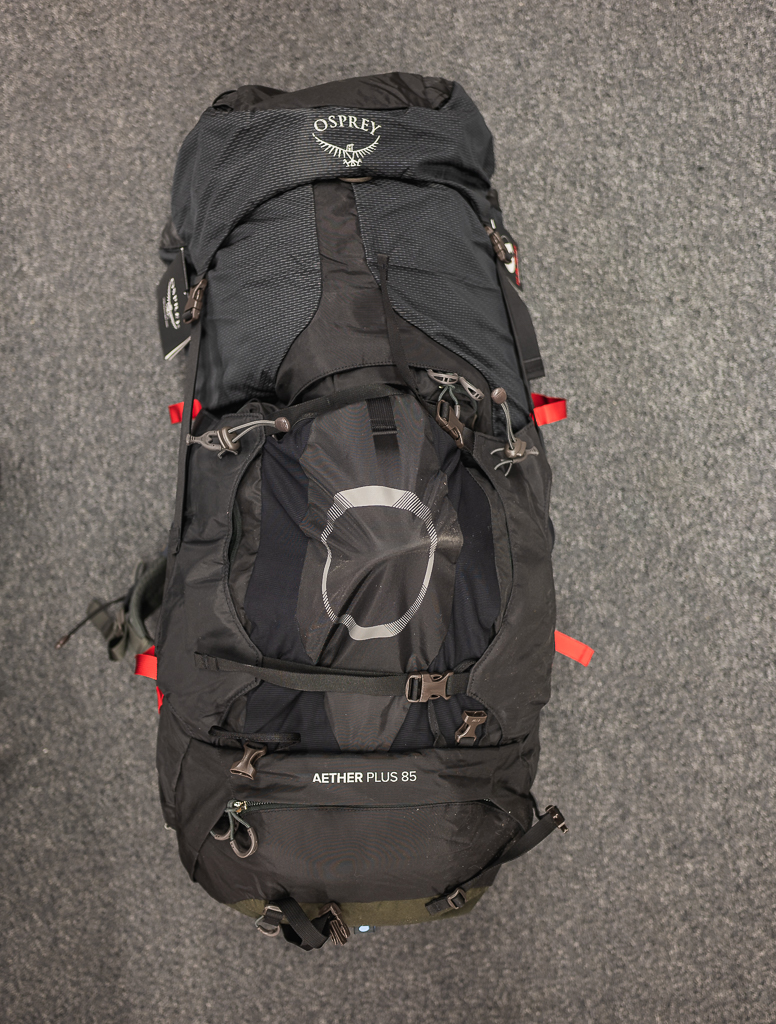
A well-stuffed Osprey Aether Plus 85.
Osprey's men's Aether series is the counterpart to the women's Ariel series. This pack has several pockets, and for a large pack it looks fairly small, because it extends quite far out from your back.
We packed this one with kit suitable for a winter trip. There was still room left for the extra layers, gas and small items you need in winter.
What fitted in the pack:
- Winter sleeping bag (Rab Ascent 900 W, packed size 26 x 45 cm)
- Sleeping mat (Thermarest Prolite Apex Large, packed size 28 x 17 cm)
- 2-person trekking tent (Halti XPD Finland 2)
- Clothing bag
- Camping stove and cookware (MSR PocketRocket Stove Kit)
- Food bag
Summary
When choosing a backpack size, the outdoor kit you already own makes a big difference. With average kit, around 60 litres is usually enough for women in summer, while for men it's closer to 75 litres. These sizes will see you through a week's trek in warm weather, as long as you plan your clothing, food and extra kit carefully.
If you cut down the size of your kit, you can get by with a much smaller pack. Beginners usually have to buy all their kit in one go, so the budget may not stretch to the smallest-packing options.
Keep in mind, though, that your backpack is often the heaviest item you carry – so there's no point buying one that's bigger than you need.