November outdoor tip: how to dress to stay warm
November often brings colder weather, and with it comes damp. A damp day is usually grey and windy, with low pressure moving through. Wind strips heat from your body quickly, and moisture soaks into your clothing. That's why a dry, crisp day well below freezing under high pressure can feel much warmer.

When it's above freezing, many people dress lighter and end up cold, especially if they spend a lot of time standing still. Dress warmly for damp days like this, and you'll soon find yourself enjoying them too.
Good layering starts with your base layer. Cotton holds on to a lot of moisture, so even if the rest of your outfit is right, you can still get cold. Merino wool, on the other hand, works really well. Don't overlook socks and accessories either. They make a real difference to keeping your hands and feet warm.

This month's outdoor tip, though, is all about your upper body. It works for everything from day walks to demanding multi-day treks. Most of us who spend time outdoors already have a lightweight down jacket and a shell jacket in the wardrobe. They often come along on trips, but they're usually worn separately.
You can combine the two. The down jacket gives you lofty insulation, while the shell keeps out wind and wet. This setup is especially useful during breaks and around camp when you're not moving. For it to work, your shell needs to be roomy enough. If you've bought a close-fitting shell, it may not go over the top.

Think about which layers you want hoods on. A down jacket hood is very warm, but under a shell hood it can sometimes be too much. In that case, the shell hood alone may be enough, or you can wear a hooded top under your down jacket.
The shell goes loosely over the down jacket so the insulation stays lofty. Compressed insulation doesn't insulate as well. The shell stops moisture getting in while letting moisture from inside escape. It also blocks the wind and helps trap warm air in the insulation. That's what makes this combination so warm. A well-made waterproof winter jacket does the same, of course, but a shell is made from tougher fabric than most winter jackets.

A down vest also works well under a shell. Your sleeves stay less bulky and you get more freedom of movement.
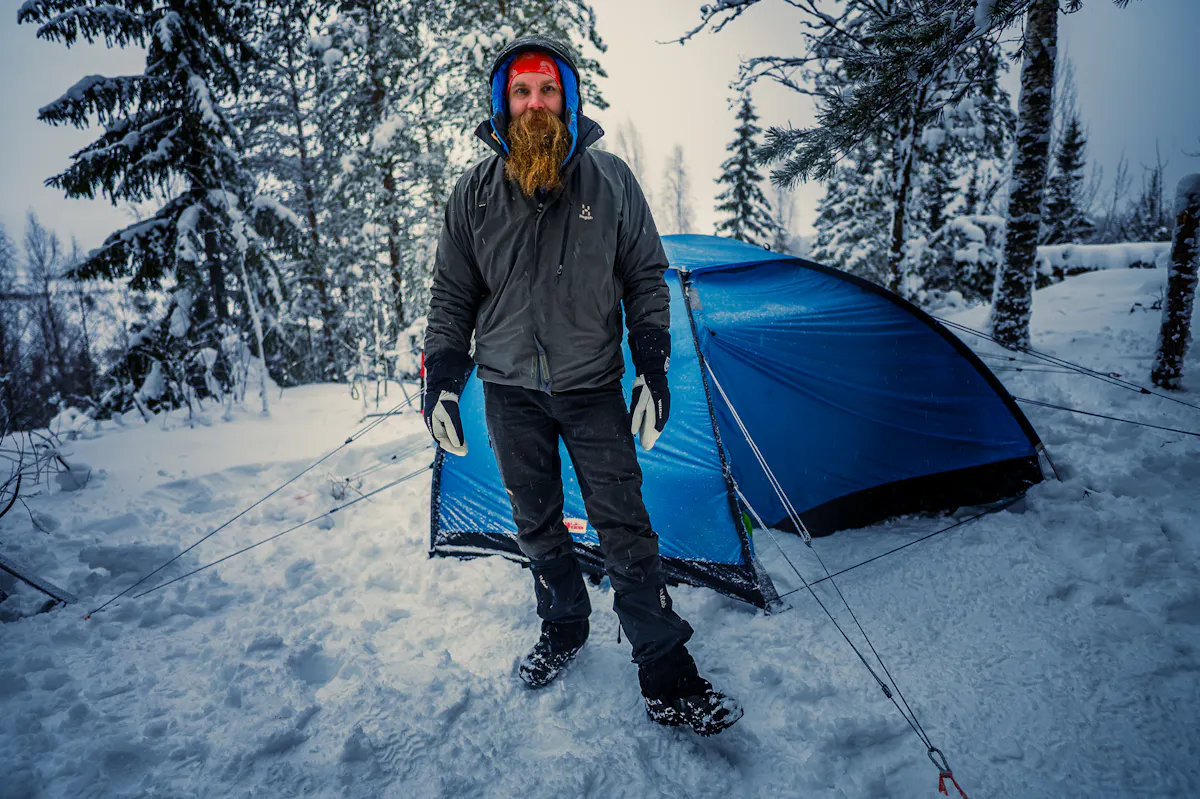
This combination holds up even in a hard winter freeze. If your jackets are roomy enough, you can fit several more layers underneath. For example: a thin merino base layer top, a thicker merino top with a collar, a wool jumper or a fleece. Then your lightweight down jacket and shell on top. Now you're ready for some properly cold weather.