The Tour Skater's Checklist
Nordic skating is a fascinating adventure sport, and one that gets people talking. The image is of skaters gliding over smooth, sunlit ice through stunning scenery, but looking a little careless. Someone with little experience on ice might wish they could do the same, yet still wonder whether the sport can really be safe. Usually only the bad news from the ice makes the headlines, so the fear is understandable and partly justified. With careful preparation, attention to safety and some knowledge of ice conditions, this adventure sport can be both enjoyable and safe.
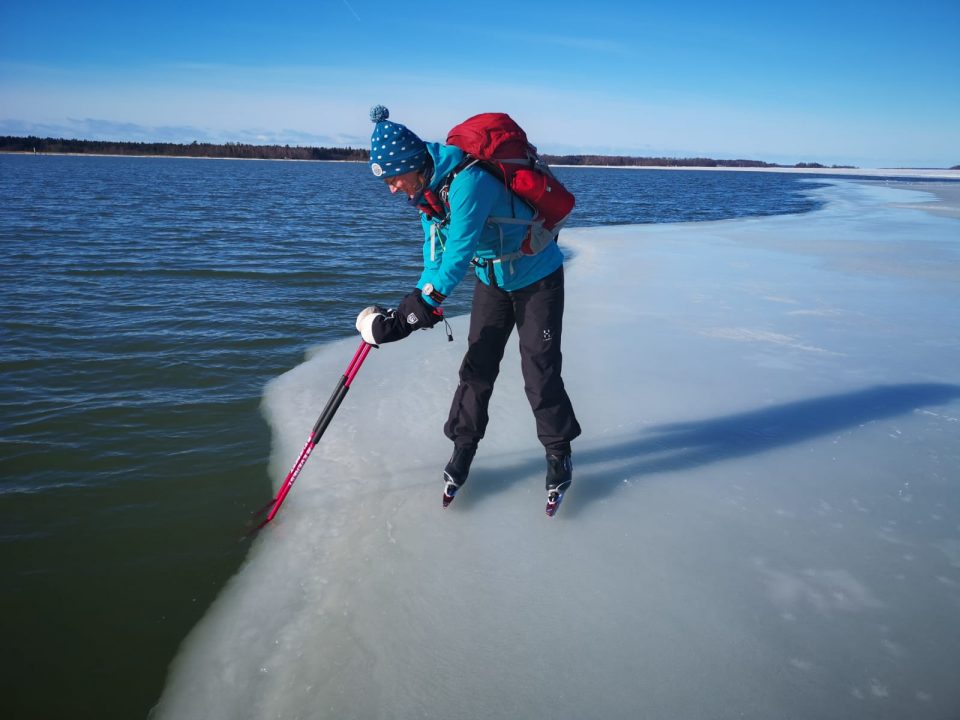
A shot of the poles lined up is always a classic.
I'm Katja from the Scandinavian Outdoor store in Pirkkala. I've been skating for more than 8 years as a member of a Nordic skating club, and before that I skated now and then with a friend. In winters with less snow I've naturally skated more, and in good ski winters less. The sport is growing, partly because snow conditions have become so unpredictable.
Like many others, I started out with long-distance skating on ploughed tracks on natural ice. That's still a good workout for me when snow covers the larger areas of ice. But the open ice beyond the tracks soon started calling. At first I bought a pair of ice picks to wear around my neck, but I didn't yet understand everything that moving safely on ice involves. One thing I did get right from the very start: I never went out on natural ice alone.
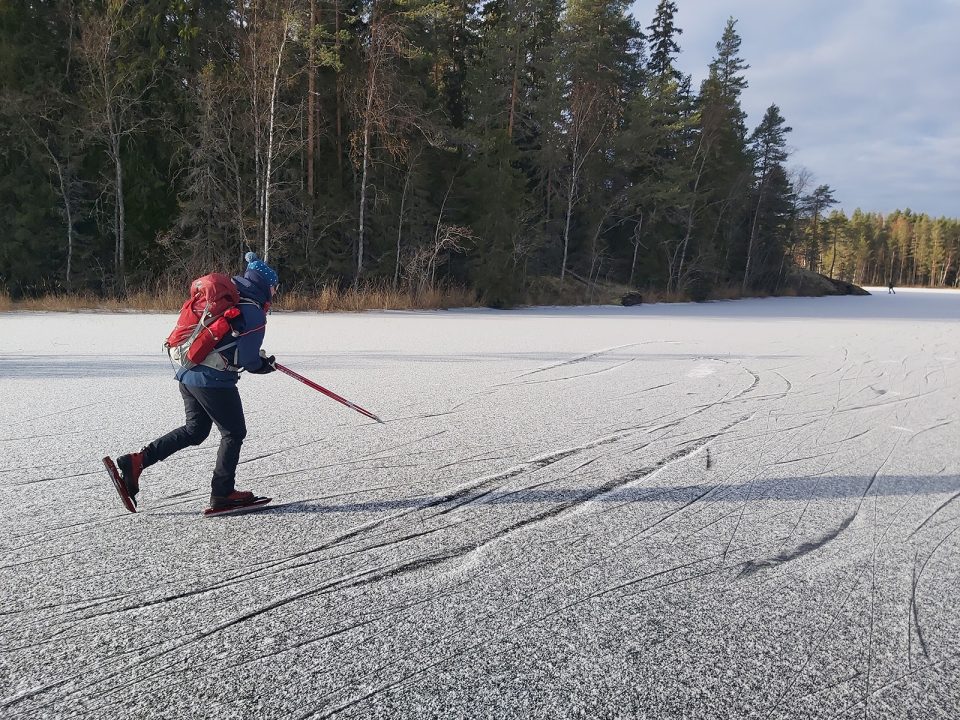
This winter we could already skate on small lakes in Pirkanmaa in October.
After joining the club, my gear improved and Nordic skating became safe. I spent hours poring over maps and satellite images, getting to know the playing fields of my new hobby. I skated in groups and listened to more experienced skaters. I learnt which cracking sounds are nothing to worry about and what the singing of the ice can tell you. I tested the ice a lot with my poles and learnt to recognise which kind of strike means the ice will hold me, and which means it will hold my friends.
Nordic skating gear
The poles are shorter than the skate skiing poles you often see on the tracks. When I'm skating on ice that's already been checked, the poles mostly stay tucked under my arm. I bring them out when I want to make sure the ice will hold, or for balance when crossing very bumpy patches where it's hard to push off. What matters is the pointed, spike-like tip, which you use to feel the structure and thickness of the ice as you skate. Testing the ice is central to safe Nordic skating. Ice is never the same thickness across a whole body of water, so knowing one spot tells you nothing about the strength of another. It's worth learning how ice forms, and it's a fascinating subject. So many factors affect how water freezes.
Here you'll find our Nordic skating products.
Here you can rent Nordic skates
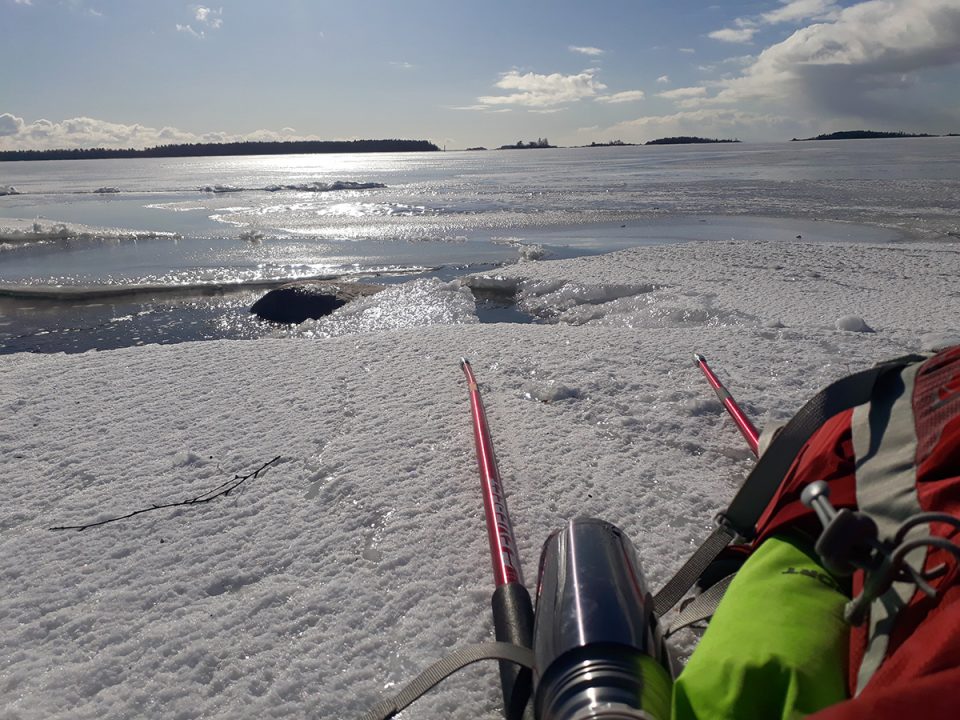
A break on an islet. The ice pole has bent from heavy use.
The ice picks hang ready around your neck. Wear them high enough that they never end up below the ice surface if you fall through. The safest option is a set of picks you can separate with one hand, taking out just one while the other stays ready. Your other hand should be able to reach the throw line attached to your backpack. If you fall through, your first move is to throw the line to your rescuer, so accuracy isn't so critical. The other end of the rope is already attached to the skater. If the person in the water can't do much more, it's now easier to pull them out. Check your throw line before every trip and make sure it's undamaged.
On a skating trip you'll sometimes have to walk too. You may need to go around an open lead over land or cross from one lake to another. After many trips I switched to BC boots, which have a better rubber sole for walking. They also need BC bindings on the blades. BC bindings are sturdier than skate skiing bindings, so they're also less likely to break. The same BC boots work with your touring skis too, if those also have BC bindings.
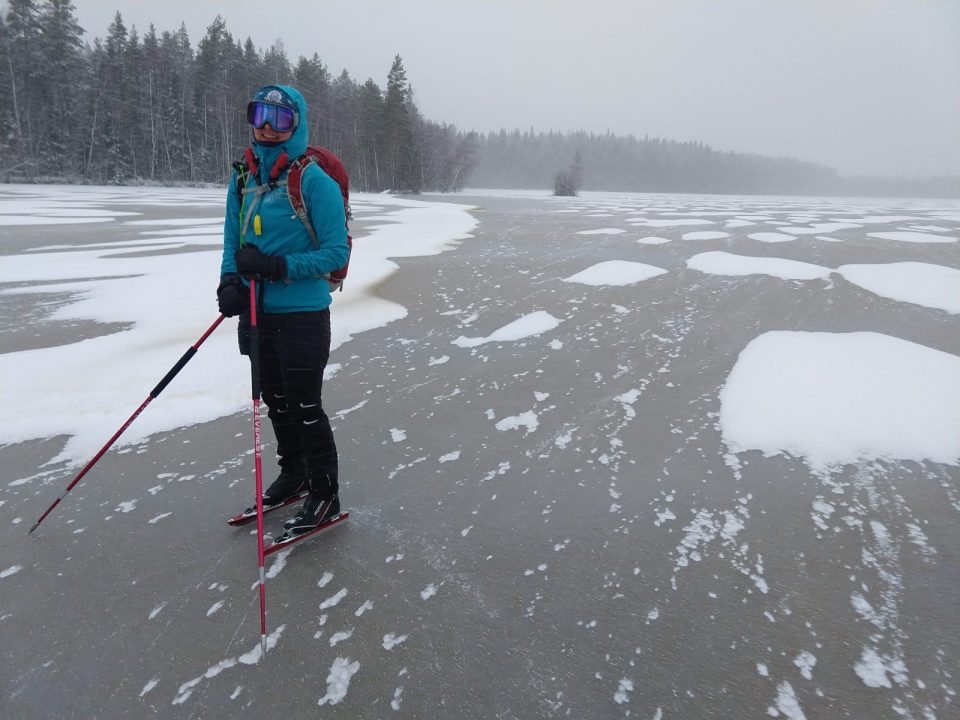
The weather isn't always on your side, but you still have to get out on the ice.
Packing your skating backpack takes care. Out on the ice you're at the mercy of the weather and the ice, often far from any outside help. Pack a complete change of clothes in dry bags: tops in one bag, bottoms in another. Put the tops bag higher up in the backpack so it comes out first when you need to change. Use bags of different colours so it's easier to give instructions to the friend helping you change. As on any good winter trip, carry a hot drink that stays warm and energy-rich snacks. Bring the usual safety and comfort items for any trip into the wild, such as a map and compass, first aid kit, head torch, toilet bag and a power bank. A small repair kit is also useful for patching up your gear mid-trip.
For your first Nordic or long-distance skating trip
Across the Nordic countries you'll find ploughed tracks on natural ice where you can get a feel for the sport. Track skating only gives you a hint of how rewarding and varied the sport is, though. You can head out to a track without much planning, and in many places you can even rent skates from the people who plough the track. Even so, I don't let my own family onto a ploughed track without ice picks. It's a matter of habit: ice picks belong with moving on ice, whatever you're travelling on.
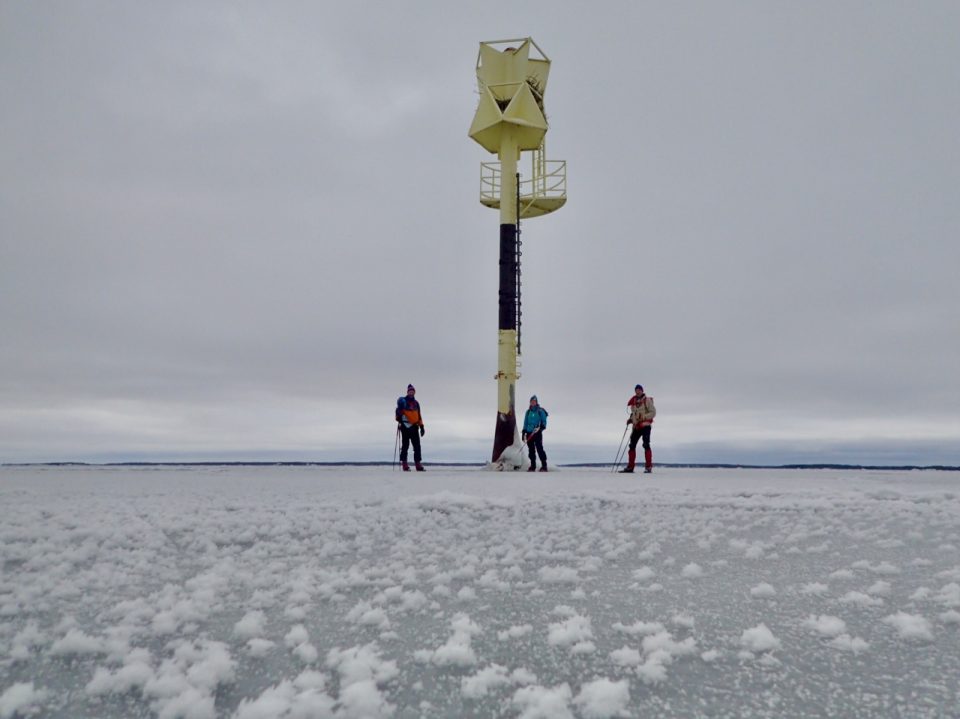
A rare moment at the edge of the main shipping lane.
Nordic skating means planning your trip. You choose a destination by studying ice information on satellite maps, thinking about how the ice has developed and how much snow has built up, and keeping a close eye on the weather forecast. Members of the Nordic skating club Skrinnarit get a lot of help with planning from other members' ice reports. The club also makes it easier to get started, as you can join trips led by more experienced Nordic skaters.
In an adventure sport, the safest approach is to make your plan a little easier than you think the group can manage. Map out your options for cutting the trip short in advance too. While you're still learning, a club is a huge help. Through my Skrinnarit membership I've had unique and unforgettable experiences in nature and got to know lots of great people.
Care tips for Nordic skating gear
When the ice is smooth and your skates are sharp, skating feels effortless. After every session I dry my skates with a cloth and put the blade guards back on. If the blades have been in contact with seawater, rinse them in fresh water at the end. Every now and then I sharpen my skates. I do it myself, as I've been taught how and over the years I've picked up sharpening stones and a jig. You can also sharpen the tips of your ice poles if they no longer bite into the ice properly.
After a skating trip I spread out the contents of my backpack to dry and turn my Ursuit suit inside out to air. It's a membrane garment, so you need to wash the sweat out of it from time to time even if it isn't otherwise dirty. The oils in sweat clog the membrane's breathable pores and the suit gets clammy more easily. I don't sweat much, so I can wash my shell a bit less often than someone who sweats heavily.
I strongly recommend practising falling through the ice, climbing out and changing clothes quickly, if you get the chance to do it safely under supervision. The practice shows you what you really need in your backpack, and you'll pack more precisely afterwards.
Here you'll find our Nordic skating products.
Here you can rent Nordic skates
Checklist
What I always wear:
-merino base layer and socks
-an extra top if needed
-wool boxers underneath or an insulated skirt on top
-Ursuit MPS mid-layer drysuit
-windproof or waterproof outer layer over the suit, depending on the weather
-mittens, neck tube, beanie
-sometimes ski goggles
-you can also wear a helmet
-phone in a dry bag
-boots
-skates
-ice picks around the neck
-ice poles
Here you'll find our Nordic skating product category.
Here you can rent Nordic skates
In the backpack and along for the trip:
-a friend!
-throw line with one end clipped to the backpack with a carabiner
-backpack with a crotch strap
-measuring stick for checking ice thickness
-dry bags for spare clothes
-a full change of clothes, or when skating in a drysuit, a spare top, beanie, neck tube and gloves
-insulated jacket for breaks
-thermos flask and a regular water bottle with extra insulation (a wool sock will do)
-food, food flask and a long spoon, plus some quick energy
-first aid kit, emergency blanket
-map and compass
-repair kit
-power bank
-fire-lighting kit
-disposable hand warmers
-head torch
-toilet bag
-cash in case you end up taking the bus home or find a nice place to eat along the way
Here you'll find our Nordic skating products.