How to light a fire with a fire steel
Do you own a fire steel but find it hard to get a fire going with it? Or are you thinking of buying one for emergencies? Lighting a fire with a fire steel takes practice, but once you have the knack, it's a reliable way to start a fire. Frost and rain don't bother it.
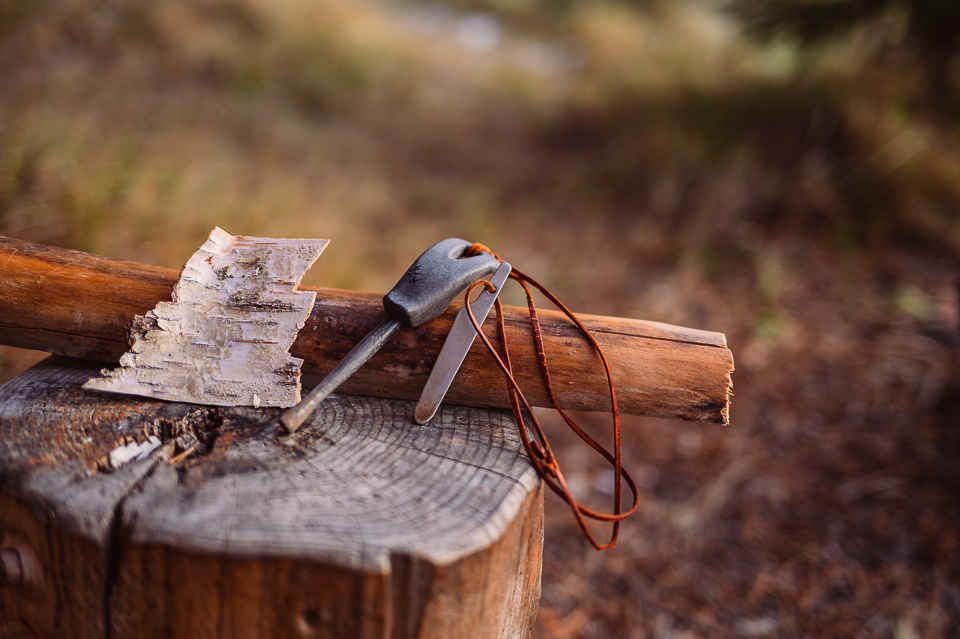
A modern fire steel rod is usually made of magnesium or ferrocerium. Scrape it with a sharp edge and it throws off hot sparks. The sparks light your tinder, and the tinder lights the fire itself.
You can make your own tinder from cotton wool, tampons, egg cartons or old candles, for example. If you have birch bark, you don't need any homemade tinder at all. In this article, we use birch bark as tinder.
Lighting a fire with a fire steel
As always, preparation is the most important part of lighting a campfire. The method stays the same whether you light the first flame with matches, a lighter or a fire steel.
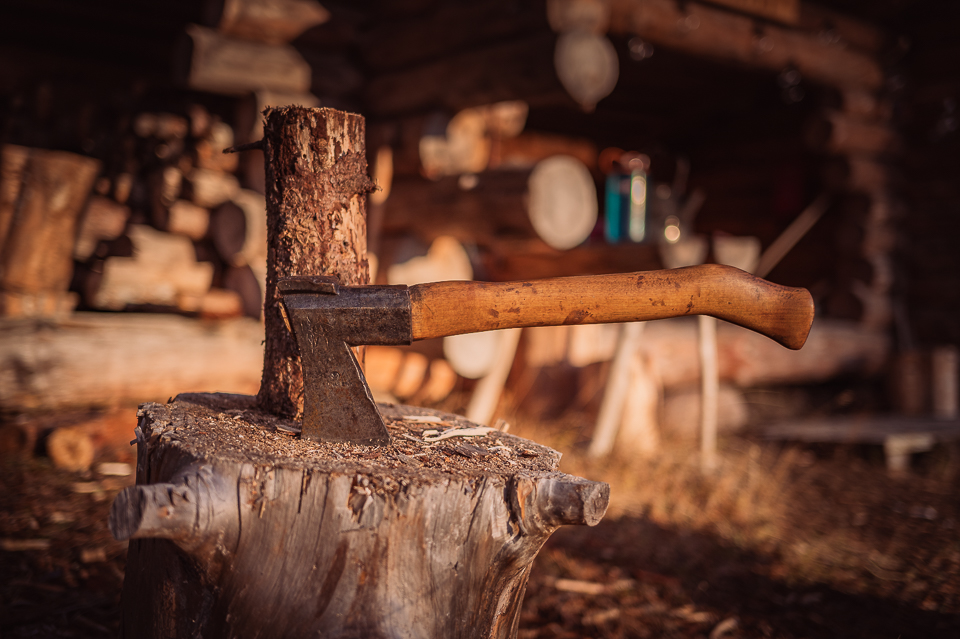
A fire is usually lit from the top, as this produces the least smoke. If you light it from the bottom, the tinder forces the wood to burn “by brute force”, giving you a dirty, smoky fire. Tinder lit on top heats the wood gradually: it dries out first, then catches once it's hot enough.
How to light a campfire with a fire steel:
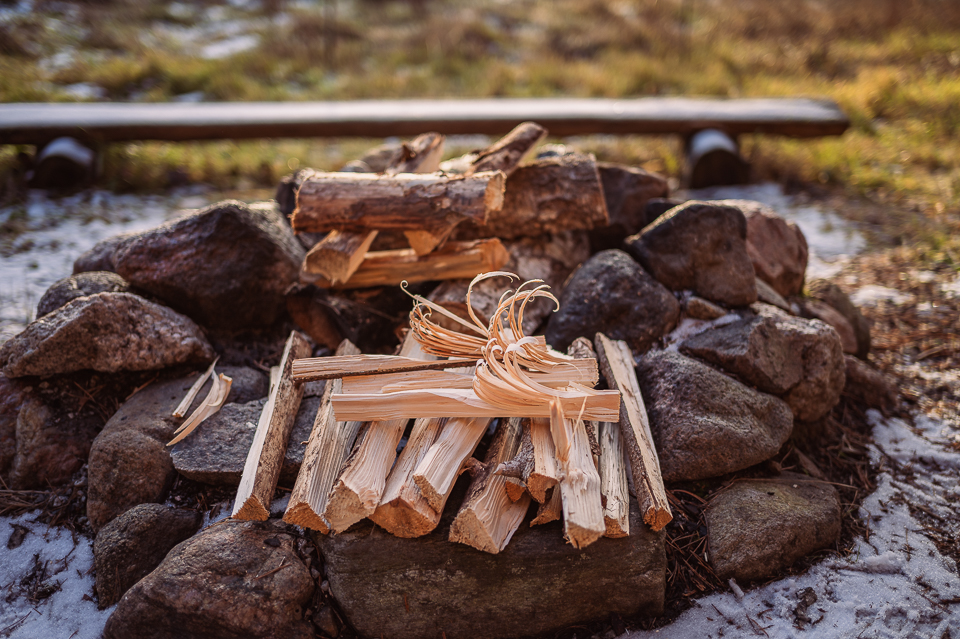
- Place the largest logs at the bottom
- Split some smaller kindling and lay it on top
- Carve a few feather sticks
- Take a piece of birch bark somewhere sheltered from the wind
- Scrape a small pile of fluffy pale shavings from the bark
- Strike a spark from the fire steel onto the bark
- Carry the burning bark to the fire and use it to light the feather sticks
The difference with a fire steel is that a lighter or match can light a feather stick directly. A fire steel only produces a spark, so you need tinder to get your first flame.
Common problems with fire steels
The most common mistake is poor preparation. Maybe you haven't scraped enough bark, or there isn't enough small wood ready in the fire that will catch easily.
Some people struggle with the scraping itself. Some fire steels come with a poor striker, or the striker is attached with a cord that's too short. In that case, you can use the spine of your knife instead. It's usually sharp enough to strike a spark.
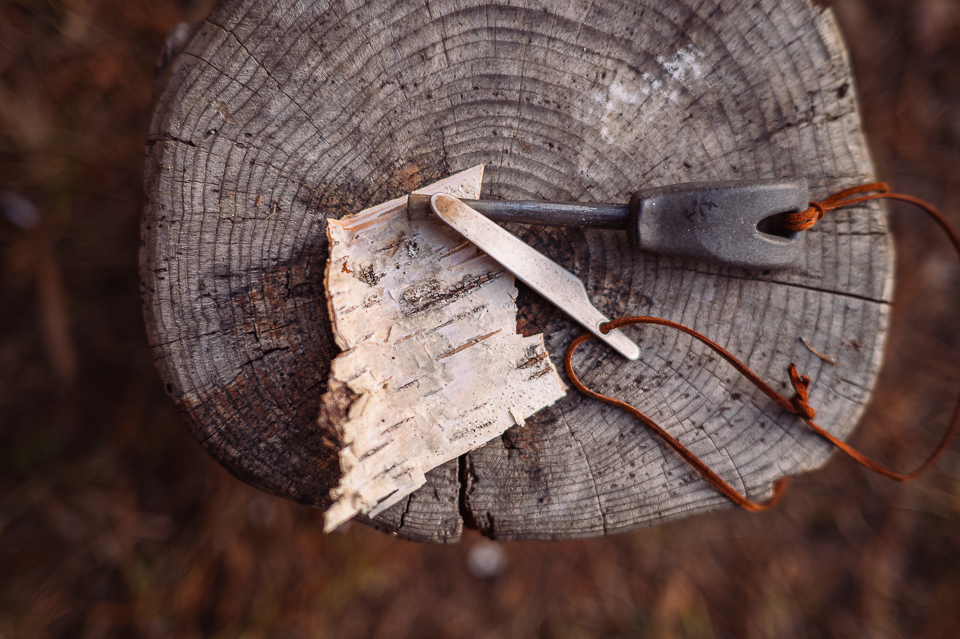
In strong wind, the bark shavings can blow away, so light your tinder somewhere sheltered. If there's no natural shelter, use your jacket as a windbreak. Sometimes the bark goes out on its way to the fire. Let it burn for a moment before you move it. Just don't burn your hand or the ground around you.
Good fire steels
We stock a wide range of fire-starting gear. Our customers' favourite is the Kupilka fire steel, but you'll find other models too. The Marttiini fire steel also works well, although some find the cord a little short. Light My Fire offers two different fire steels. The Army is slightly larger and better suited to regular use (approx. 12,000 strikes), while the Scout is smaller (approx. 3,000 strikes) and a sensible choice if you're buying a fire steel just in case, for emergencies.