A Guide to Getting Started with Bikepacking
Bikepacking is cycle touring with all your gear packed on the bike. Where it differs from traditional touring is the route: instead of sticking to roads, you'll mostly ride trails and smaller forest tracks. Your bike bags carry everything you need, including the kit for camping out overnight.
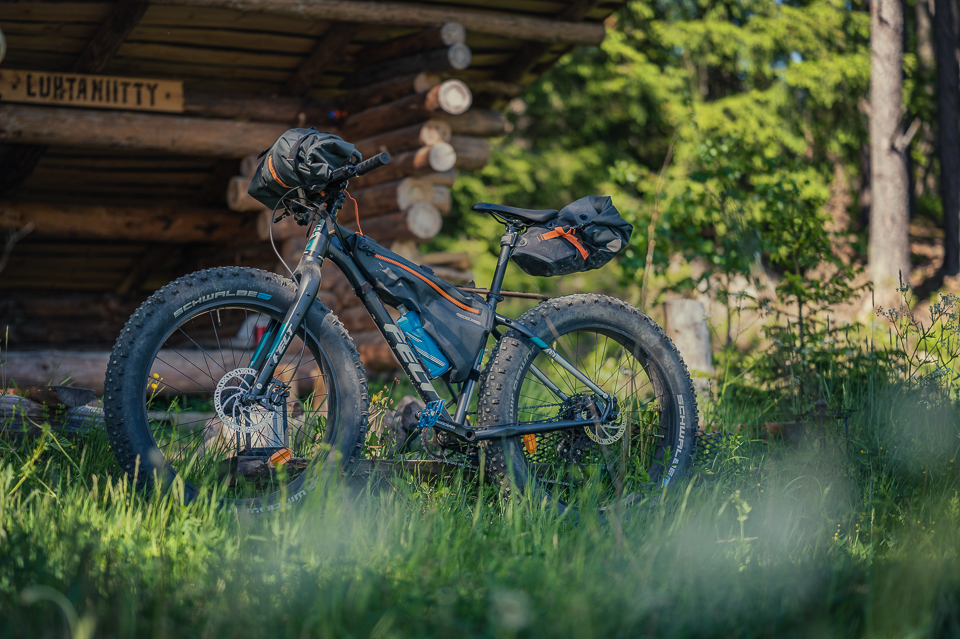
Choosing a bike for bikepacking
- A rigid mountain bike is generally the best fit, as bags are easy to attach to the frame.
- A fatbike works year-round and handles more challenging terrain.
- A gravel bike is a good option if you ride mostly roads and gravel tracks.
You'll find all our bikepacking gear here.
The most common type of bike is probably the hardtail mountain bike, but a fully rigid bike suits bikepacking better, as it's easier to fit bags to the frame. If you ride all year round, a fatbike is a good choice – the wide tyres let you ride across all kinds of terrain. If you spend more time on roads, a gravel bike will do the job too.
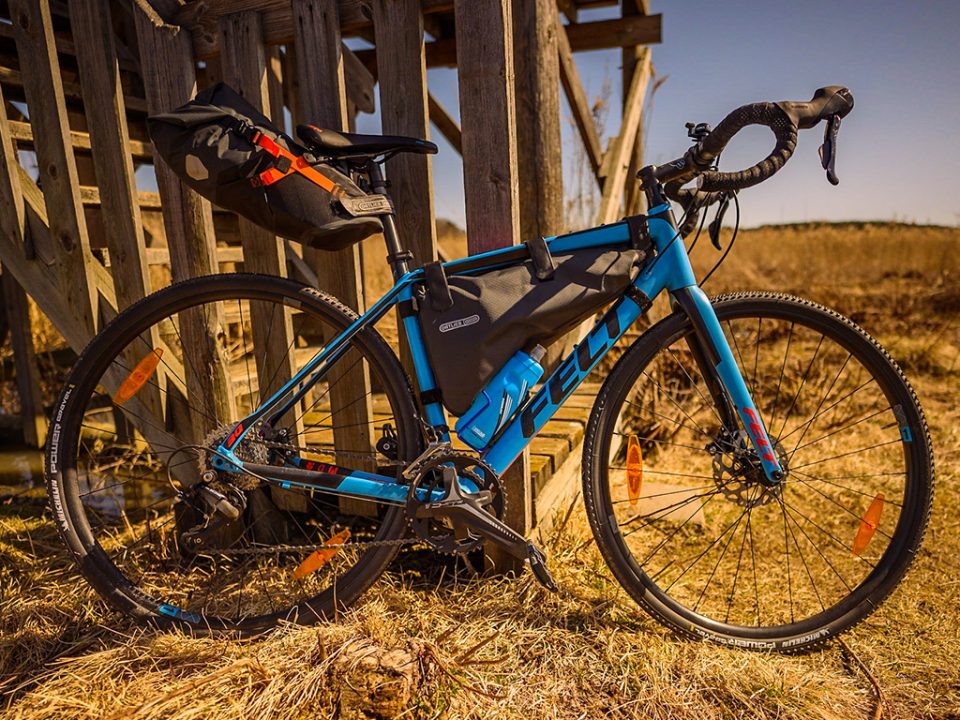
A gravel bike also takes a wide range of bags, and you can ride it on easier trails as well as gravel tracks.
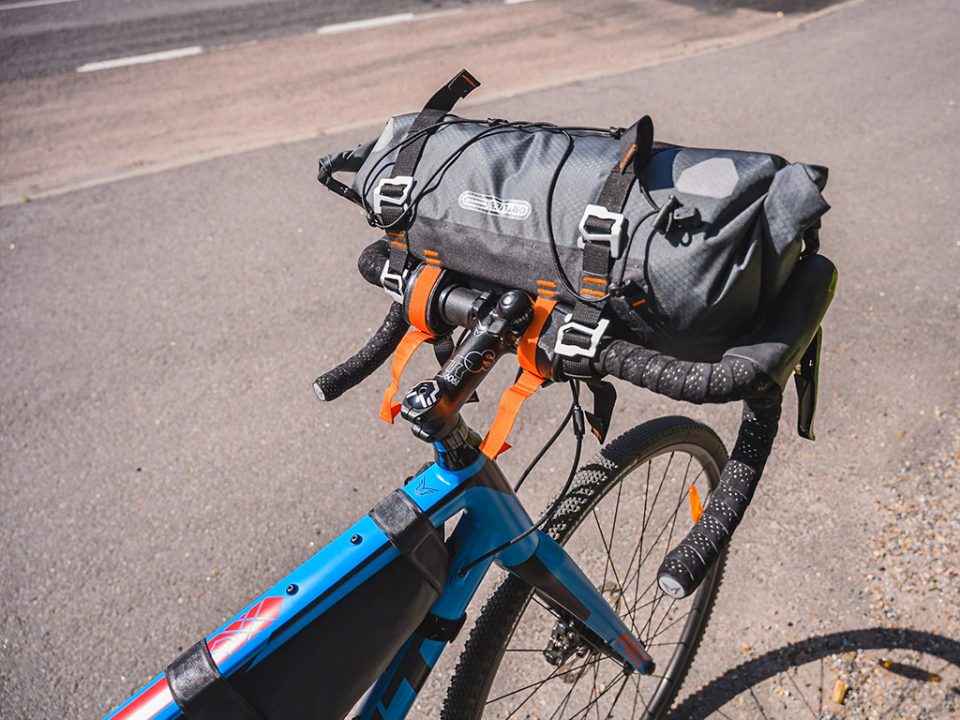
Fitting a handlebar bag to narrow drop bars can sometimes be tricky.
The idea is to fit bags to the bike that hold all your gear, so you don't have to carry a heavy pack on your back. Riding with a backpack gets uncomfortable over longer distances. A heavy backpack or rucksack also shifts the bike's centre of gravity backwards, which can easily cause the bike to understeer.
Our range includes bags that fit all around the bike.
Bikepacking bags and packing
- Bags attach to different points on the bike (frame, saddle, handlebars).
- Frame bag: sits centrally under the top tube (ideal for most of your heaviest gear).
- Handlebar bag: at the front, best for lighter items.
- Saddle bag: behind and under the saddle — often roomy and very practical.
- Bags should be waterproof, or you should use dry bags for clothing and gear.
- Balanced packing affects handling (avoid too much weight at the front or back).
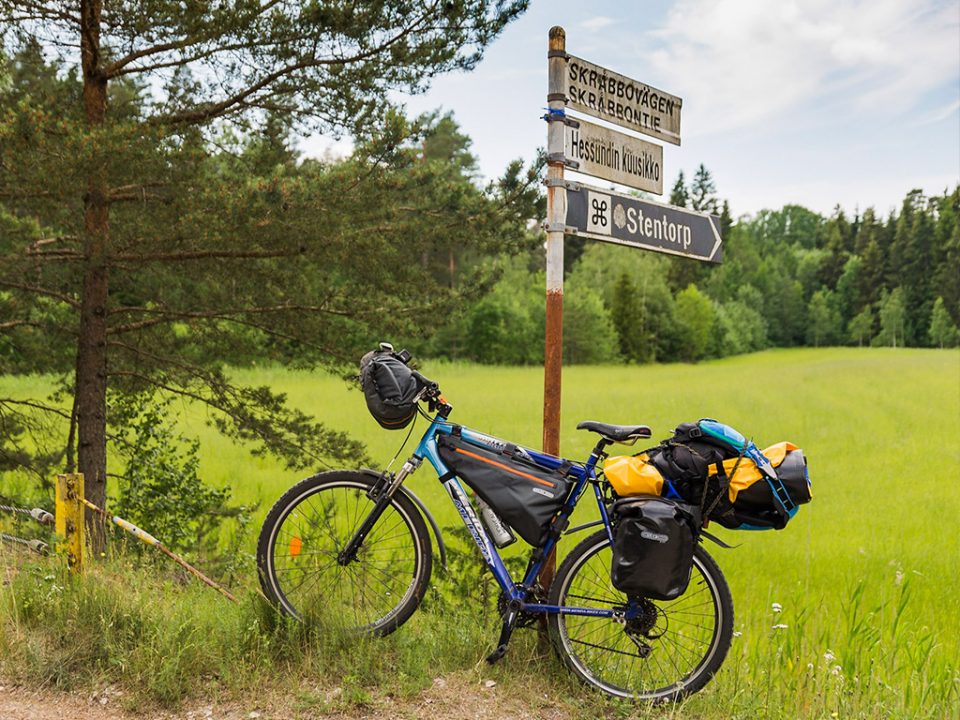
An older 26″ mountain bike works for bikepacking too, but a 29″ bike rolls considerably better. The bike pictured has a packraft strapped to the back, so you can also try bikerafting – combining paddling and cycling.
Types of bags used for bikepacking:
A frame bag fits in the centre of the frame, under the top tube.
At the front of the bike, you can fit a handlebar bag. If your fork has mounting points for a rack, you can attach bags there as well. You can also pack gear into dry bags and strap them to the bike.
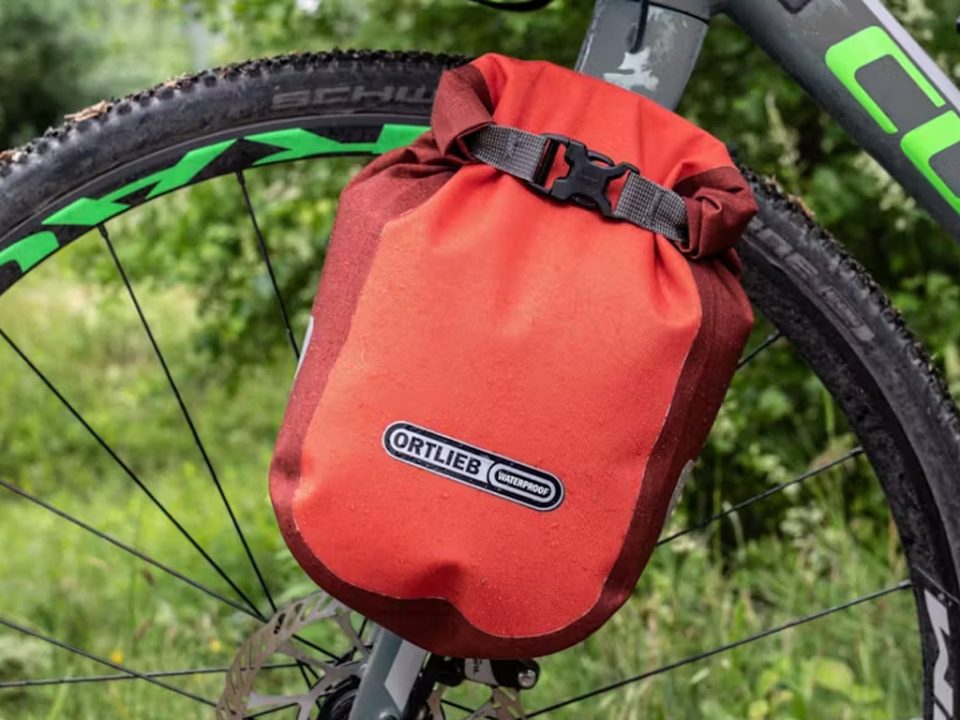
Ortlieb, for example, makes the Fork Pack range, which comes with a fork mount.
Under the saddle, you can fit saddle bags in various sizes – some double as a mudguard.
Most bikes can take a rear rack, which lets you use traditional panniers.
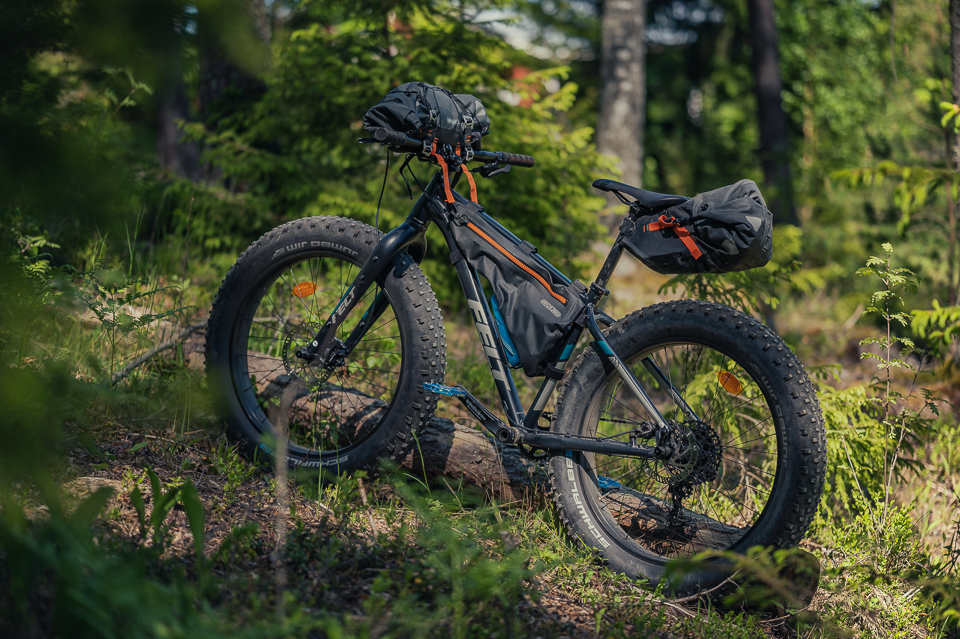
The bike pictured has a handlebar bag, a frame bag and a saddle bag. You could also add front and rear racks to carry panniers.
Your bags should generally be waterproof – almost all your gear and clothing is stuff you don't want getting wet. Some bags are also compressible. That means if you pack compressible items such as clothing or a sleeping bag, you can squeeze out the excess air. Compressing your clothes lets you pack them into a very small space.
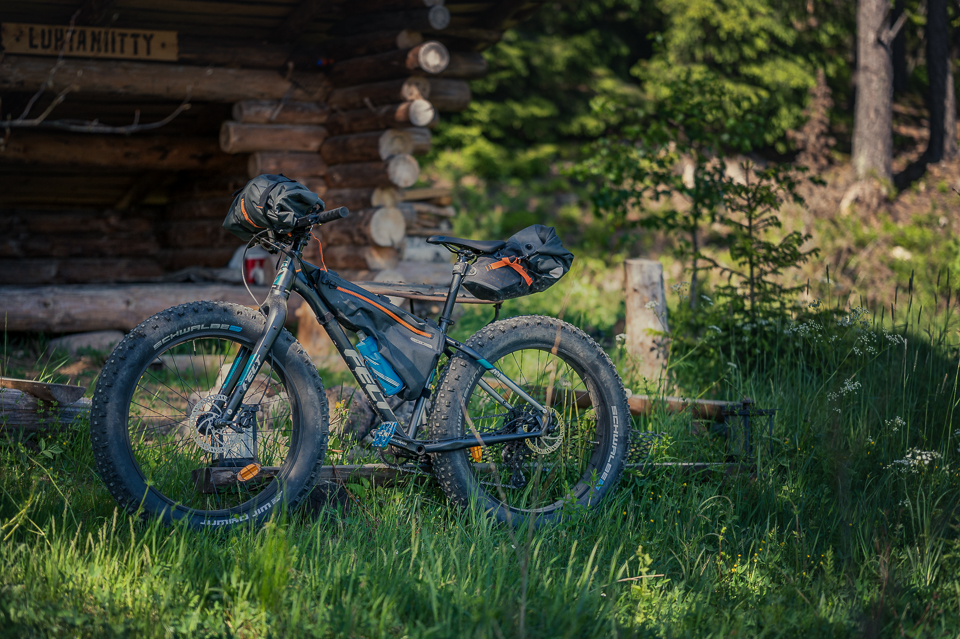
A water bottle doesn't always fit properly alongside a frame bag. If that's the case, consider moving it to the fork.
When packing your bags, think about the bike's balance. If it's heavily weighted to the front or back, it will affect how the bike handles.
Our most popular bike bag brand is Ortlieb, known for its durable build and solid warranty. These days our range also includes plenty of other brands, such as Deuter, Osprey, Helsport, Evoc and Fjällräven. Several brands also make practical backpacks for cycling.
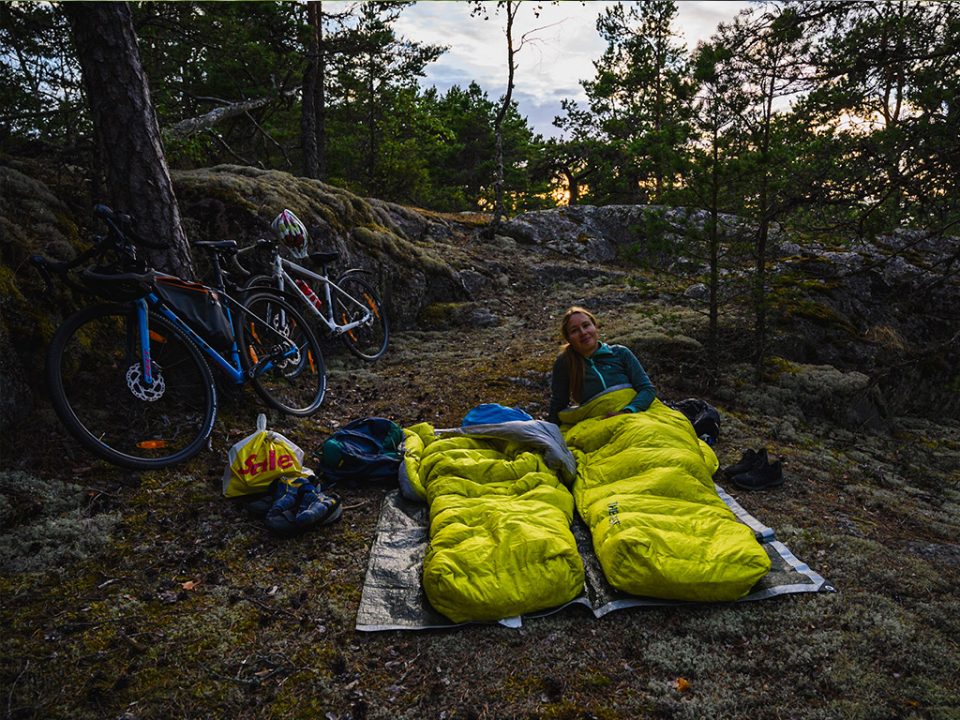
A down sleeping bag or quilt that packs small, plus an inflatable sleeping mat, makes a good overnight setup for bikepacking. You can sleep out without a tent or hammock, but bring at least a tarp you can rig as a rain shelter if needed.
Sleeping and camping gear
- A small, packable sleeping bag or quilt (down, for example) works well.
- An inflatable sleeping mat packs down small and adds comfort.
- A tarp, if needed, for shelter from rain or extra wind protection.
- Camping out needs the same kit as regular hiking – it's just packed into your bike bags.
Cycling and other gear
- Wear cycling clothing — trouser legs mustn't catch in the chain.
- Hiking trousers also work for cycling, as long as they're hard-wearing and comfortable to sit in.
- Position your water bottle so it fits alongside the frame bag.
For an overnight bikepacking trip, you need the same gear as for a hiking or paddling trip. Since everything goes into bike bags, it helps to have camping gear that packs down small. Bulky kit is hard to fit on the bike and soon starts getting in the way of your riding.
Cycling clothing always works best on the bike, though some riders wear hard-wearing hiking trousers instead. Trousers made from flimsy fabric will wear through at the seat over time. The trouser leg should be either close-fitting or adjustable at the ankle so it doesn't pick up grease from the chain. You can also wear padded cycling liners under hiking trousers.
Browse our cycling clothing here:
Cycling jackets
Cycling jerseys
Cycling trousers and shorts
Cycling gloves
Cycling glasses and helmets
You'll find all our bikepacking gear here.