A guide to choosing alpine skis
Choosing the right downhill skis can feel daunting when there are hundreds of models and lengths to pick from. The right ski depends on your height, your ability and how you plan to use it. With the right skis, your time on the slopes is both more fun and safer.
Why choosing the right skis matters
- The right downhill skis make skiing fun and safe.
- The key factors are your height, ability and intended use.
Ski length
- There's no single formula for length. It depends on your height and ability.
- Piste skis: between chin and nose is the typical length.
- All-mountain skis can range from eye level to your own height.
- Freeride and off-piste skis are usually long, or at least as tall as you are.
Ability and ski choice
- Beginner: go for the shorter end. The ski is nimble and easy to control.
- Intermediate: you can choose a slightly longer, wider and stiffer ski, which stays more stable at speed.
- Advanced / expert: choose your ski based on how you ski and where (slalom, giant slalom, freeride and so on).
Choosing skis for children
- Don't buy to grow into: skis that are too long are harder to control and less safe.
- The right length is usually between the collarbone and chin, depending on the child's size.
Women's skis
- Women's skis are often slightly lighter and softer flexing.
- The balance point is designed to make the ski easier to control and to initiate turns.
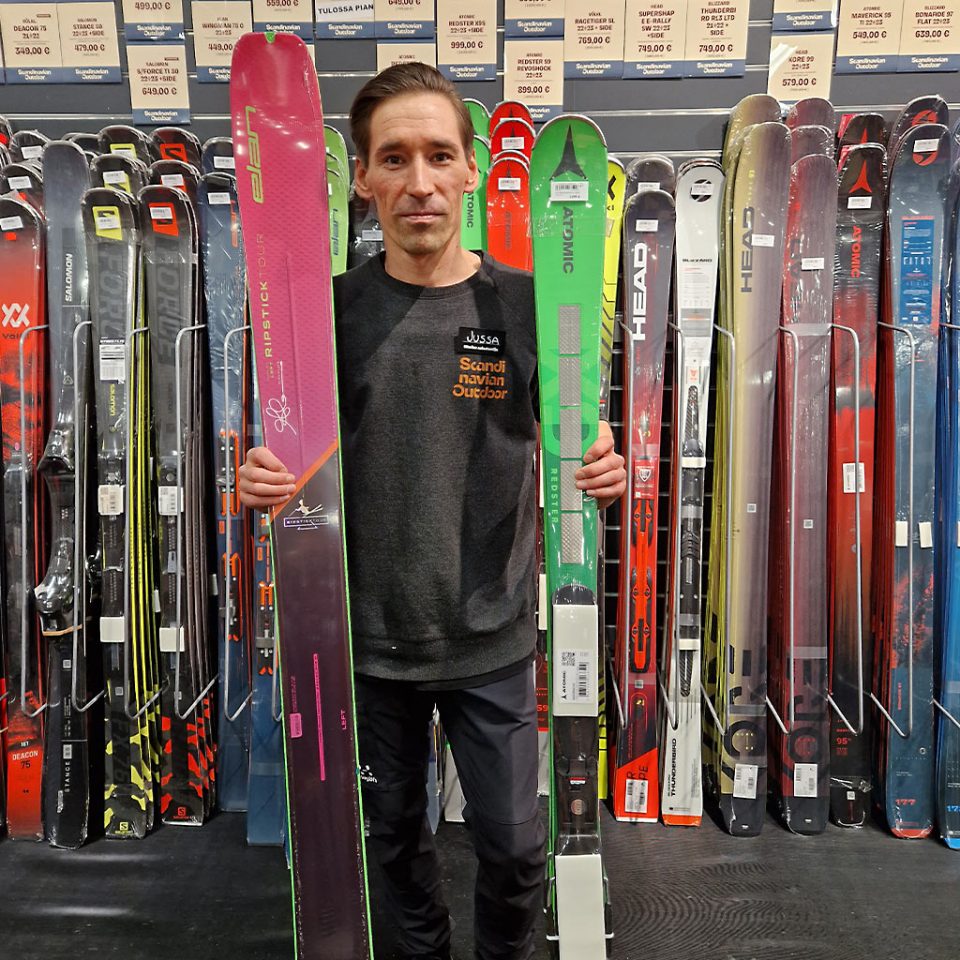
You'll find Jussa ready to help at the ski department in our Tammisto store.
There's no simple chart for downhill ski length. Several factors come into play, the biggest being your height and ability. As a rough guide, ski length ranges from chin height to slightly taller than you are.
A traditional piste ski typically falls between your chin and nose. A slightly wider all-mountain ski sits between eye level and your own height. Freeride skis built for off-piste terrain are at least as tall as you, and usually a little longer.
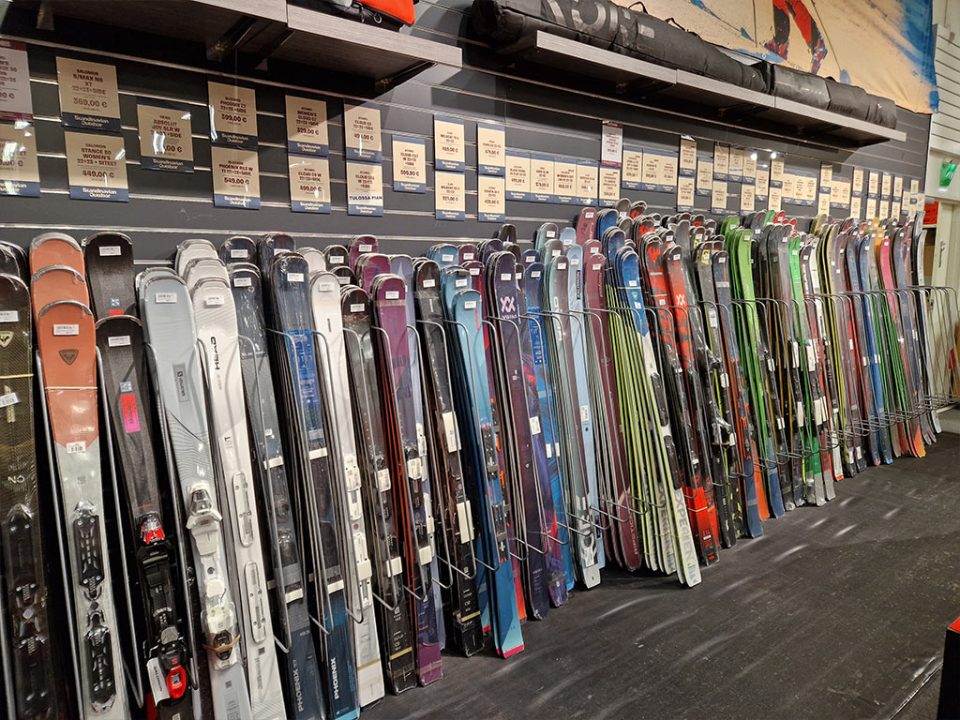
For beginners, ease of use and low weight matter most. If you're just starting out, go for the shorter end of the range, somewhere between your chin and nose. A shorter ski is more nimble, easier to control and doesn't take much effort to turn.
Intermediate skiers can go slightly longer and wider than beginners. You can also choose a slightly stiffer ski. It takes a bit more effort, but stays more stable when you pick up speed. Most skiers fall into this category, so it's also where you'll find the widest choice of models.
Experienced, expert-level skiers choose their skis based on intended use. Options range from short slalom skis to long giant slalom and freeride skis.
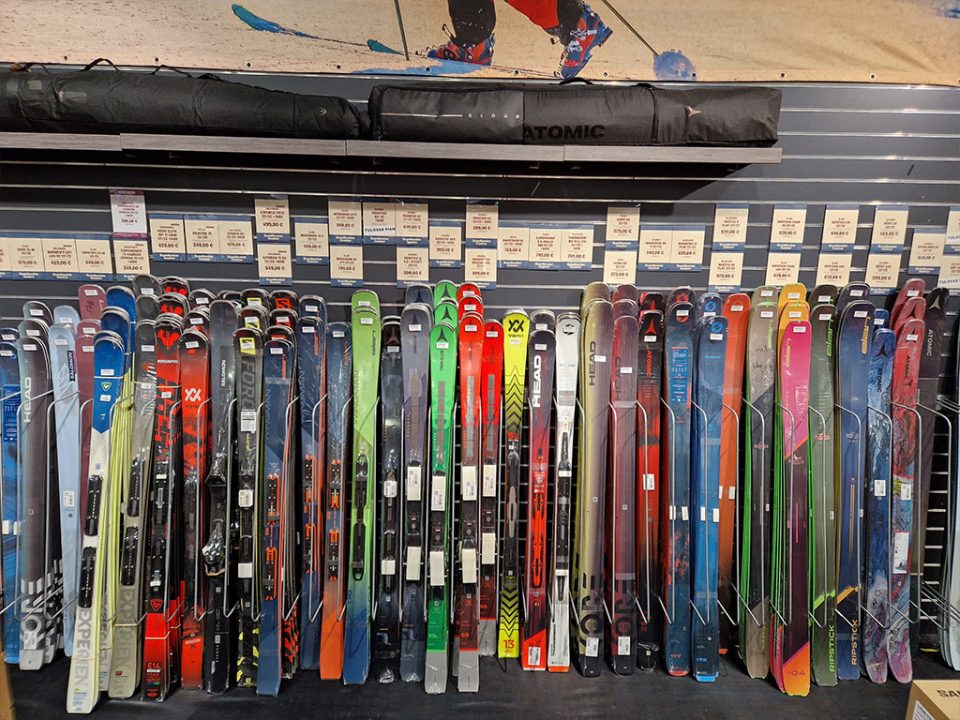
When buying skis for children, don't buy them to grow into. Skis that are too long are hard to control, make snowploughing more difficult and aren't safe. The right length for a child's ski is between the collarbone and chin. Lighter children and first-timers should go shorter, while kids with a bit of experience can go longer. The right-sized kit makes skiing fun, and they'll happily play on the slopes all day.
Women's models are usually slightly softer flexing and lighter. The balance point of a women's ski is positioned a little differently, which makes the ski easier to control and to initiate turns.
You'll find our ski departments at our Pirkkala, Kuninkoja and Tammisto stores. All products are also available in our online store.