A guide to buying shell trousers
Rain doesn't have to spoil a day outdoors – as long as you're dressed for it. Autumn is a great time for hiking and getting outside, with the landscape full of colour and earthy scents. The summer heat no longer leaves you sweating, and you can wear more layers.
TOP 5 tips for buying shell trousers
- Choose the right construction (2-, 2.5- or 3-layer):
2-layer is comfortable and versatile, 2.5-layer is light and packs down small, and 3-layer is the most durable option for demanding use. - Check the hydrostatic head:
A higher mm rating means better waterproofing. Anything over 20,000 mm keeps you dry even when you're sitting down or the fabric is under pressure. - Look at the leg zips:
Full-length zips make it easy to pull the trousers on over your boots. Shorter zips may mean taking your boots off first. - Choose for your activity:
For hiking, a light and packable pair. For cycling, a tougher fabric. For everyday walks, a comfortable 2-layer construction. - Think about durability in active use:
On the bike, for example, your trousers need to stand up to wear, especially around the crotch.
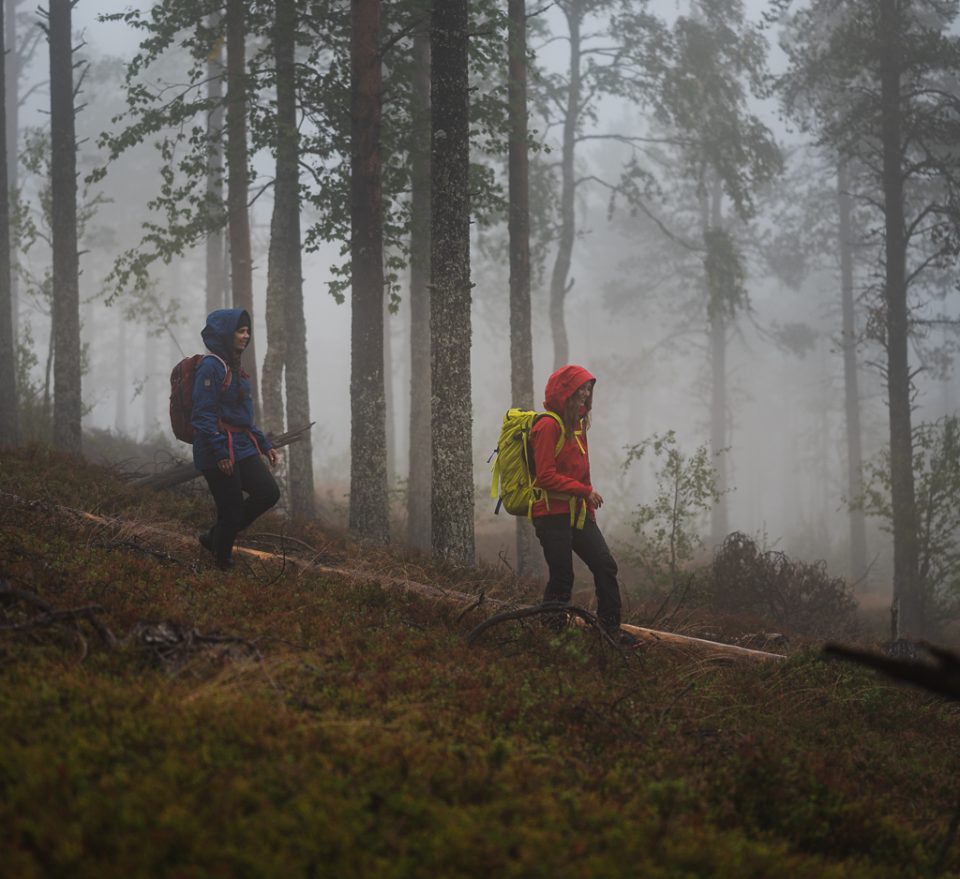
In light rain, a water-repellent hiking jacket or a more versatile waterproof shell jacket is usually enough. Shell trousers come into their own when the rain is so heavy that water runs straight off your jacket and onto your legs. Ordinary trousers soak through fast, and wet trousers get cold very quickly.
How shell trousers are built
The term shell trousers means the trousers have a waterproof shell. Examples include the various Gore-Tex (GTX) fabrics, DrymaxX, Texapore, Omni-Tech and Musto BR2. There are three types of shell construction:
2-layer construction
The outer fabric is waterproof, with a light mesh lining inside. Thanks to the mesh lining, these trousers feel comfortable even against bare skin. The construction makes them slightly heavier, but also durable. Comfortable shell trousers for all-round use.
You'll find all our 2-layer shell trousers here.
A few of our 2-layer shell trousers:
Haglöfs Astral GTX Pant range
Halti Fort Pant (also available in plus sizes)
2.5-layer construction
The face fabric and membrane are laminated together, with an ultra-light printed lining on the inside of the membrane. This construction is very light, though not always as comfortable against the skin as a 2-layer. Handy on multi-day treks when you want to save weight.
You'll find all our 2.5-layer shell trousers here.
Examples of our 2.5-layer shell trousers:
Haglöfs L.I.M Pant range
3-layer construction
All three layers (face fabric, membrane and inner fabric) are laminated together into a single fabric. This is the most durable option, though it can feel slightly stiffer than 2-layer fabrics. Built for demanding use.
You'll find all our 3-layer shell trousers here.
Our 3-layer trousers:
The North Face Summit Chamlang Futurelight Pant
Fjällräven Keb Eco Shell Trousers
Haglöfs L.I.M ZT Shell GTX Pro Pants
Leg zips on shell trousers
Shell trousers often have leg zips to make them easier to put on. The zip can be full-length, 3/4-length or calf-length.
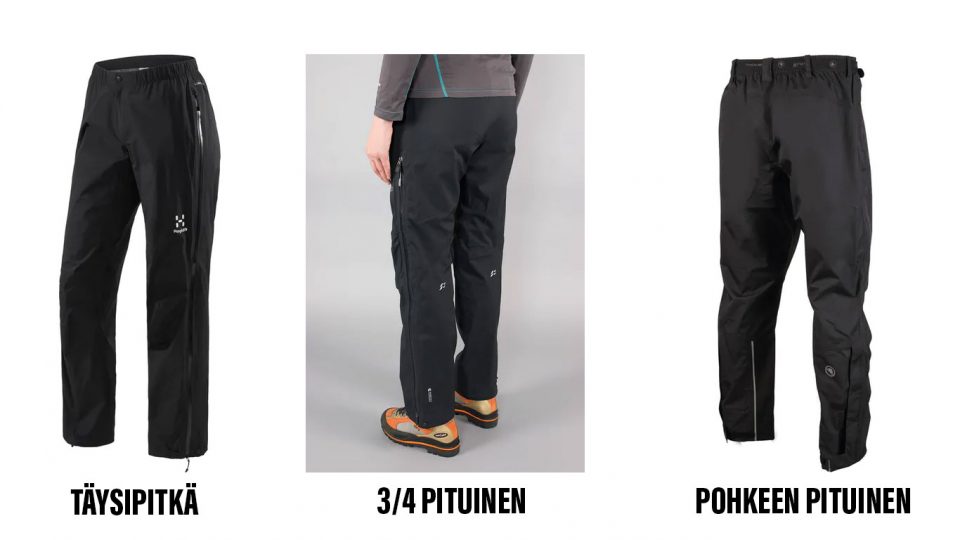
Pictured from left to right: Haglöfs L.I.M Pants, Rab Firewall Pants and Endura Gridlock II Trousers.
When the rain starts, a full-length leg zip lets you pull your shell trousers straight on over your hiking trousers without taking your boots off. You can do the same with a 3/4-length zip, but the trousers are a little narrower at the upper thigh, so a wet boot may rub against the fabric on the way through. With a calf-length zip, the opening can be too tight to get a boot through, as the knee area is often quite snug. In that case, you'll need to take your boots off first.
The main risk with zips is leaking. A zip is also one more part that can fail – it may wear or get damaged over time – and it adds a little weight.
Hydrostatic head
The hydrostatic head tells you how waterproof a fabric is. It's given in millimetres, and the higher the figure, the better the trousers keep water out. At 10,000 mm, trousers are already very waterproof, but they may let moisture through when you sit down and the fabric over your seat comes under more pressure. To stay fully dry, even when sitting, you generally need a hydrostatic head of 20,000 mm or more.
Choosing shell trousers
When choosing shell trousers, think about what you'll mainly use them for. Different activities call for different features.
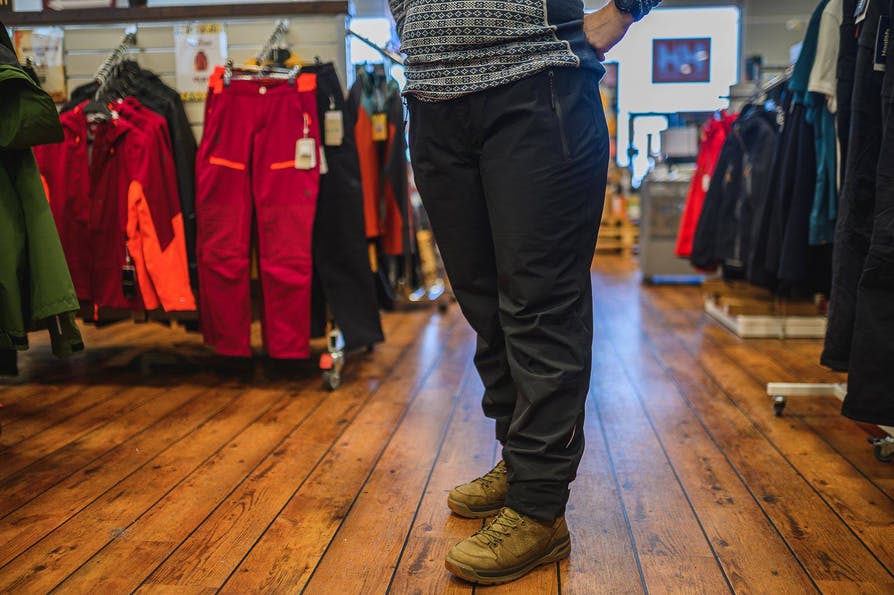
Scandinavian Outdoor's own collection also includes the Aura+ W GTX Pants, shell trousers designed together with Sasta and cut in Sasta's roomier + fit.
Cycling calls for a tough fabric that won't wear through at the crotch. If you're using the trousers for commuting, weight probably matters less. A good option here is a pair of 3-layer trousers that work for almost any activity – or, for a more affordable choice, Endura's Gridlock trousers, which are made for riding.
Many of our shell trousers work well for hiking, but if they'll spend most of the time in your pack as insurance against a downpour, think about weight and packed size. 2.5-layer trousers are a good fit here. For walks and day hikes, 2-layer shell trousers are more comfortable and can be worn directly against the skin.
For sailing, our range includes dedicated shell trousers from Musto, among others.
You'll find our full range of shell trousers here. You're also welcome to come and try them on in our stores.