Tips for an autumn colours hike
This post has tips for an autumn hike in the ruska season, when the leaves and ground vegetation turn colour. If you enjoy hiking and sleeping outdoors, there's no reason to stop when summer ends. The Nordic seasons are striking, and spending nights outside is the best way to experience them. Ruska is one of the most beautiful times of year, but it can also be hard on your gear. After a warm summer, cold and wet weather can catch you off guard.
8 tips for an autumn hike
- Pick the right time
- In Finland, the autumn colours move from north to south. In Lapland they usually peak in early September, while further south they arrive later in the autumn.
- Be ready for changeable weather
- Autumn temperatures can swing a lot, and rain and wind are common. Night frosts are possible.
- Layer up properly
Breathable base layers, an insulating mid layer and a proper shell jacket and trousers are the foundation of any autumn hike. - Keep your gear dry
A rain cover on your pack isn't always enough. Pack your most important kit in dry bags. - Choose your shelter for the conditions
In autumn, your tent needs to handle wind and rain, but it also needs enough ventilation to manage condensation. - Plan for colder nights
A warmer sleeping bag and an insulated sleeping mat add both comfort and safety. - Make the most of autumn
The colours, quieter landscapes, a chance of northern lights, plus berries and mushrooms make an autumn hike something special. - Follow the forecast and stay flexible
Autumn conditions can change quickly, so build alternatives into your route plan.
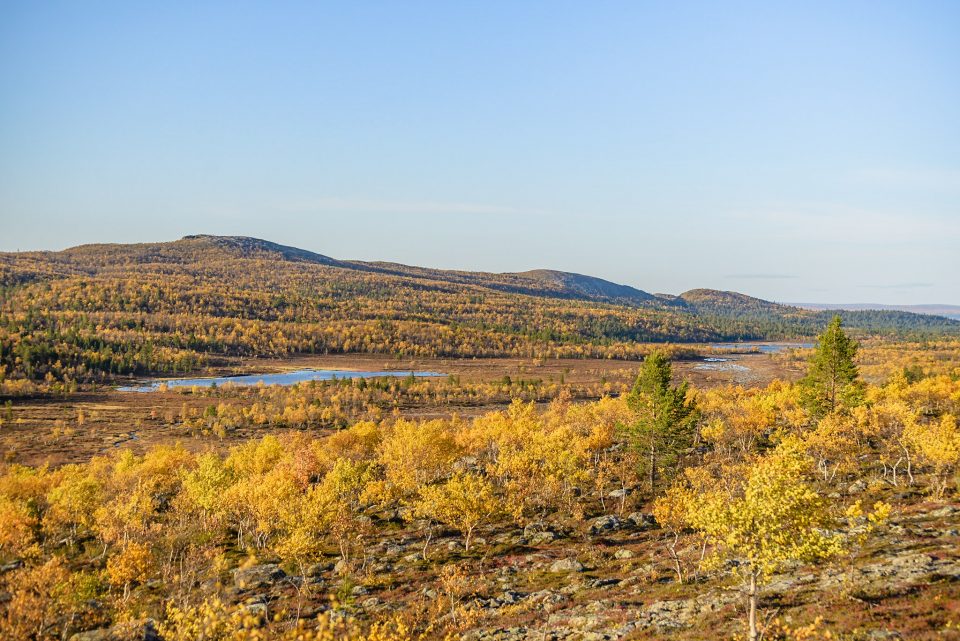
In full sunshine the autumn colours glow, and a blue sky makes for a beautiful contrast.
How autumn hiking differs from summer hiking
In summer, the challenges are often sweltering heat and light nights that can keep you awake when you're sleeping outdoors. In autumn, the returning darkness feels exciting and even a little romantic. In Lapland, night frosts start to set in, and heavy rain and strong winds are common.
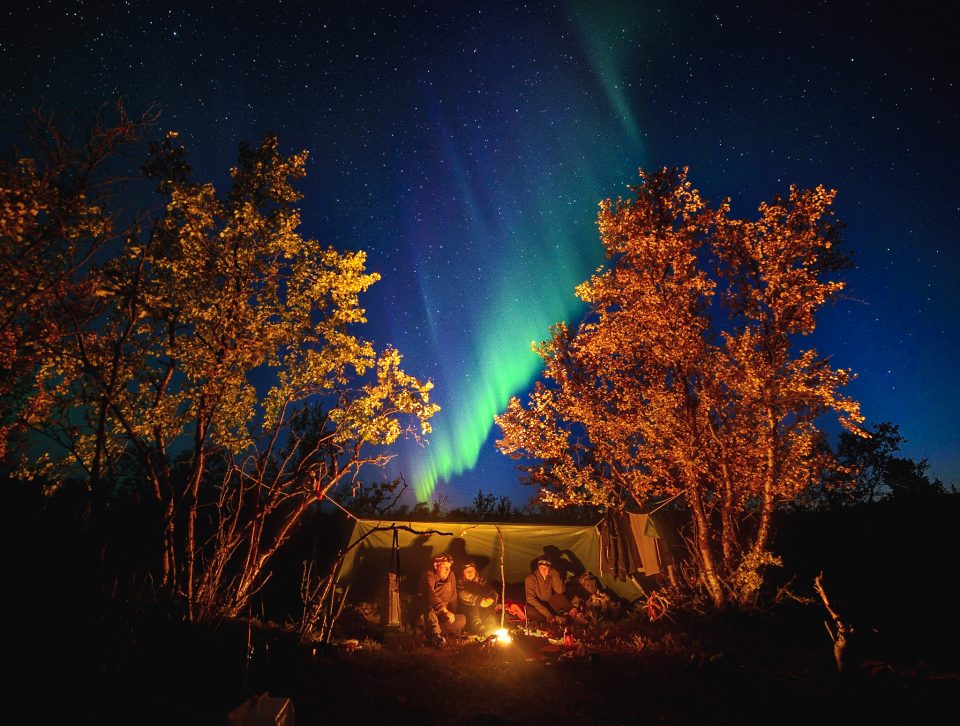
Autumn is also when the northern lights season begins. Aurora and autumn colours together are pure magic. Remember the rules on campfires, though: lighting a fire isn't covered by everyman's rights.
In summer there's often a forest or grass fire warning, and you rarely need a fire anyway. In autumn it's good to start the campfire season again and gaze at the starry sky while the treetops dance in the yellow firelight.
With luck, the weather can be genuinely warm, but it can just as easily be cold and damp. That's the biggest challenge. Check the forecast before you go, but bear in mind it usually changes daily, and you'll only see the real weather once you're there. Conditions can turn quickly and without warning, so it pays to be prepared. If you can, keep checking the forecast every day during your hike too.
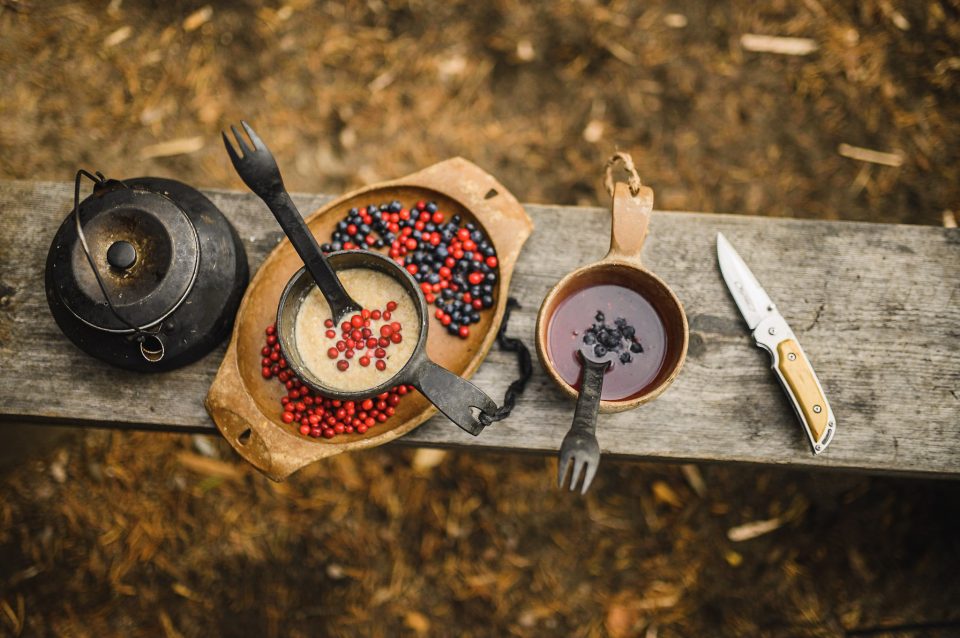
Fresh berries add flavour to your morning porridge, not to mention vitamins.
One of the best things about late summer and autumn is fresh berries picked straight from the bush, and mushrooms, of course.
Packing your gear
You should always pack with rain in mind, but in autumn it matters even more. A pack rain cover on its own isn't enough; it only helps in the odd shower. Anything even slightly sensitive to moisture is best packed in dry bags from the start.
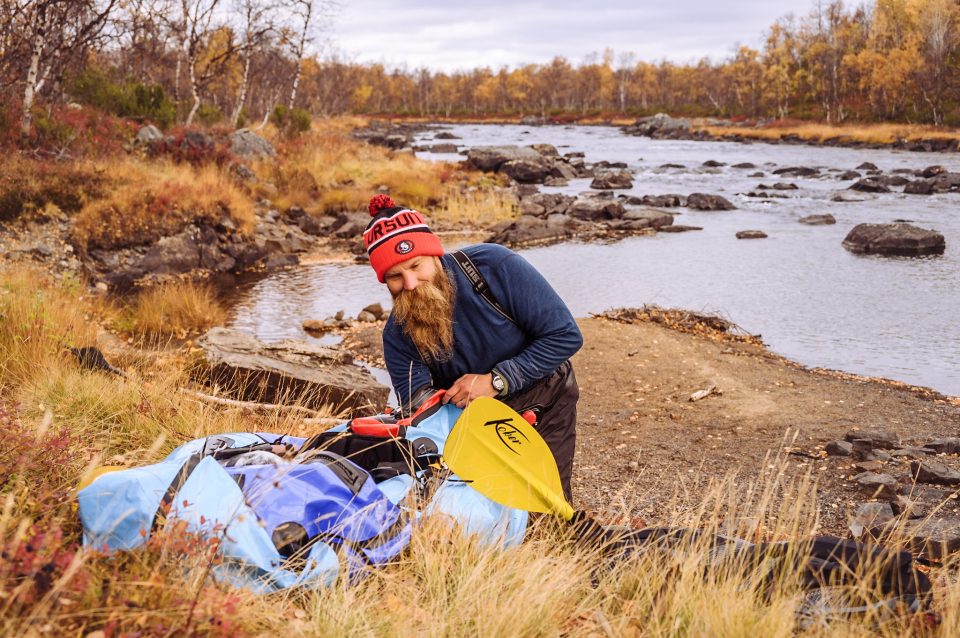
You can also enjoy the autumn colours by paddling. With a packraft, you can stow your gear inside the hull, protected from getting wet.
Your sleeping bag, clothes, map and food are especially vulnerable to moisture and can become useless once wet.
Dressing for the weather
During ruska, the weather can be almost anything from 20°C to below freezing. It can be bone dry or soaking wet. Dress so you're ready for both.
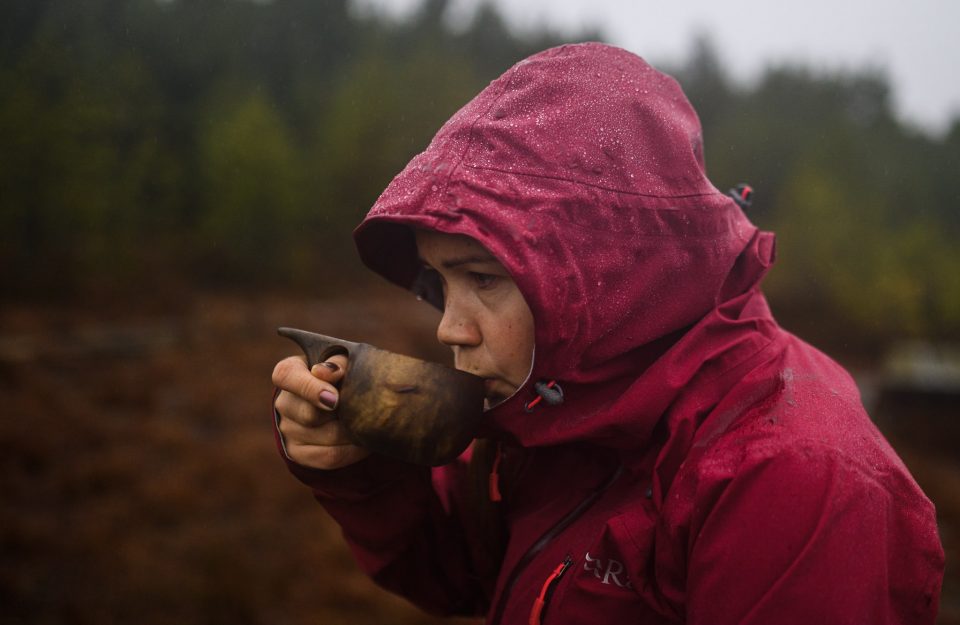
The sun doesn't always shine. On a hike, it helps to prepare yourself mentally for spells of rain too. Being outdoors means getting on with it, whatever the weather.
In autumn, a well-made shell jacket gives you peace of mind, ideally paired with shell trousers or a rain skirt. For hiking, choose a shell jacket that can handle the weight and abrasion of a heavy pack and has a high enough hydrostatic head. As a rule, 10,000 mm isn't enough: with a pack pressing against your back, water may start to get through.
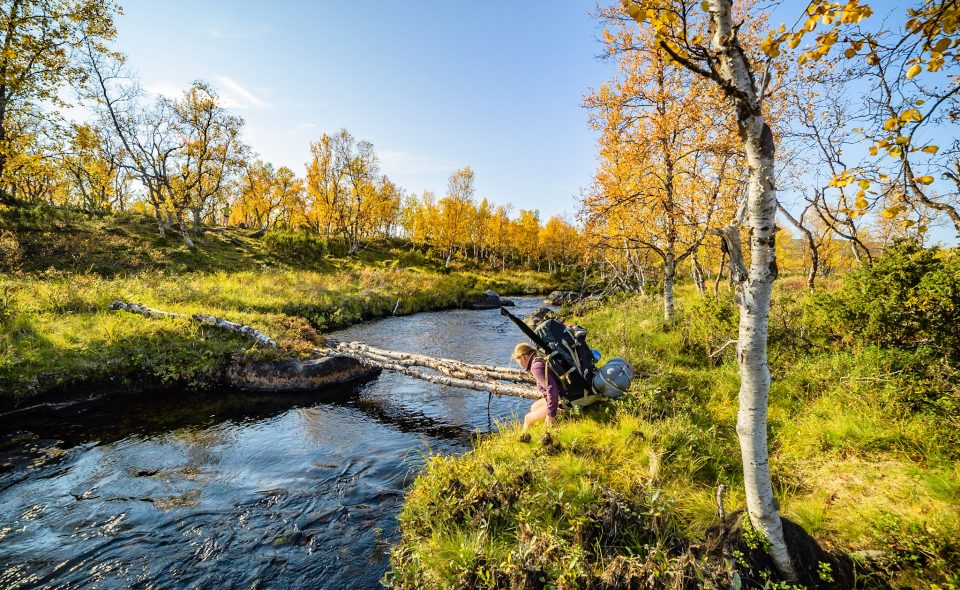
In the wilderness you'll often head off-trail and wade across rivers and streams, sometimes with your hiking boots still on. That's when it's worth thinking about whether you really want waterproof footwear.
On marked trails, waterproof boots work well. You'll usually only meet small puddles, rivers and streams have bridges, and wet vegetation won't soak your feet.
Choosing your shelter for an autumn hike
Many hikers own just one shelter and make it work. But if you have more than one, or you're buying a tent for autumn use, choose a model that can stand up to strong winds while still offering good ventilation.
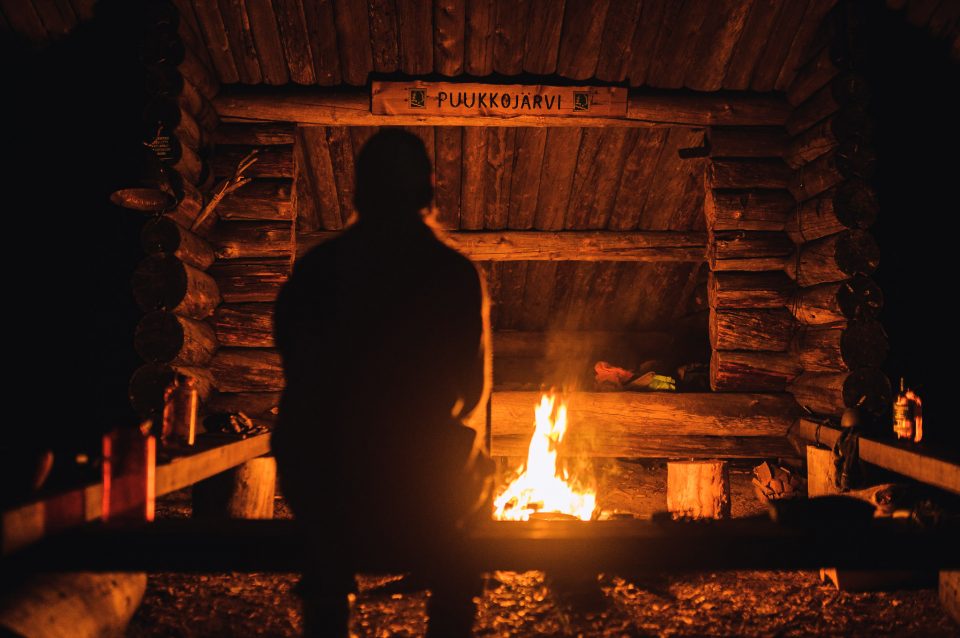
Spending an autumn night in a lean-to shelter is romantic and easy, and you won't have to pack away a wet tent in the morning. Expect other hikers to be there too, though, and always bring your own shelter.
In autumn rain, condensation is a common problem: moisture condenses on the inside of the tent. Good ventilation helps, and a footprint, a groundsheet that goes under the tent, adds comfort. Many tent models have their own dedicated footprint, cut to the exact shape of the tent and designed to attach to its base. Less moisture rises from the ground, and you also get a floor in the porch.
There's nothing stopping you from using a tarp or a hammock instead. They usually give you better airflow, too. With a tarp, take care in strong winds and pick a slightly more sheltered pitch.
Where and when are the autumn colours at their best?
The autumn colours come from deciduous trees as well as from the ground vegetation, as dwarf shrubs and herbaceous plants change colour. In northern Lapland, the best colours almost always arrive in the second week of September. The most vivid shades come from mountain birch leaves, dwarf birch, bilberry, bog bilberry and alpine bearberry. The display is usually better after a dry spell. Strong winds strip the leaves from the trees faster; without them, the season can last a little longer.
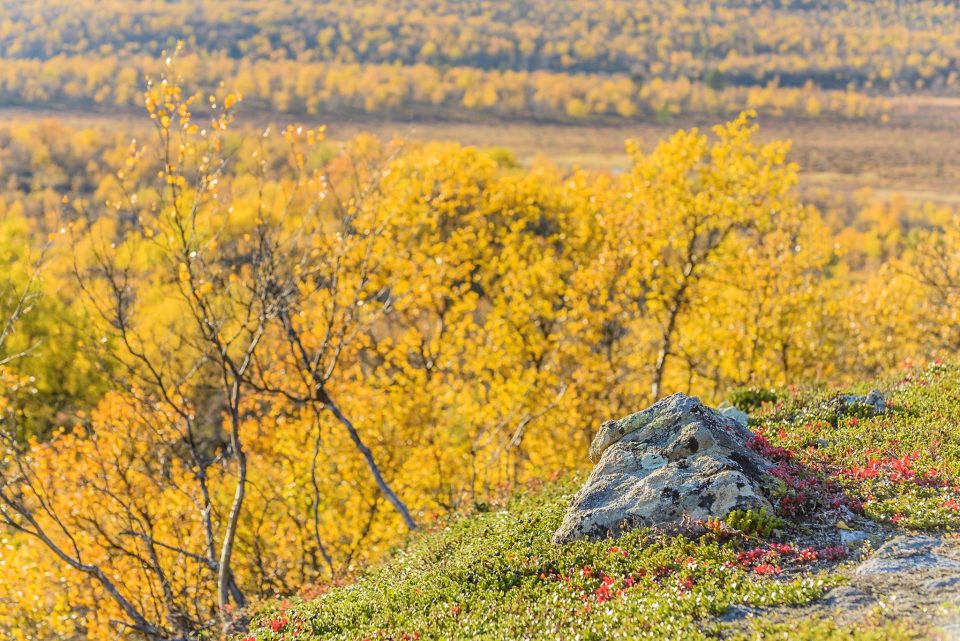
Sometimes the ground vegetation turns before the trees, and sometimes the leaves go yellow before the shrubs.
Many people think of Lapland when it comes to autumn colours, but you can enjoy them all over Finland. In the south there's an even wider variety of trees. Maple, oak, alder and rowan all turn beautiful colours, and they change at different times, so the display can last for several weeks.
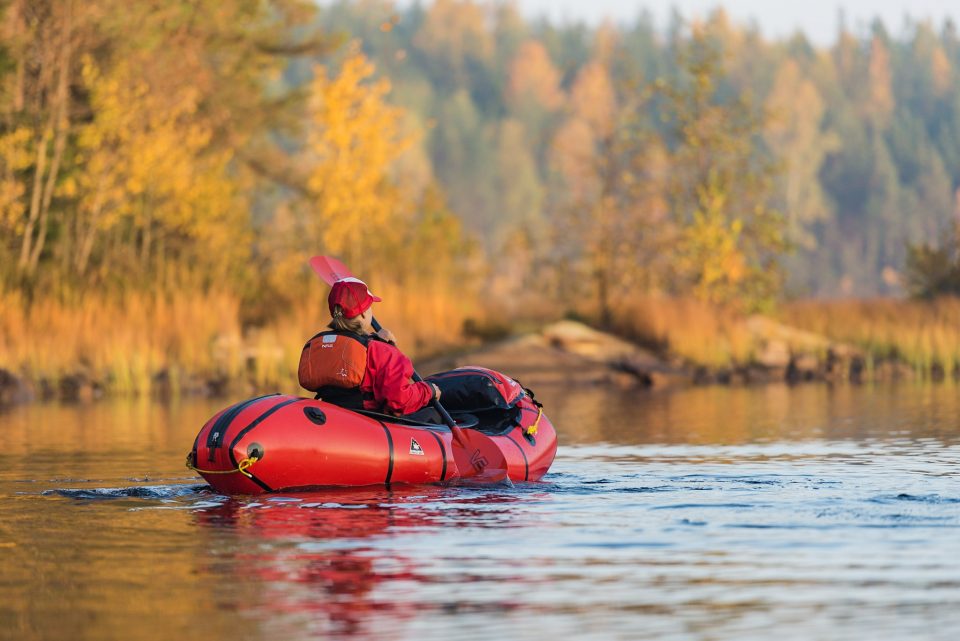
Southern Finland's autumn colours at their best in Teijo National Park.
The colours gradually move south. They reach the Kuusamo area in mid-September, Kajaani at the end of September, the Tampere region in early October, and the southern and south-western coast often not until mid-October.
Even if you don't have time for a full hike during the autumn colours, try to get out for a night in nature. You don't have to go far. Some of the best colours might be in your local woods.