August trail tip — Managing your water on a hike
On a hike, you rarely need to carry much water. Most Nordic hiking areas have plenty of natural water sources. You can drink from some as they are, or treat the water on the spot to make it safe. Treating your drinking water is recommended, because natural water always carries some risk.
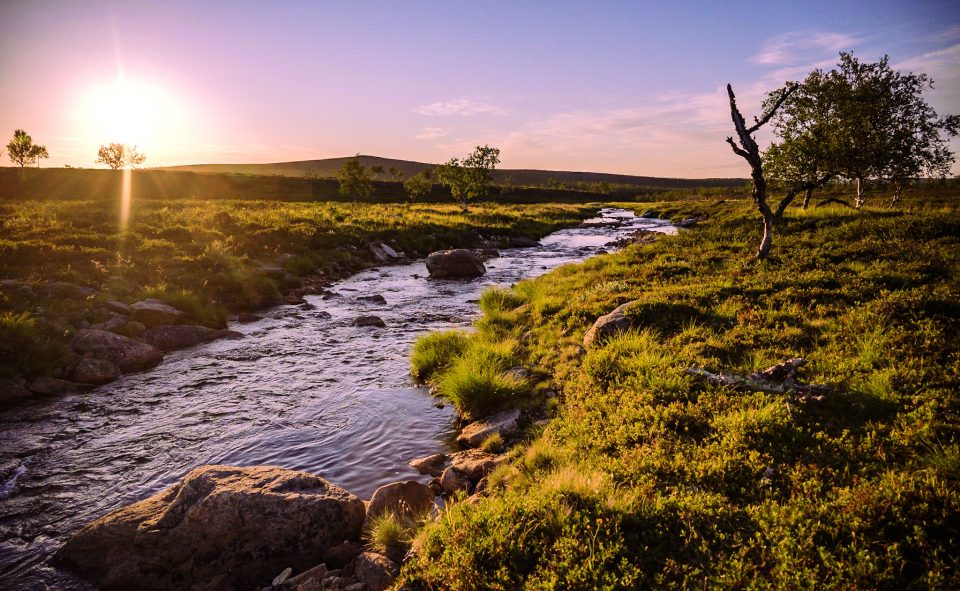
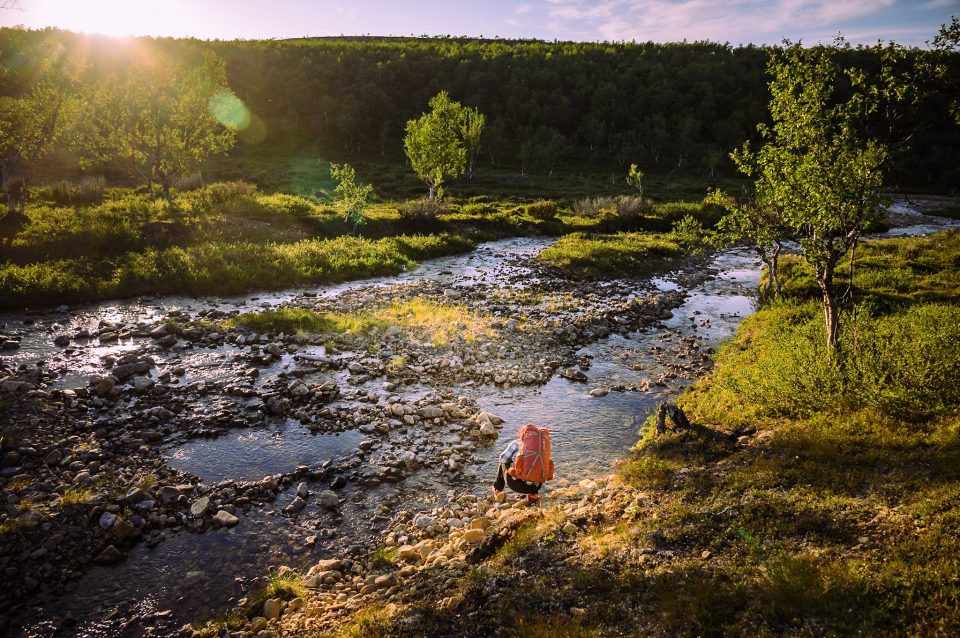
In Lapland especially, there's little point in carrying a lot of water. Along the way you'll find streams, rivers and lakes. In very dry summers the smallest streams can dry up completely, so always check the water sources on your route in advance and plan how much you need to carry.
Always check the water with your senses first. If it's brown or smells bad, don't use it.
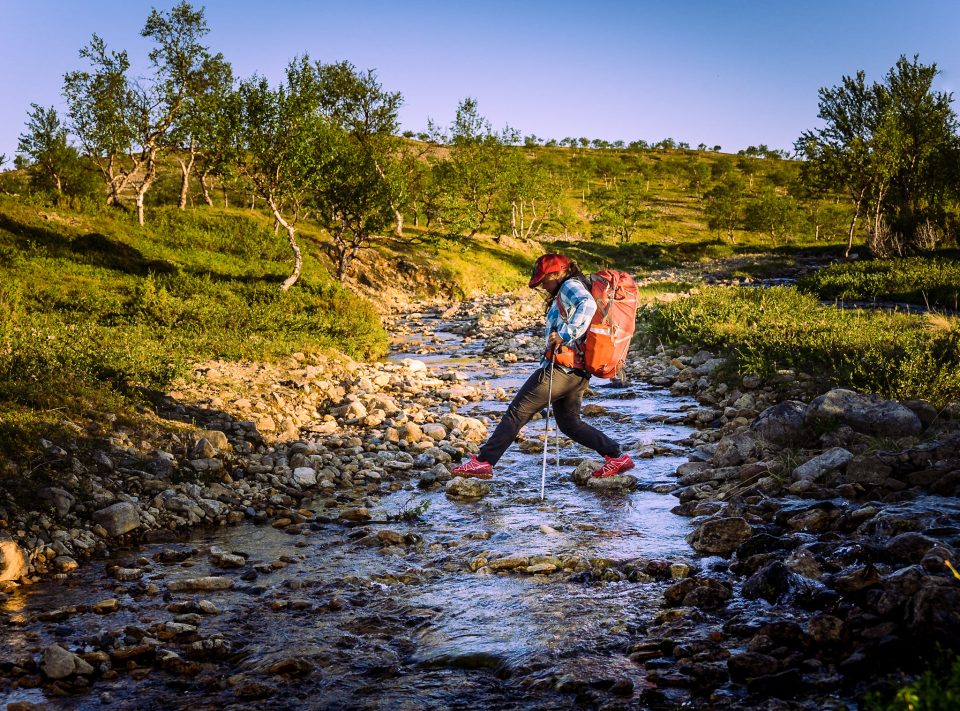
If you're going off marked trails, you'll usually cross small streams every so often, and you can take a drink as you go. Plenty of hikers don't carry any water at all in this kind of terrain. If you're worried about running short, just fill your bottle whenever you get the chance. If a full bottle feels like too much weight, fill it halfway.
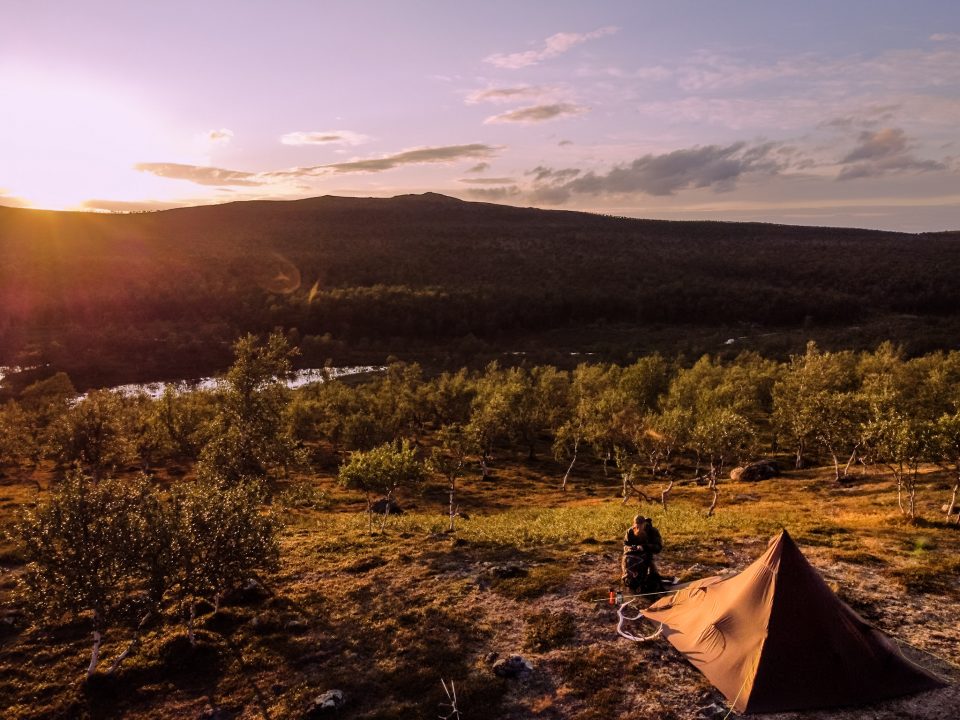
Pitch camp close to a water source. That way you don't have far to go when you're cooking. Drink plenty in the evening and morning to stay well hydrated. If the mosquitoes are bad, choose a slightly higher, breezier spot. You'll get a better view too.
Don't wash your dishes directly in lakes or streams. Go to the toilet well away from water as well.
Three ways to treat water
Treating natural water reduces the risk of infection. Water can contain harmful bacteria, parasites or viruses. An infection can make you ill enough to need an urgent evacuation to hospital.
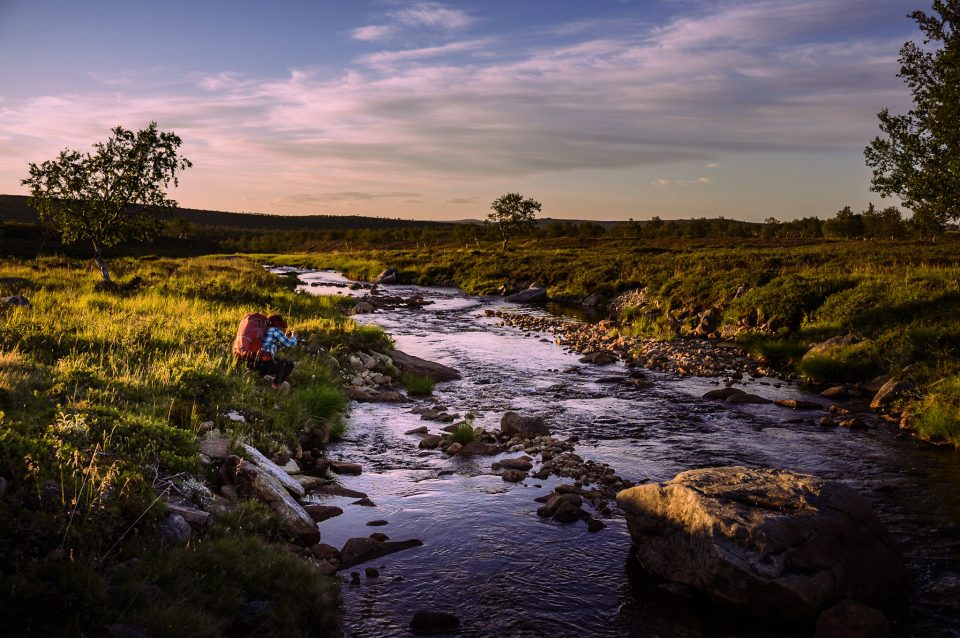
You'll find all our water filters and purification tablets here.
Boiling
Boiling is one of the oldest ways to treat water. Most bacteria, protozoa and viruses die at around 80°C. Boiling won't remove heavy metals, pesticides or other toxins, though. Check your map to see where the water comes from. Is there farming, a factory or a mine upstream of the stream or river?
Bring the water to a full, rolling boil. The usual recommendation is 3 minutes, although in practice less is often enough. Boiling isn't the most convenient option when you need a drink quickly, and it uses a lot of stove fuel.
Purification tablets
Purification tablets are an effective way to treat water. One example in our store is Katadyn Micropur Forte. Each pack has 100 tablets, and one tablet treats a litre of water. According to the current instructions, a 30-minute wait eliminates viruses and a 2-hour wait eliminates Giardia.
Follow the manufacturer's instructions carefully. The tablet needs enough contact time to treat the water properly. The downside is the aftertaste, which not everyone likes. Even so, it's worth always keeping a pack of tablets with you.
Filtering
Filtering is often the easiest and fastest way to treat water. There are filters for large groups, small groups and individual use. Most common filters remove virtually all bacteria and protozoa, but not viruses.
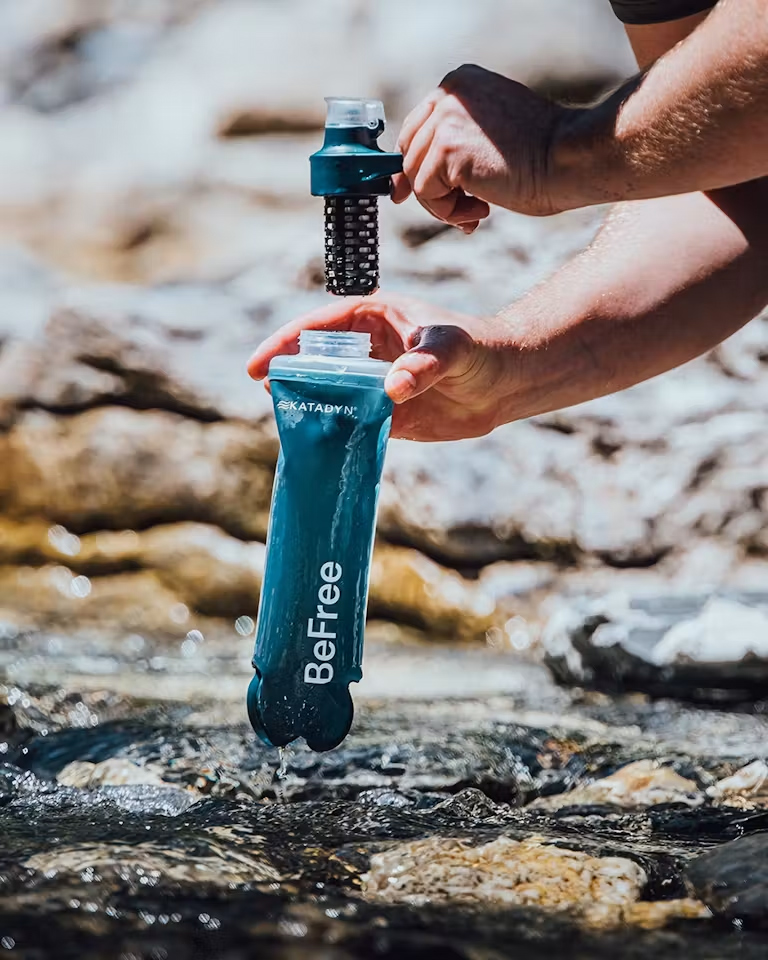
Our most popular water filter is the Katadyn Befree AC 0.5. It's compact, light, fast and affordable. The AC models have an activated carbon filter in addition to the fibre filter. Open the cap, scoop water into the soft flask, close the cap and squeeze the water into your bottle. Quick and simple.
Remember that none of these methods can remove blue-green algae. You can check the blue-green algae situation in your area here, for example: https://www.vesi.fi/sinilevatilanne/